
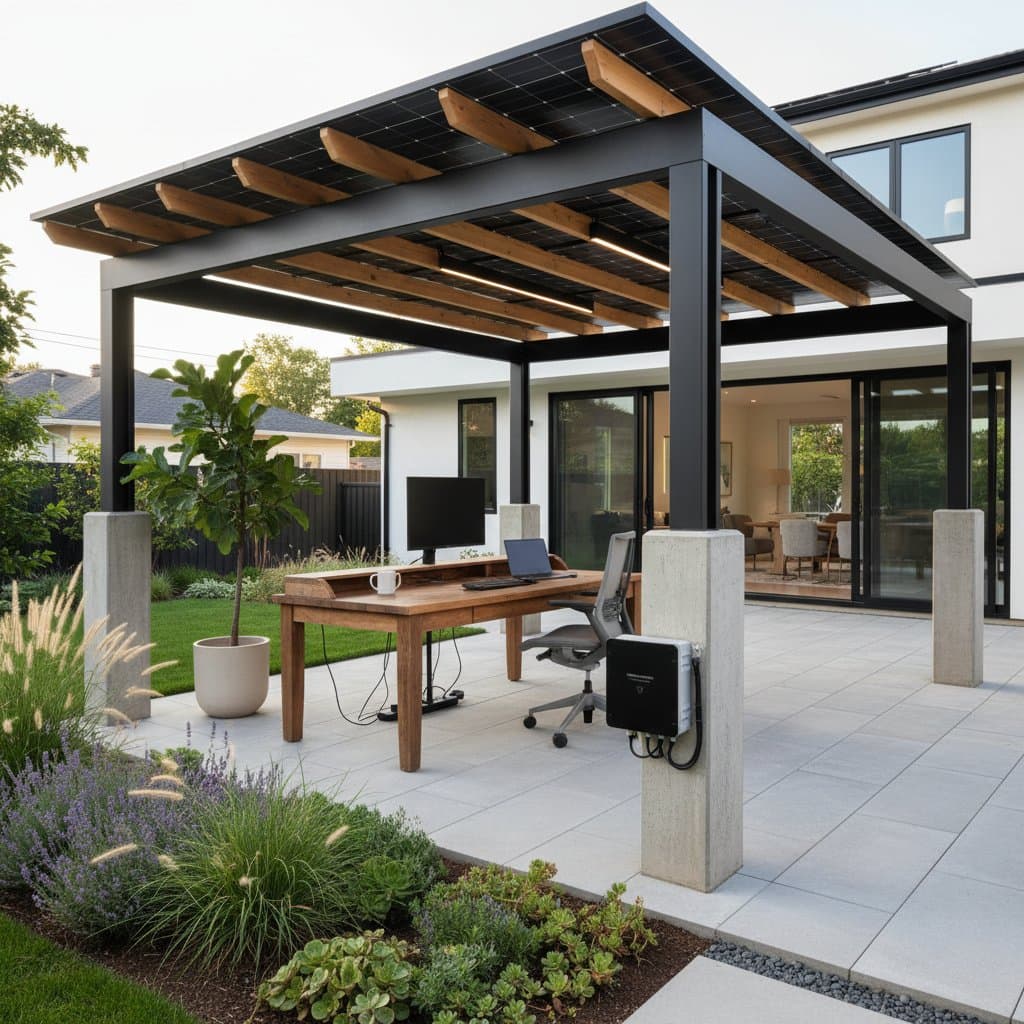
Step 6: Wire and Connect
Route protective conduit from the solar panels to a central junction box, and then connect it to the inverter. For direct powering of devices such as a laptop or lighting fixtures, incorporate a compact battery bank equipped with an inverter outlet. When integrating with your home's electrical system, engage a licensed electrician to handle the final wiring and conduct a thorough inspection.
Step 7: Add Comfort Features
With the power system operational, install essential office components. Position a durable, weather-resistant desk and an adjustable ergonomic chair. Incorporate a compact ceiling fan or pedestal model for ventilation. Suspend energy-efficient LED lights beneath the rafters to support extended evening productivity. Consider installing a retractable shade panel on an exposed side to mitigate direct sunlight during peak hours.
Safety Tips
Prioritize safety throughout the installation and use of your solar pergola. Shut off all power sources before working on any electrical components. Install ground fault circuit interrupter (GFCI) outlets for every outdoor connection to prevent shocks. Secure the pergola posts by anchoring them at least two feet into the ground to withstand wind and precipitation. In regions prone to heavy snowfall, verify that the solar panels meet appropriate load-bearing specifications prior to setup. Always wear protective gloves and safety goggles when cutting or drilling into structural beams.
Troubleshooting
Address common issues promptly to maintain reliable performance.
Low power output:
Examine the installation site for obstructions like overhanging tree branches or adjacent structures that cast shadows. Perform monthly cleaning of the panels using a soft-bristled brush and mild water solution to eliminate accumulated dust, pollen, or debris.
Flickering lights or device interruptions:
Review all wiring connections for signs of corrosion or loosened terminals. Tighten fittings as needed and apply fresh weatherproof seals to protect against moisture ingress.
Water pooling on panels:
Confirm that the panels maintain a minimum 10-degree tilt to facilitate natural drainage. For flat-roof configurations, install shims or adjustable mounting brackets to achieve the proper angle.
Overheating inverter:
Position the inverter in a shaded area with adequate ventilation. Maintain at least six inches of clearance on all sides to promote unrestricted airflow and prevent thermal buildup.
Maintenance
Solar pergolas require minimal ongoing care, primarily focused on cleaning and periodic checks. Establish a seasonal routine to preserve functionality and longevity.
- Clean the solar panels every one to two months using water and a soft, non-abrasive cloth to avoid surface damage.
- Inspect wiring for signs of wear or damage, particularly following severe weather events.
- Apply a fresh coat of outdoor sealant to wooden posts every other season to guard against moisture and rot.
- Tighten all bolts and screws annually to prevent structural loosening over time.
Should energy production decline by more than 20 percent, arrange for a professional evaluation by a certified solar technician to diagnose underlying issues.
Storage
Safeguard your setup during periods of non-use to extend the life of components and furnishings.
- Relocate laptops and other portable electronics to an indoor environment for protection.
- Enclose outlets and battery banks with fitted waterproof covers when idle.
- Coil and store extension cords in a dry location to prevent tangling or exposure.
- For pergolas with detachable panel sections, place them upright in a padded, weatherproof case within a sheltered shed.
Budget and Time
Constructing a solar pergola presents a cost-effective alternative to comprehensive rooftop solar installations, though it exceeds the expense of basic shade structures. Anticipate the following investment ranges based on scope and specifications.
- A complete DIY kit typically costs between $3,500 and $6,000, varying by dimensions and solar capacity.
- A bespoke installation including professional electrical work ranges from $7,000 to $12,000.
- Completion time for an experienced individual builder spans two to four weekends. Factor in additional days for obtaining permits and scheduling inspections.
Return on investment varies with regional electricity rates and daily usage patterns, yet many systems begin yielding savings immediately upon connecting office equipment.
Seasonal Reminders
Adapt your care routine to weather changes for year-round reliability.
- In spring, thoroughly clean panels, examine seals for integrity, and refresh paint on wooden elements.
- During summer, monitor for shading caused by seasonal foliage growth and reposition furniture to optimize air circulation.
- In fall, remove fallen leaves from panel surfaces and any integrated gutters to prevent blockages.
- For winter, gently sweep snow from panels using a soft broom to minimize structural stress from accumulated weight.
Consistent attention to these tasks ensures the pergola remains efficient and structurally sound across seasons.
When to Call a Pro
Certain aspects of the project benefit from expert involvement to ensure compliance and safety.
Engage a professional under these circumstances:
- When connecting the system to your home's main breaker panel.
- If local regulations require permits or electrical inspections.
- For complex roof designs or structures exceeding 10 feet in height.
- To incorporate advanced features like battery storage or integration with an existing solar array.
During consultations, inquire about key specifications including panel wattage output, inverter efficiency ratings, and comprehensive warranty details. Insist on a detailed contract outlining guarantees for both materials and labor.
Key Takeaways
A solar pergola effectively addresses dual challenges in remote work: insufficient outdoor ergonomics and escalating energy expenses. This versatile structure provides essential shade, robust framing, and on-site power generation within a single footprint. Opt for basic carpentry tools to construct it from scratch, or select a prefabricated kit that bundles panels, wiring, and mounting hardware.
Solar panels harness sunlight to produce electricity, while the pergola's ventilated design promotes cooling for sustained efficiency. The defined enclosure fosters a distinct work zone apart from indoor spaces, potentially enhancing concentration and alleviating daily stress.
Making It Happen
Initiate your project with these straightforward actions.
- Assess sunlight availability by using a mobile application to track direct exposure across your yard or patio throughout the day.
- Establish a realistic budget and evaluate kit options that align with your required power output.
- Sketch the workspace configuration, noting positions for seating, electrical access, and gear storage during off-hours.