
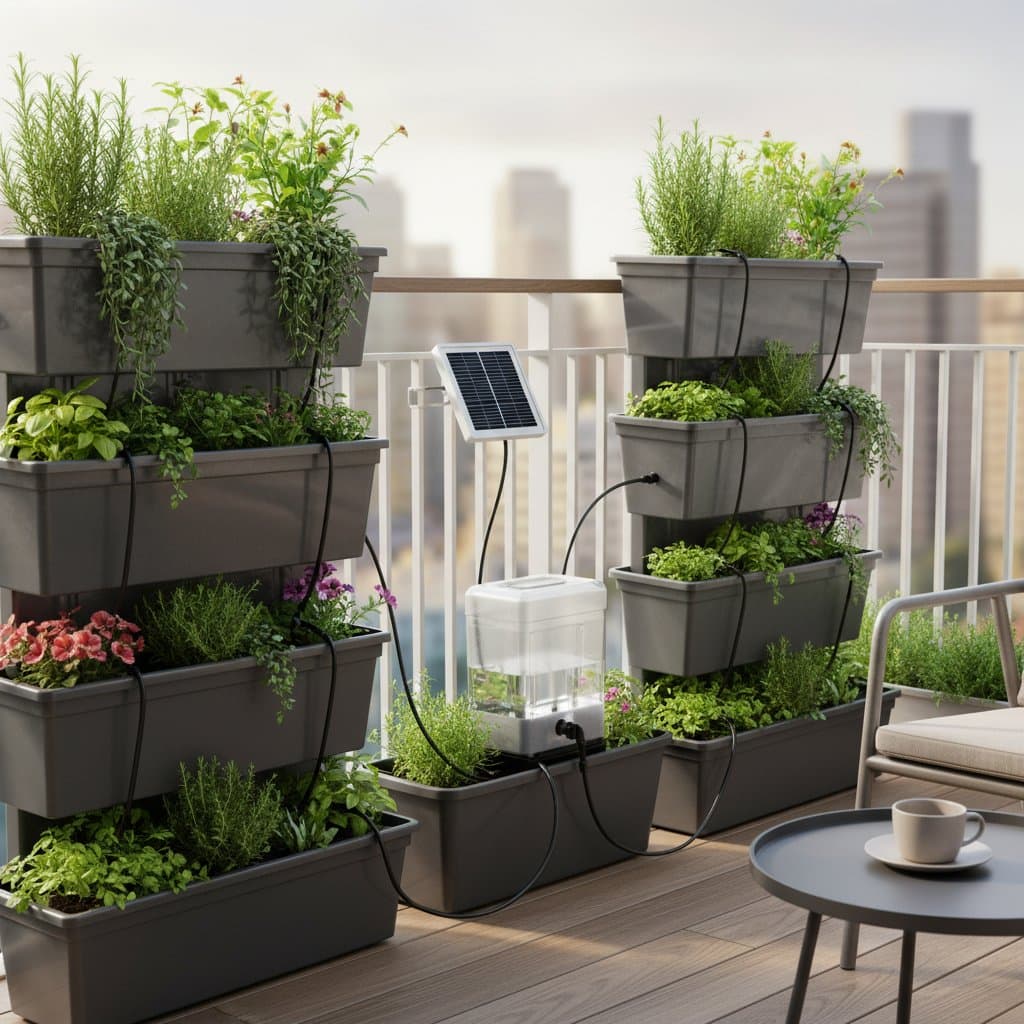
Solar Drip Magic: Auto-Water Your Balcony Oasis
Your balcony plants deserve steady care, even when you forget the watering can. A solar drip irrigation system gives them what they need, drop by drop, powered by sunlight. It saves time, trims water waste, and keeps your small garden thriving through heat, travel, and busy days.
This guide explains what solar drip irrigation is, why it works so well for balconies, and how you can set one up today with safe, simple steps.
Overview
A solar drip irrigation system uses a small solar panel to power a pump that draws water from a container or bucket. Thin tubes carry the water to drip emitters placed at each plant’s base. The system runs automatically when the sun shines, so you get a natural rhythm of light and moisture that matches plant growth.
For a balcony setup, this means:
- No need for electrical outlets or timers.
- Steady watering even in full sun.
- Less stress on roots from overwatering.
In short, you get smart automation that fits in a few square feet.
Key Benefits
- Water efficiency: Drip emitters deliver moisture directly to the root zone, reducing evaporation by up to half compared to hand watering.
- Energy independence: Solar panels charge the system without cords or batteries.
- Plant consistency: Regular moisture keeps soil texture balanced and avoids leaf drop.
- Low maintenance: Once set up, you refill the water container every week or two depending on plant size and weather.
- Compact design: Kits fit spaces as small as three square feet.
Your balcony becomes a small self-sustaining ecosystem, running quietly on sunlight.
Tools and Materials
You can start with a ready-made solar drip kit or build one from parts. Either way, keep your list clear and simple.
Basic setup needs:
- 1 solar panel pump unit, around 5 to 10 watts, with a small submersible pump included.
- 1 water container, 2 to 5 gallons (8 to 20 liters), ideally with a lid to reduce algae.
- ¼ inch (6 mm) tubing, 15 to 25 feet (4.5 to 7.5 meters) depending on layout.
- Drip emitters or adjustable drippers, one per plant.
- Connectors and stakes, to hold tubing in place.
- Scissors or tubing cutter.
- Filter screen to keep debris from clogging the pump.
Optional but helpful:
- A moisture sensor that triggers the pump when soil dries.
- A backflow valve if you connect to a shared water source.
Steps
Step 1. Plan your layout
Sketch your balcony and mark where each pot or planter sits. Group plants by water need. Herbs and succulents use less water than ferns or tomatoes. Keep the water container in a shaded corner if possible to avoid overheating.
Step 2. Place the solar panel
Mount the panel where it gets at least five hours of direct light per day. Use adjustable brackets or clamps on the railing. Keep the wire run short, under 10 feet (3 meters), for best efficiency.
Step 3. Set up the water source
Fill your container halfway with clean water. Secure the pump at the bottom and attach the intake filter. Make sure the cord exits safely without pinching. Keep the lid slightly open for air flow but covered enough to block insects.
Step 4. Run the main tubing
Cut a length of main tubing from the pump outlet to your plant area. Use connectors to branch smaller lines to each pot. If you have more than 10 emitters, split the tubing into two zones to keep pressure even.
Step 5. Add emitters
Insert a drip emitter close to each plant stem, about 1 inch (2.5 cm) from the soil surface. Secure with stakes. Adjust flow rate if the emitter allows. Start with one gallon (3.8 liters) per hour and test over a day.
Step 6. Test the system
Place the panel in full sun and watch the pump start. Check each emitter for an even drip. If some lines stay dry, flush them with water to clear air bubbles. Adjust heights so all pots receive similar flow.
Step 7. Secure and tidy
Use ties or clips to attach tubing along railings or walls. Avoid sharp bends that slow water flow. Coil extra tubing neatly and label each line if plants differ in type or watering schedule.
Safety Tips
- Electrical caution: Even low-voltage solar wires can short if wet. Keep connectors dry and sealed with silicone or waterproof tape.
- Water weight: A full 5-gallon container weighs about 40 pounds (18 kilograms). Check that your balcony surface can hold it safely.
- Sun exposure: Avoid placing the pump itself in direct sun; it lasts longer shaded.
- Cleaning: Use gloves when scrubbing algae or sediment from the reservoir.
Troubleshooting
Problem: Uneven watering
Check tubing for kinks or clogged emitters. Replace any that drip slowly. A quick flush with clean water often clears debris.
Problem: Pump not running
Test the solar panel connection. Wipe dust from the surface. If cloudy weather persists, move the panel to a brighter location or pair with a small rechargeable battery pack rated for your pump.
Problem: Overflow or leaks
Inspect joints for loose fittings. Wrap leak-prone spots with plumber’s tape. Keep the water container below the highest emitter to prevent siphoning when the pump stops.
Problem: Algae buildup
Empty the reservoir once a month and rinse with a mix of one part vinegar to ten parts water. This clears slime without harming plants.
Maintenance and Storage
- Weekly: Refill the water container and check flow at each emitter.
- Monthly: Clean the pump filter and wipe the solar panel with a soft cloth.
- Seasonal: Before cold weather, drain the system and store tubing indoors. Frozen water can crack plastic lines.
- Long-term: Replace tubing every two to three seasons if it becomes brittle.
Store all parts dry and labeled. Coil tubing loosely in a box, not tight loops, to prevent cracks.
Budget and Time
A small solar drip kit costs between 40 and 90 dollars, depending on pump size and features. Tubing and accessories add another 10 to 20 dollars.
Setup takes one to two hours for a balcony with ten to twelve pots. After that, upkeep is minimal, mostly checking water levels and cleaning once a month.
The savings come through lower water bills and fewer lost plants from drought stress.
Seasonal Reminders
- Warm months: Increase flow slightly to offset evaporation.
- Cool months: Reduce watering frequency. Plants need less moisture when growth slows.
- Rainy periods: Disconnect or cover the panel to pause watering. Resume when soil dries.
This rhythm keeps both soil and roots balanced year-round.
When to Call a Pro
If you want to link your solar drip system to a larger rain barrel or rooftop collection tank, consult a licensed plumber. They can install safe valves and prevent backflow.
Call a solar technician if your panel stops charging or the pump wiring needs replacement. These are short jobs for a pro and keep your system efficient.
Key Takeaways
Main points to remember:
- Use a 5 to 10 watt solar pump for up to 12 pots.
- Keep the reservoir covered and clean.
- Test and adjust emitters for even flow.
Your Next Steps
- Measure your balcony and count your plants.
- Choose a solar drip kit that matches your layout size.
- Set up the reservoir and panel this week to test flow.