
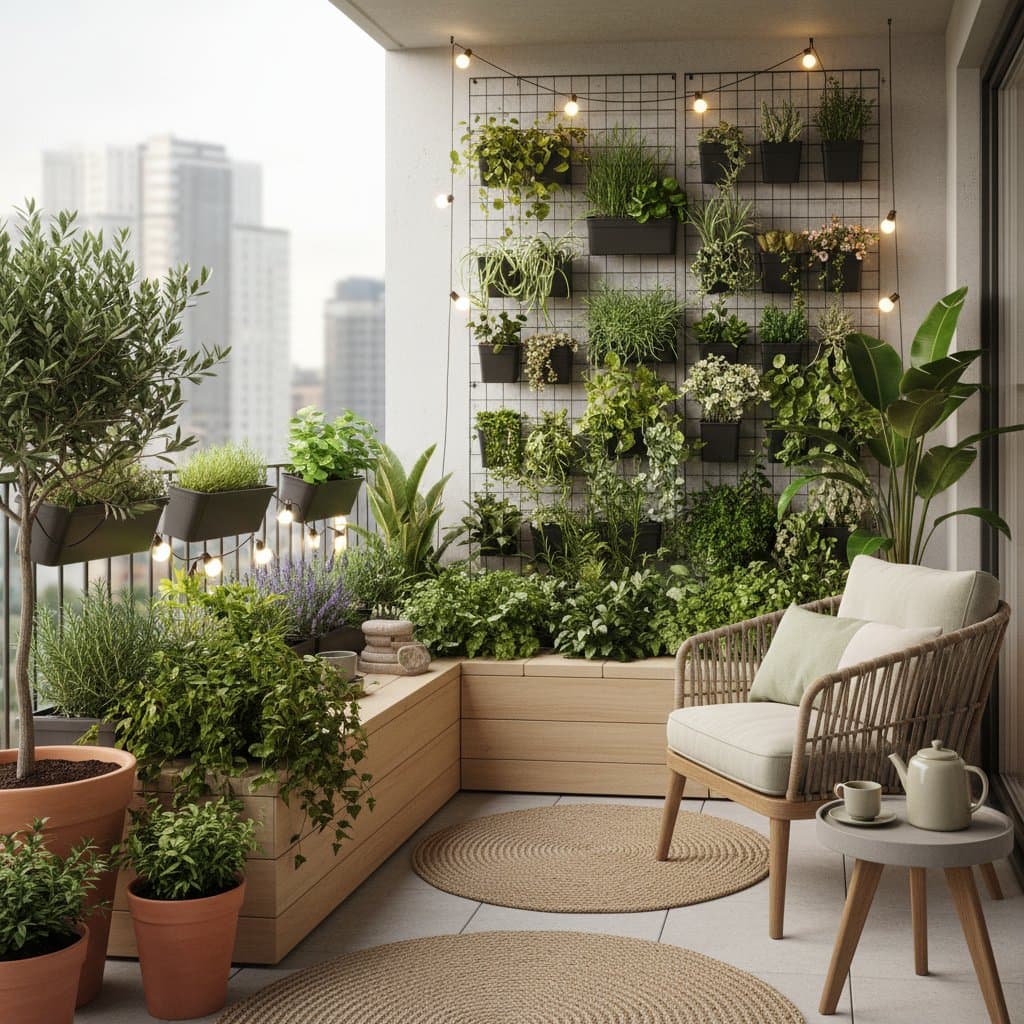
Discover Living Furniture to Enhance Balcony Design
Small balconies often serve as underutilized spaces in urban homes. Living furniture changes that dynamic by integrating greenery directly into functional pieces, creating a serene retreat that promotes relaxation and connection to nature. This approach maximizes every square foot while enhancing comfort and aesthetic appeal.
In this guide, explore the definition of living furniture, its advantages for city dwellers, and practical methods to implement it. Select durable materials, arrange cozy seating, and incorporate plants adapted to constrained light and space conditions. The result is a balcony that feels expansive, inviting, and alive throughout the seasons.
Overview
Living furniture refers to designs that merge traditional seating or surfaces with integrated plant elements or natural finishes. Examples include benches with embedded planters, tables featuring herb-growing compartments, or chairs crafted from weather-resistant woods that develop a patina over time. These pieces harmonize functionality and foliage, fostering an organic atmosphere without overwhelming the area.
Key advantages include enhanced comfort, reduced visual clutter, and improved air quality near relaxation zones. Such furniture also delineates distinct areas effectively; for instance, a compact loveseat flanked by planters can establish a secluded nook amid shared city views. Selecting living furniture ensures that limited space serves multiple purposes efficiently.
Tools and Materials
Starting requires minimal equipment, focusing on precise sizing and essential upkeep items.
- Measuring tape, extending at least 10 feet (3 meters)
- Moisture-resistant sealant for untreated wood surfaces
- Cushions designed for outdoor durability, featuring removable, washable covers
- Planters or integrated troughs with depths of 6 to 12 inches (15 to 30 centimeters)
- Lightweight potting soil to respect balcony load capacities
- Plants matched to available sunlight, including herbs, succulents, or shade-tolerant ferns
- Soft brush or microfiber cloth for routine surface cleaning
Verify the balcony's structural weight limit prior to installing substantial planters or weighted furniture pieces.
Steps
Step 1: Measure and Map the Space
Employ the measuring tape to document the balcony's width, depth, and railing height. Identify sun exposure patterns across different sections. Sketch a simple floor plan, ensuring at least 24 inches (61 centimeters) of clearance for movement. Indicate preferred locations for seating, surface areas, and plant placements.
Step 2: Choose One Main Living Piece
Begin with a single focal element, such as a planter-integrated bench or a modular table with built-in plant recesses. This strategy maintains a serene aesthetic and prevents overcrowding. Opt for materials suited to local weather; sealed cedar or powder-coated metal endures humidity, while resin wicker provides flexibility in arid climates.
Step 3: Add Compact Seating
Choose chairs with seat heights of 16 to 18 inches (41 to 46 centimeters) for ergonomic comfort. Favor foldable or stackable models to facilitate storage. Incorporate cushions protected against ultraviolet rays, selecting lighter hues to minimize heat absorption from sunlight.
Step 4: Layer Plants for Height and Texture
Incorporate plants across three vertical levels to achieve visual balance and depth.
- Low-growing options like herbs or succulents in shallow trays near the base.
- Medium-height selections such as ferns or dwarf shrubs in 10-inch (25-centimeter) containers.
- Vertical accents including trailing vines or slender bamboo in corner planters reaching 3 feet (0.9 meters) or taller.
This arrangement forms a natural privacy barrier that softens surroundings without impeding ventilation.
Step 5: Add Light and Comfort
Install clip-on solar-powered lights or LED string varieties along the railing for ambient illumination. Place a weatherproof rug to add warmth and define the seating area. Encase any electrical wiring in protective, outdoor-rated conduits.
Step 6: Maintain and Adjust
After assembly, spend a week observing the setup in use. Assess daily light variations and frequent access points. Reposition elements incrementally to optimize circulation and usability.
Safety Tips
- Fasten elevated pots to railings using sturdy brackets.
- Distribute heavy planters evenly to avoid uneven loading.
- Equip furniture legs with rubber or plastic caps to shield surfaces from scratches and corrosion.
- Wear protective gloves during sealant application or handling of unfinished wood.
Troubleshooting
If plants show signs of rapid wilting, inspect for adequate drainage. Ensure each planter includes at least three 0.25-inch (6-millimeter) holes; layer gravel at the base to prevent water accumulation.
For cushions that retain moisture, transfer them to a waterproof storage container post-use. Apply a specialized fabric protector to enhance water repellency.
In windy conditions causing furniture movement, secure lightweight items with discreet sandbags or weighted bases. Employ bungee cords beneath seats for additional stability during gusts.
Maintenance
Perform weekly cleaning with a solution of mild soap and water, followed by thorough drying using a soft cloth. Reapply wood sealant biannually to repel moisture. Treat metal components with rust-inhibiting oil as needed. Prune plants regularly to manage root expansion within integrated planters. Refresh potting soil annually to support vigorous growth.
Store surplus soil and tools in airtight containers, clearly labeling seeds and fertilizers. Position these items elevated to mitigate dampness exposure.
Storage
During prolonged rain or winter chills, shield furniture with permeable tarps. Stack or lean chairs vertically against walls for space efficiency. Drain ceramic pots to avert freeze-induced cracks. Keep cushions in a dry, indoor location, laid flat to preserve shape.
Consider a multifunctional storage bench for compact balconies; a unit measuring 48 inches (122 centimeters) wide by 18 inches (46 centimeters) deep accommodates cushions and accessories while providing extra seating.
Budget and Time
A foundational arrangement comprising one living bench, two chairs, and multiple planters typically ranges from 200 to 500 dollars. Incorporating bespoke elements or integrated lighting may elevate costs to 800 dollars or higher. Assemble the complete design over a single weekend, accounting for wood treatment and plant positioning. Expect monthly maintenance expenses of 20 to 30 dollars for soil replenishment and plant nourishment.
Seasonal Reminders
Adapt care routines to seasonal shifts for sustained vitality.
- In spring, renew soil, tighten fasteners, and reseal wooden surfaces.
- During summer, irrigate plants in the early morning to prevent foliage burn.
- Come fall, prune overgrown vines and remove debris to inhibit decay.
- For winter, relocate sensitive plants indoors and angle planters to facilitate runoff.
These practices preserve the balcony's appeal and safeguard against elemental wear.
When to Call a Pro
Engage a licensed contractor for securing substantial planters or benches to railings, ensuring compliance with load specifications and corrosion-resistant hardware. If the balcony floor exhibits irregularities or fissures, request an evaluation from building maintenance professionals before introducing significant weight. For automated watering systems or wired lighting, consult certified plumbers or electricians.
Key Takeaways
Living furniture reimagines modest balconies as verdant extensions of living space. It seamlessly unites seating, vegetation, and usability within a cohesive framework. Initiate with modest scale, prioritize accurate measurements, and select weather-resilient materials.
Making It Happen
Take these immediate actions to launch your project.
- Measure the balcony dimensions and draft a preliminary layout emphasizing a dedicated seating area.
- Select a primary living furniture item, like a planter bench or integrated table, aligned with spatial and illumination constraints.
- Introduce layered planting with container-friendly varieties such as herbs or climbers.
In just one weekend, establish an outdoor haven that encourages daily escapes. Living furniture elevates balconies beyond mere decoration, fostering enduring harmony with nature.