
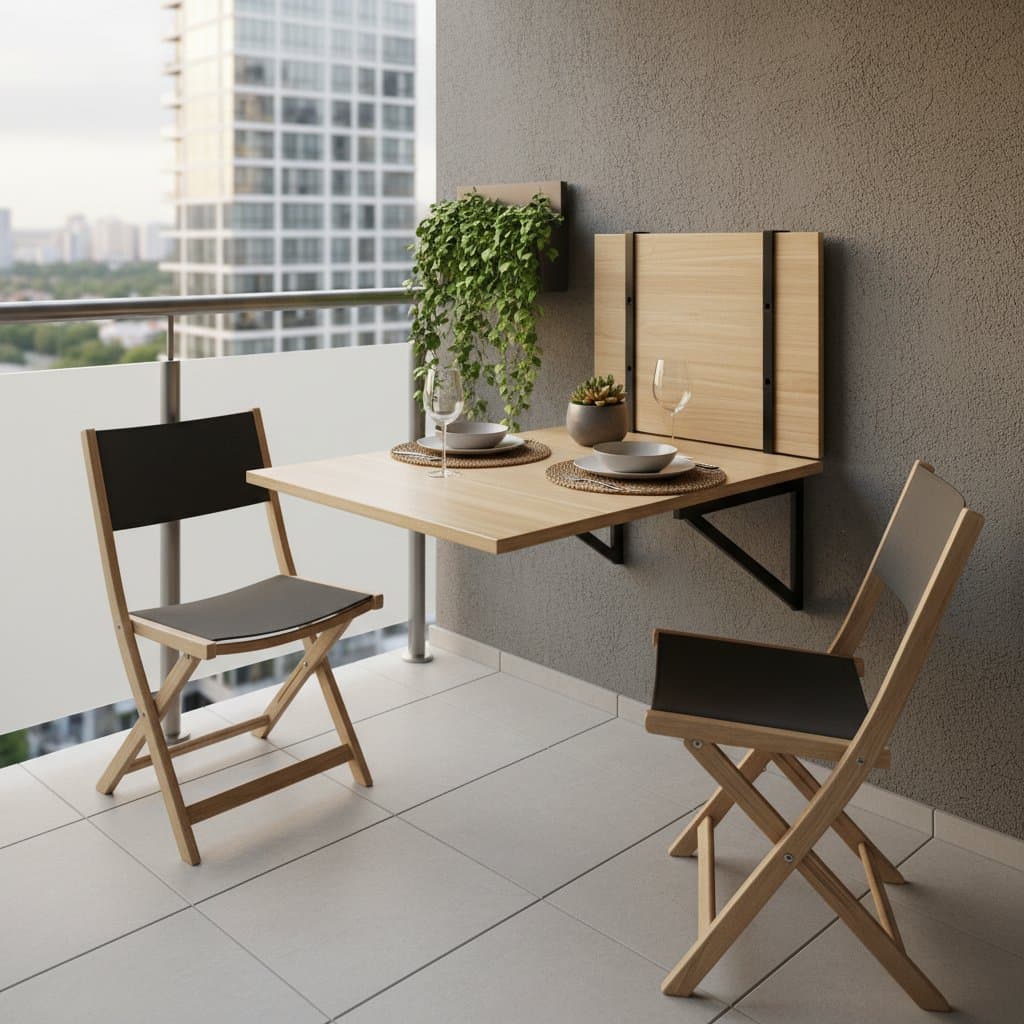
Fold-Down Murphy Tables: Transforming Tiny Balconies into Dining Havens
Compact balconies frequently serve as overlooked spaces in urban homes, yet they possess untapped value as inviting outdoor retreats. A fold-down Murphy table resolves common challenges by providing a reliable surface that extends when required and retracts seamlessly against the wall. This design choice optimizes limited areas, converting a slender balcony into a practical venue for al fresco dining or focused work sessions.
Readers gain a comprehensive understanding of balcony Murphy tables, including their role in space-efficient living, along with detailed guidance on safe installation and ongoing care.
Understanding Balcony Murphy Tables
A balcony Murphy table consists of a folding wall-mounted surface engineered for exterior environments. It conserves floor space, facilitates straightforward cleaning, and supports diverse functions like shared meals, herb cultivation, or mobile office setups. In high-density apartment settings, where square footage commands premium value, this table enables outdoor enjoyment free from the encumbrance of oversized furnishings.
Its primary advantage lies in resourcefulness. The extended tabletop typically spans 36 inches wide by 24 inches deep, while the folded profile measures under 4 inches in thickness. Certain configurations incorporate a fixed lower shelf for holding decorative items or lightweight planters, accessible even in the stowed state.
Essential Tools and Materials
Prepare the following items for a successful project:
- A Murphy table kit or robust wall brackets with a load capacity of 40 to 80 pounds
- A power drill equipped with appropriate bits for masonry or wooden surfaces
- A 6-foot level and precise measuring tape
- Screws paired with anchors compatible with your wall composition
- Protective eyewear and work gloves
- Outdoor-grade sealant or finish for any untreated wooden elements
Opt for prefabricated units certified for exterior durability, featuring powder-coated metal or moisture-resistant timber construction.
Installation Process
Step 1: Assess and Measure the Area
Evaluate the balcony's wall dimensions for width and available height. Ensure a minimum of 24 inches of open space ahead of the deployment zone to accommodate seating and unobstructed passage. Account for natural light patterns to position the table optimally.
Step 2: Position and Mark Locations
Align the collapsed table or mounting frame to the wall surface. Employ the level to verify horizontal accuracy. Pencil-mark the positions for drilling to guide subsequent actions precisely.
Step 3: Prepare the Wall with Drilling and Anchors
Bore holes to the recommended depth based on anchor specifications. Embed the anchors level with the wall face. Don safety glasses to shield against debris generated during this phase.
Step 4: Secure the Support Structure
Fasten the primary frame or brackets in place. Secure screws with moderate torque to prevent anchor damage. Verify initial stability by applying gentle pressure prior to attaching the table leaf.
Step 5: Install the Folding Surface
Connect the hinged tabletop to the frame assembly. Test the folding action for fluid operation and confirm secure locking in the horizontal position without any instability.
Step 6: Apply Protective Finishes
For wooden surfaces, coat with a transparent exterior sealant to guard against environmental exposure. Allow full curing time before initial utilization to avoid moisture-related issues.
Key Safety Considerations
Adhere strictly to the manufacturer's specified weight threshold to maintain structural integrity. Refrain from loading the table with substantial items such as large pots or cooking appliances. For concrete or masonry walls, select heavy-duty anchors designed for exterior weight-bearing applications.
Conduct a thorough check of the locking system before supporting consumables or equipment. Periodically inspect mounting points for signs of wear, especially after exposure to harsh weather.
Common Issues and Solutions
Should the table exhibit tilting, revisit the leveling during marking and confirm anchor insertion depths. Inconsistent folding often stems from loosened fasteners; retighten as necessary. Creaking sounds indicate hinge friction, which responds well to a light application of silicone-based lubricant.
On aging or irregular walls, instability may require supplementary bracing beneath the tabletop. Consult product documentation for model-specific adjustments to enhance reliability.
Upkeep and Seasonal Care
Clean the surface each week using a solution of mild detergent and water, followed by thorough drying to inhibit corrosion or mold growth. During periods of heavy precipitation or low temperatures, keep the table retracted to minimize exposure. Wooden variants benefit from resealing biannually, while metal components demand routine rust inspections and spot refinishing.
Complement the setup by storing stackable chairs inside or utilizing vertical hooks for suspension. Maintain a 4-inch gap behind the folded unit to promote air circulation and prevent condensation buildup.
Cost and Time Investment
Expect to invest between $80 and $250 in a durable balcony Murphy table kit, varying by material quality and size. Novice installers typically complete the assembly in one to two hours, assuming familiarity with basic hardware tools.
Professional Assistance Indicators
Engage a qualified contractor if the balcony wall displays fissures, unstable sections, or if rental agreements necessitate verification of modifications. Experts ensure compliance with load standards and select anchors suited to challenging surfaces like stucco or reinforced concrete.
Implementing Your Balcony Upgrade
Begin by surveying the wall for an ideal location balancing sunlight and shelter. Select a model with weatherproof components and a compact folded profile under 4 inches. Assemble tools, allocate time for installation, and perform a stability test ahead of your debut outdoor gathering.