
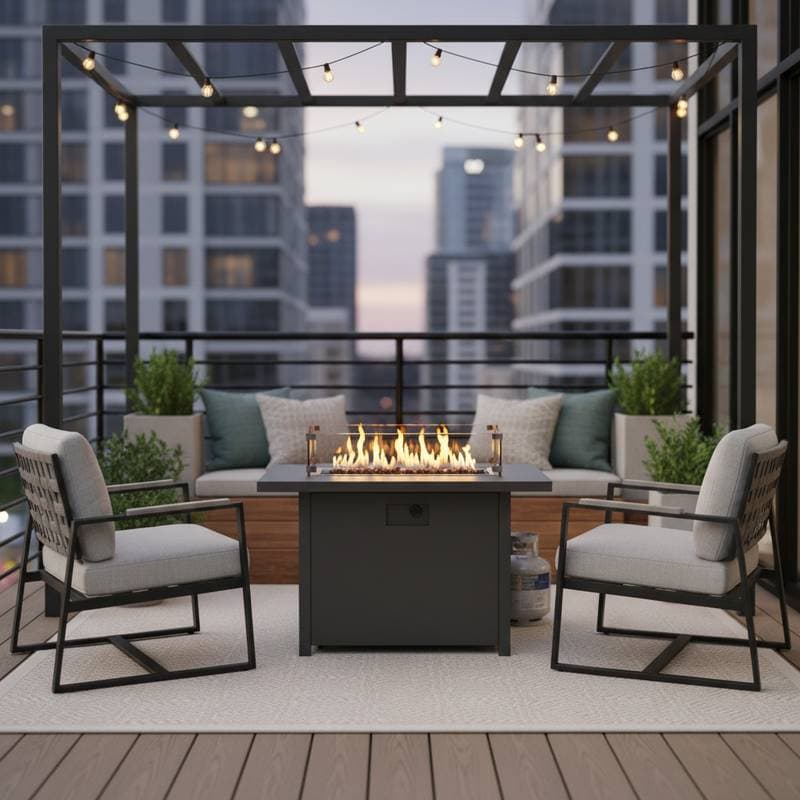
Balcony Fire Tables: Compact Warmth for Urban Spaces
Small outdoor areas deserve thoughtful enhancements. As temperatures drop, a balcony fire table transforms a modest space into a welcoming spot. These units deliver heat, illumination, and ambiance while occupying minimal room. This guide equips readers with knowledge on selecting, installing, and maintaining a fire table for safe, effective use.
Readers gain insights into the design and function of these tables, key selection criteria, and year-round care strategies.
Overview
A balcony fire table serves as a multifunctional heating solution, integrating a stable surface with a contained flame. Models operate on propane, natural gas, or ethanol gel fuel. Compact dimensions ensure compatibility with confined urban balconies, allowing enjoyment of fire without the need for expansive fire pits.
The primary advantage lies in targeted comfort. These tables emit gentle light and radiant heat effective within a three- to five-foot radius. Typical output ranges from 30,000 to 50,000 BTUs, sufficient to heat areas up to 100 square feet. Enclosed flames enhance safety compared to open wood-burning options and comply with restrictions in many residential settings.
Tools and Materials
Setup requires minimal equipment, though specific items promote safety and efficiency.
- Fire table unit, ideally under 30 inches in width for balcony compatibility
- Fuel source, such as a 20-pound propane tank or natural gas adapter
- Fire glass or ceramic media to distribute flames evenly
- Heat-resistant mat for surfaces like wood or composite decking
- Weatherproof cover for protection against elements
- Non-flammable gloves for handling during assembly and cleaning
Position an ABC-rated fire extinguisher within easy reach, but shielded from direct heat exposure.
Steps
1. Measure Your Space
Begin by using a tape measure to determine available clear space on the balcony. Account for at least two feet of clearance around all sides of the table. For covered balconies, verify a minimum ceiling height of seven feet above the flame area to allow proper ventilation.
2. Choose Your Fuel
Evaluate options based on lifestyle and infrastructure.
- Propane offers portability and ease of replacement, ideal for renters or temporary setups.
- Natural gas suits fixed installations connected to existing lines, providing continuous supply.
- Ethanol burns cleanly without external tanks, though it generates lower heat levels.
Review building regulations prior to purchase, as some prohibit open flames or propane storage.
3. Prepare the Surface
Install a heat-resistant mat beneath the table if the balcony floor consists of wood, plastic, or unsealed concrete. Extend the mat at least six inches beyond the unit's footprint to shield surrounding areas from heat.
4. Connect the Fuel Source
Adhere strictly to the manufacturer's guidelines for connections. Test for leaks by applying a soapy water solution to fittings; bubbles indicate a need for tightening or replacement. Refrain from igniting until all potential leaks receive resolution.
5. Ignite the Flame
Employ the unit's push-button igniter for most models. Start with a low flame setting for the initial minutes to allow even warming of components. Gradually increase intensity once the flame achieves stability.
6. Arrange Surroundings and Ensure Safety
Maintain a 12-inch buffer between the flame and nearby furniture or railings. Select non-combustible materials, such as metal or tempered glass, for adjacent decor. Position no hanging fabrics, plants, or flammable items directly overhead.
Safety Tips
Supervise the flame at all times during operation. Position children and pets no closer than three feet from the unit. Store propane tanks exclusively outdoors, never in enclosed indoor areas.
In the event of a gas odor, immediately shut off the supply valve, relocate the tank to a well-ventilated outdoor space, and allow airing before any relighting attempt. Perform monthly cleaning of burner ports to avoid blockages. Engage a licensed gas professional for permanent line installations or significant repairs.
Troubleshooting
For a weak flame, verify the gas valve remains fully open and clean the burner ports thoroughly. With propane models, confirm sufficient tank levels.
Soot accumulation often signals improper air-fuel mixture; clean the burner and adjust the air shutter if the design permits.
Ignition failure may stem from a depleted battery in the igniter; replace it or use the manual lighting method outlined in the manual.
To address uneven heating, redistribute fire glass or media to ensure uniform coverage over the burner.
Maintenance
After each session, wipe the table surface with a soft, damp cloth to remove residue. Monthly inspections should focus on fittings for signs of corrosion or wear. Position fuel tanks upright, shielded from direct sunlight.
Clean fire glass using mild soap and warm water whenever discoloration appears. In regions prone to wind, install a glass wind guard to stabilize the flame and minimize soot production.
Storage
At season's end, disconnect the fuel supply and apply a fitted cover. Store propane tanks on level outdoor surfaces. Opt for collapsible or tabletop designs if indoor storage proves necessary, using a sealed, weatherproof container.
Secure covers snugly while incorporating ventilation to prevent moisture buildup, which can lead to rust on metal components. Place silica gel packets beneath the cover to absorb excess humidity.
Budget and Time Considerations
Entry-level propane models range from 150 to 400 dollars. Advanced natural gas versions may exceed 700 dollars. Budget an additional 30 dollars for a standard propane refill.
Portable setups typically require 30 to 45 minutes for assembly. Professional installation of gas lines demands several hours.
Runtime varies by setting; a 20-pound propane tank sustains medium heat for eight to 10 hours.
Seasonal Reminders
In spring, examine hoses and seals for integrity before resuming use. During summer, operate at reduced levels on warmer evenings.
Fall maintenance includes burner port cleaning and rust checks. For winter, apply protective coverings to guard against snow and ice accumulation.
Regular upkeep prevents expensive repairs and ensures readiness for subsequent seasons.
When to Call a Professional
Consult a certified gas technician for natural gas connections or persistent gas odors post-installation. Experts perform pressure tests and verify ventilation compliance.
Address electrical issues in ignition systems through qualified service. If balcony constraints limit airflow or clearance, seek approval from a building inspector prior to installation.
Extending Your Outdoor Season
A well-chosen balcony fire table integrates seamlessly into urban routines, providing reliable warmth and aesthetic appeal. Prioritize precise measurements and appropriate fuel to maximize benefits.
Incorporate frequent, brief uses to foster daily relaxation. Through diligent maintenance, this addition prolongs enjoyable outdoor time, fostering moments of tranquility amid city life.
- Measure precisely and maintain clearances.
- Match fuel to your setup needs.
- Integrate into regular routines for sustained value.