
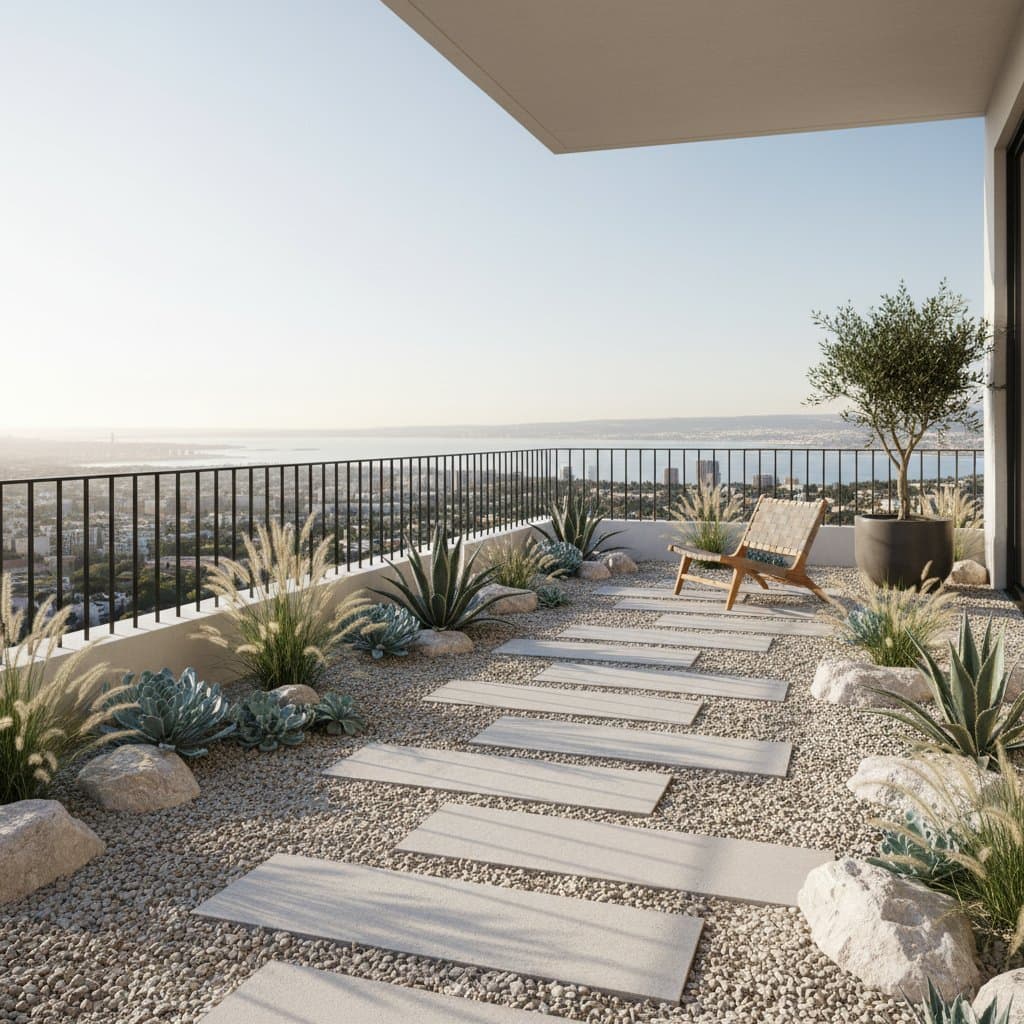
Step 6: Initial Watering
Provide one thorough watering to all elements. This action settles the underlying soil and rinses away any dust accumulated on the gravel surface. Thereafter, monitor the plants closely and water solely when visible signs of stress appear, such as wilting leaves, which typically occurs every two to three weeks during warmer months.
Step 7: Final Cleanup
Remove any displaced gravel from the balcony floor using a soft broom. Store any remaining gravel in a sealed container, such as a plastic bucket with a tight lid, to facilitate easy access for future minor adjustments.
Essential Safety Considerations
Gravel gardens present minimal hazards, yet balcony installations require careful evaluation to ensure structural integrity.
- Load Assessment: Gravel gains significant weight when saturated. Calculate that one square foot (0.09 square meters) may support up to 20 pounds (9 kilograms). Consult your building's documentation or a professional to verify the balcony's maximum load capacity prior to full implementation.
- Proper Drainage: Verify that all trays and planters feature unobstructed drainage holes. Accumulated water can compromise balcony flooring or supporting materials over time.
- Wind Mitigation: On elevated balconies, opt for denser gravel varieties or secure taller plants by surrounding their bases with small anchoring stones to counteract gusts.
Common Issues and Solutions
Low-maintenance designs like gravel gardens occasionally demand minor interventions to maintain optimal performance.
Pale or Yellowing Plants: This symptom often indicates an overly nutrient-dense or moisture-retaining soil mixture. Incorporate additional coarse sand into the blend and reduce watering intervals to allow the soil to dry out between applications.
Emerging Weeds: Extract weeds manually while the gravel layer remains slightly moist for easier removal. Follow with a gentle sweep across the surface to eliminate seeds and prevent further germination.
Shifting Gravel: Redistribute displaced stones by brushing them back into position. In areas prone to strong winds, integrate a scattering of larger pebbles to enhance overall stability.
Reduced Drainage Flow: Gently elevate the edge of the protective liner to dislodge any accumulated debris. Perform a seasonal rinse of the gravel layer using a watering can fitted with a fine rose attachment to clear fine particles.
Cost Breakdown and Timeline
Assembling a modest gravel garden on a balcony requires only an afternoon of focused effort. A single individual can complete the entire process in three to four hours, depending on the scale.
The primary investments involve sourcing gravel and suitable containers. To provide a clearer picture, consider these estimated expenses for a basic setup covering 10 to 15 square feet:
- Gravel: $10 to $20 per 50-pound bag (one to two bags suffice for small spaces)
- Containers or Trays: $15 to $40 per unit (select durable, weather-resistant options like fiberglass or recycled plastic)
- Drought-Tolerant Plants: $5 to $12 per specimen (focus on succulents, sedums, or lavender for reliability)
- Geotextile Fabric: $10 per roll (essential for weed suppression and soil separation)
Overall, expect to spend between $70 and $150 for a fully equipped arrangement. Post-installation, annual upkeep costs approach zero, with occasional plant replacements or gravel replenishment every two to three years adding minimal expense. Factor in tools like a trowel or gloves if not already owned, but these represent one-time purchases.
Ongoing Care Routine
Gravel gardens demand far less attention than traditional soil-based balcony plantings, allowing more time for enjoyment.
Monthly Maintenance:
- Sweep away fallen leaves, dust, or urban debris from the gravel surface using a soft-bristled brush.
- Inspect and reposition any stones that have migrated near drainage outlets.
- Trim away spent stems or faded blooms with clean shears to promote neat appearance.
Seasonal Upkeep:
- Replenish gravel in areas where it has compacted or thinned, applying a quarter-inch layer as needed.
- Prune perennial herbs lightly to maintain compact growth and encourage fresh foliage.
- If plant vigor declines, introduce a scant layer of compost beneath the gravel perimeter to bolster nutrient levels without over-fertilizing.
In general, avoid supplemental fertilizers, as the gradual decomposition of organic matter within the soil mix provides sufficient nourishment for drought-adapted species.
Practical Storage Solutions
Reserve surplus gravel in a lidded bucket positioned conveniently near the balcony access point, minimizing transport through indoor areas. Stack unused nursery pots in a compact corner and designate one shallow tray for propagating cuttings or holding spare plants.
Affix weather-resistant labels to key specimens, noting their variety and care preferences to track performers over time. In regions with intense rainfall, elevate containers slightly using sturdy bricks or pot feet; this setup enhances air circulation and prevents moisture stagnation beneath the liner, reducing rot risks.
Indicators for Professional Assistance
While gravel gardens suit most DIY enthusiasts, certain scenarios warrant expert input to avoid complications.
Seek a professional if:
- Uncertainty persists regarding the balcony's weight-bearing capacity.
- The balcony surface exhibits a noticeable slope directing water toward structural walls.
- Evidence of moisture infiltration appears in adjacent masonry or interior flooring.
Engage a structural engineer or certified contractor for a swift assessment of load limits and drainage efficacy. Such consultations typically last under one hour and incur fees below $150, safeguarding against costly repairs down the line.
Building Your Gravel Garden
Establishing a gravel garden elevates a standard balcony into a serene, effortless extension of your living space. Begin modestly to build confidence in the system's benefits.
Observe how the gravel moderates hydration levels and contains debris effectively. As familiarity grows, scale up to encompass additional areas for broader coverage.
To launch your project:
- Measure the available balcony dimensions and review official load specifications from your building management.
- Acquire a single bag of pea gravel and one resilient, drought-tolerant plant, such as a sedum variety, to prototype the arrangement.
- Select a geotextile fabric sheet and a shallow tray to assemble a trial section, testing integration with your space.