
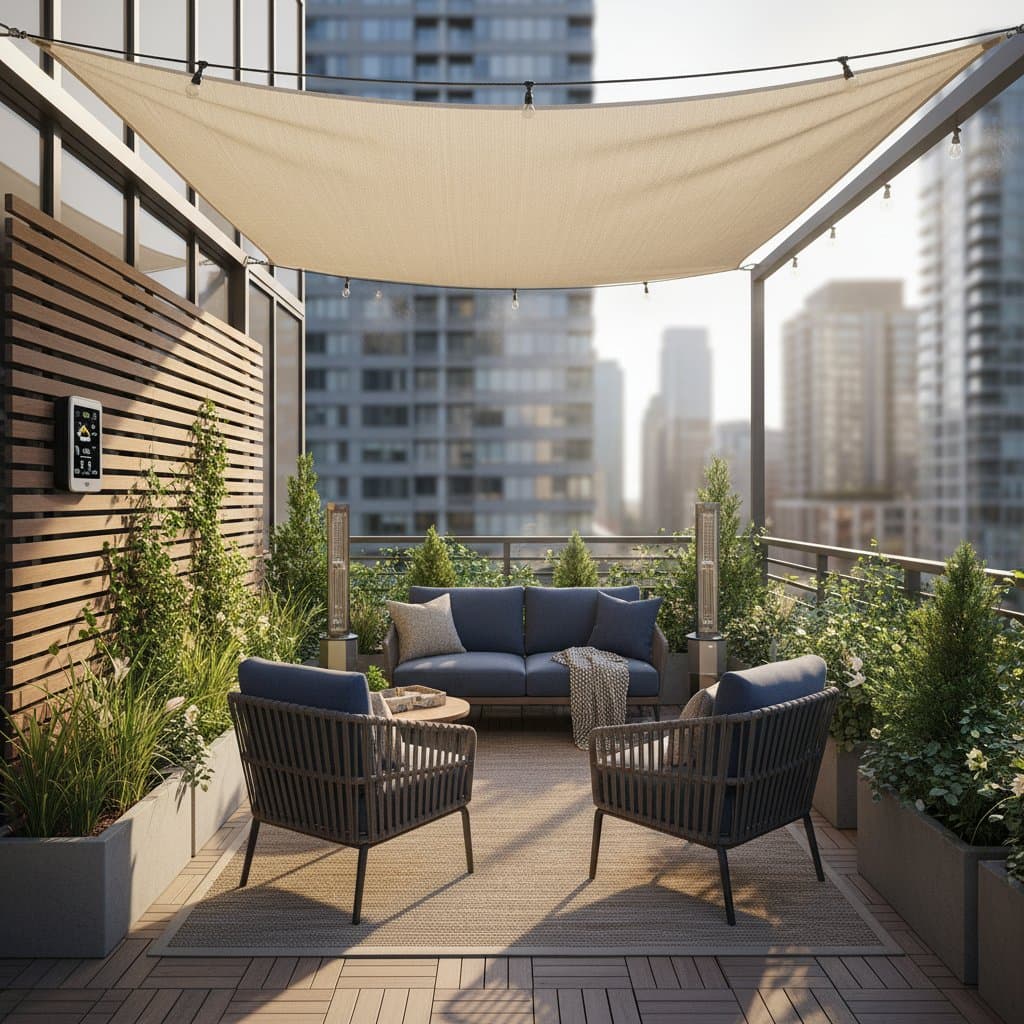
Balcony Microclimates: Enjoy Outdoors All Year
Balconies often experience extreme variations, from intense summer heat to biting winter chills, with wind patterns that shift unpredictably. These conditions define a microclimate, the distinct environmental profile of a localized outdoor area. The advantage lies in the ability to influence this microclimate effectively.
The objective remains straightforward: assess the balcony's environmental dynamics and implement adjustments to ensure comfortable outdoor use across seasons. Proceed by evaluating light exposure, mitigating air currents, incorporating thermal elements, and regulating shade systematically.
Overview
A microclimate encompasses the interplay of temperature, sunlight, wind, and humidity within a confined space. Surrounding structures such as walls, roofs, and adjacent vegetation shape these factors. For balconies, orientation and enclosing materials generate specific atmospheric traits.
Grasping these elements enables informed design choices. Such knowledge safeguards plants from environmental stress, prolongs personal comfort, and minimizes reliance on supplemental heating or cooling devices.
An optimized balcony microclimate extends viable outdoor time by multiple months. It fosters robust plant growth and diminishes deterioration of furnishings.
Tools and Materials
Basic equipment suffices for initial assessments and modifications. Assemble the following:
- Thermometer and hygrometer for tracking temperature and humidity levels
- Compass for determining directional orientation
- Tape measure to gauge spatial dimensions and elevations
- Wind sensor or fabric strip to detect air movement
- Shade cloth or adjustable screen for solar management
- Durable outdoor rug or insulating mat for floor protection
- Planters or lattice structures to redirect or buffer airflow
- Weather-resistant heater or fan for temperature regulation
- Soil moisture probe for plant care applications
These items facilitate controlled testing and measurable outcomes.
Steps
Step 1: Observe the Space
Dedicate several days to recording sunlight progression and wind behavior. Measure temperatures during morning, noon, and evening intervals. Document shadow positions and their duration.
South-facing balconies capture abundant direct sunlight. East orientations benefit from soft morning illumination. West exposures intensify with afternoon rays. North alignments provide consistent coolness and reduced brightness.
Compile observations in a log. This documentation informs decisions on seating, planting, and protective placements.
Step 2: Control Sun and Shade
Initiate management with targeted shading solutions. Select shade cloth offering 30 to 70 percent blockage; lower percentages permit greater light penetration, while higher values deflect more heat.
Secure the cloth to railings or via tension rods. Maintain ventilation gaps to promote air circulation. For compact areas, opt for bamboo panels or deployable awnings.
To enhance warmth, incorporate reflective elements such as light-colored surfaces or metallic containers that redirect sunlight.
Verify all components meet fire resistance standards and remain firmly attached.
Step 3: Manage Wind
Airflow accelerates heat loss, with even 5 to 10 miles per hour reducing felt temperature noticeably. Deploy elevated planters, lattice frameworks, or freestanding dividers reaching 3 to 4 feet to temper currents.
Position these in staggered configurations rather than complete barriers, allowing controlled passage of breeze.
On angular balconies, fit transparent acrylic sheets to deflect winds without obstructing sightlines. Apply silicone sealant along borders to eliminate vibrations.
Step 4: Add Warmth and Cooling
During cooler periods, employ portable radiant heaters equipped with automatic shutoff for stability. Position units at least 3 feet from combustible items and vertical surfaces.
For hotter conditions, install oscillating clip-on fans to distribute air evenly and prevent stagnant warmth.
Layer a half-inch-thick weatherproof rug to shield feet and curb thermal escape from slab floors. Choose options with nonslip rubber undersides for stability.
Step 5: Balance Humidity and Moisture
City balconies tend to desiccate rapidly compared to ground-level plots. Utilize pots featuring reservoir bases to conserve water. Position vegetation in clusters to elevate ambient moisture by 5 to 10 percent.
Following precipitation, introduce circulation via fans or adjustable vents if levels remain elevated. Monitor for moisture accumulation in recesses, which may promote fungal growth; maintain cleanliness and dryness.
Safety Tips
- Employ exclusively outdoor-rated electrical extensions and outlets.
- Maintain separation between heat sources and ignitable substances.
- Anchor shading and dividing elements to withstand gusts reaching 20 miles per hour.
- Review condominium or building regulations prior to installing permanent attachments or substantial hardware.
Troubleshooting
Problem: Enclosed or excessively warm atmosphere.
Solution: Enhance ventilation using a fan or segmented screening.
Why it works: Directed airflow dissipates accumulated heat and equalizes conditions.
Next step: Install a monitoring thermometer to evaluate improvements.
Problem: Rapid plant dehydration.
Solution: Group specimens and adopt automated irrigation systems.
Why it works: Proximity conserves collective hydration and slows vapor loss.
Next step: Inspect root zones biweekly until patterns stabilize.
Problem: Mold development on furnishings.
Solution: Clean with diluted detergent, followed by water-repellent coating.
Why it works: Protective barriers repel liquids and inhibit microbial adhesion.
Next step: Relocate removable padding to interior storage during idle periods.
Maintenance and Storage
Conduct seasonal evaluations to secure connections, launder textiles, and renew protective finishes on timber. Clear sensors of particulates to preserve precision.
House thermal and airflow devices in moisture-free enclosures off-season. Organize wiring and protective sheaths for efficient seasonal redeployment.
For greenery, prune wilted foliage and reposition containers for uniform exposure. Empty saucers post-rainfall to deter insect proliferation.
Budget and Time
Transform a modest balcony environment over a single weekend.
- Low budget (under $100): Incorporate fabric barriers, repurposed vessels, and basic matting.
- Mid budget ($100 to $300): Integrate heating units, circulation devices, and transparent shields.
- Higher budget (over $300): Deploy automated coverings or tailored airflow deflectors.
Ongoing expenses remain minimal through routine upkeep and proper warehousing.
Seasonal Reminders
- Spring: Replenish growing medium, verify runoff systems, and restore corroded surfaces.
- Summer: Amplify shading and irrigate vegetation at dawn.
- Fall: Clear accumulations, fasten divisions, and verify heating functionality.
- Winter: Encase seating, shelter textiles, and limit hydration.
When to Call a Pro
Engage a certified electrician for fixed illumination or heating installations. Inquire regarding amperage capacities and weatherproof circuitry safeguards.
Key Takeaways
- Balconies possess measurable microclimates amenable to customization.
- Solar exposure, air dynamics, and surface choices dictate usability.
- Modest interventions, such as 3-foot buffers or 50 percent shading, yield significant enhancements.
- Adhering to safety protocols and routine upkeep sustains investments.
Your Next Steps
- Allocate a full day to charting illumination and breeze trajectories.
- Introduce a single adjustment this week, like shading fabric or insulating overlay.
- Document effective strategies to refine applications seasonally.