
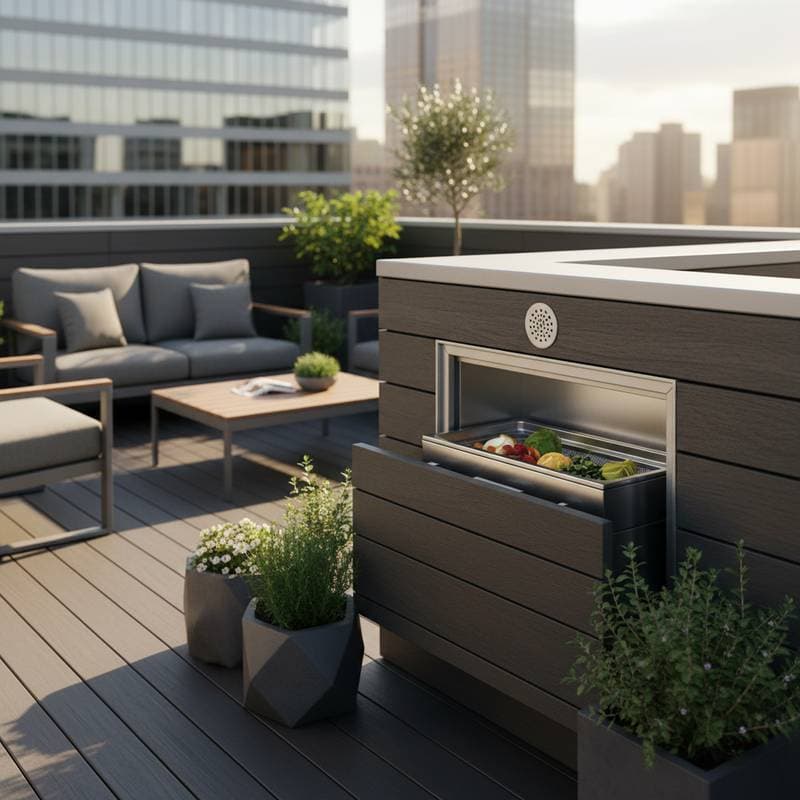
Introduction to Hidden Compost Bins for Urban Decks
Urban dwellers often face the challenge of limited space while striving for sustainable living practices. Integrating hidden compost bins into deck railings offers a clever solution that conceals waste management without disrupting the clean lines of your outdoor area. These micro compost units capture kitchen scraps discreetly, promote environmental responsibility, and preserve the visual appeal of city patios.
This guide provides a step-by-step process to design and install a custom hidden compartment. Suitable for wood or composite railings, the setup accommodates small bins that handle daily organic waste. Benefits include reduced trips to larger compost sites, minimized odors through smart ventilation, and enhanced deck longevity with proper sealing techniques.
Before starting, assess your railing's material and load-bearing capacity. Ensure compliance with local building codes, especially for modifications to structural elements. Gather tools such as a drill, saw, measuring tape, and safety gear.
Materials Needed
Select durable, weather-resistant materials to withstand outdoor conditions. Essential items include:
- Micro compost bin (capacity of 1-2 gallons, with optional smart lid for odor control)
- Railing material (cedar wood or composite boards for the compartment frame)
- Hinges, screws, and weatherstripping for secure assembly
- Vent screens, carbon filters, and sealant for maintenance features
- Rubber pads and stainless steel hardware to prevent corrosion
Budget for high-quality components to avoid frequent replacements. A basic kit supports DIY efforts, while advanced options incorporate solar-powered fans for enhanced airflow.
Step 1: Plan and Measure the Space
Begin by measuring the railing section where the bin will reside. Identify a spot at least 12 inches wide and 18 inches deep to accommodate the micro bin without obstructing walkway traffic. Sketch a simple diagram noting hinge placement and vent locations.
Consider access points: position the compartment on the inner railing side for easy reach from the deck. Account for the bin's dimensions and allow 1 inch of clearance for smooth insertion. Verify that the modification does not weaken the railing's integrity.
Step 2: Select and Prepare Materials
Choose a micro bin with a secure lid to contain scraps like vegetable peels and coffee grounds. Opt for bins with built-in charcoal filters if odors concern you. For the compartment, cut railing boards to form a rectangular enclosure that matches the existing railing height.
Prepare the wood by sanding rough edges and applying a preliminary coat of primer. If using composite materials, ensure cuts are precise to maintain structural alignment. Test-fit components on a workbench to confirm compatibility.
Step 3: Cut and Assemble the Compartment
Use a jigsaw to create an opening in the railing board for the bin compartment. Reinforce the frame with additional bracing to support the added weight of filled compost. Attach hinges to the top edge of the opening, ensuring the lid aligns flush with the railing surface when closed.
Secure the frame using corrosion-resistant screws. Install a latch or magnetic closure for easy access. Double-check that the assembly integrates seamlessly with the deck's design, maintaining uniform spacing between balusters.
Step 4: Add Ventilation
Drill two small vent holes in the hidden side of the compartment. Install vent screens to block insects. If using a smart lid with a small fan, place the vent near the power source or solar panel.
Proper ventilation prevents moisture accumulation and promotes aerobic decomposition. Position vents low for incoming air and high for outflow to create natural circulation. Clean screens monthly to sustain efficiency.
Step 5: Insert and Secure the Bin
Slide the micro bin into the compartment. Apply small rubber pads beneath it to prevent vibration. Make sure the lid opens freely without hitting rail posts. Add a thin weatherstrip if you require a tighter seal.
Test the mechanism by filling the bin partially and simulating daily use. Adjust padding as needed to eliminate rattles from wind or movement. This step ensures reliable operation over time.
Step 6: Seal and Finish
Brush on waterproof sealant or clear deck finish around all cut edges. This extends the life of the wood and prevents moisture damage. If you used composite materials, wipe away dust and ensure all joints fit snugly.
Allow the sealant to cure for 24 hours before full exposure to elements. Reapply annually to protect against weathering. A polished finish enhances the railing's appearance while safeguarding functionality.
Troubleshooting Common Issues
Address potential challenges promptly to maintain system performance.
Problem: Odor or moisture buildup.
Solution: Check vent openings for clogs and add a carbon filter pad. Empty smaller bins every two or three days.
Why it works: Airflow and timely emptying reduce anaerobic decay that causes strong smells.
Problem: Hinged lid sticks or swells.
Solution: Sand the edges lightly and reapply sealant.
Why it works: Moisture causes swelling in untreated wood. Smoothing and sealing restore clearance.
Problem: Pests or flies appear around vents.
Solution: Replace vent screens with finer mesh and ensure seals close tightly.
Why it works: Small gaps invite insects, and tight seals block entry.
Problem: Bin shifts during use.
Solution: Add adjustable brackets inside the compartment.
Why it works: Secure mounting prevents misalignment and spillage.
Budget and Time Considerations
A do-it-yourself version costs between $75 and $200 depending on material quality and whether you purchase a smart bin. Composite sleeves and stainless hardware last longer but cost more upfront.
Expect about 2 to 4 hours of work for planning, cutting, sealing, and fitting. Smart lids or solar vents add one more hour for wiring or panel setup. A professional carpenter might charge $250 to $400 for a custom-built insert that meets railing codes.
Factor in ongoing costs for filters and sealants, typically under $20 per year. Time savings come from reduced waste hauling, making the investment worthwhile for frequent composters.
When to Consult a Professional
Call a professional carpenter or deck builder if the railing supports structural loads or built-in lighting. Seek expert help if you feel unsure where fasteners or wiring run inside the frame. Consider professionals for a fully integrated smart compost unit with electrical or solar wiring.
Request a quote that lists materials, fasteners, and weatherproofing methods. Confirm that any electrical components for smart bins are rated for outdoor use. Professionals ensure safety and code compliance, particularly in high-rise or rental properties.
Implementing Your Hidden Compost System
Start by measuring the rail space and selecting composite or cedar for durability. Follow the assembly steps to add a hinged top and vented compartment. Monitor fill levels and refine your emptying routine based on household waste volume.
With this setup, your deck remains pristine for gatherings, while the hidden bin processes organics efficiently. Over time, the enriched compost supports balcony gardens, closing the loop on sustainable urban living.