
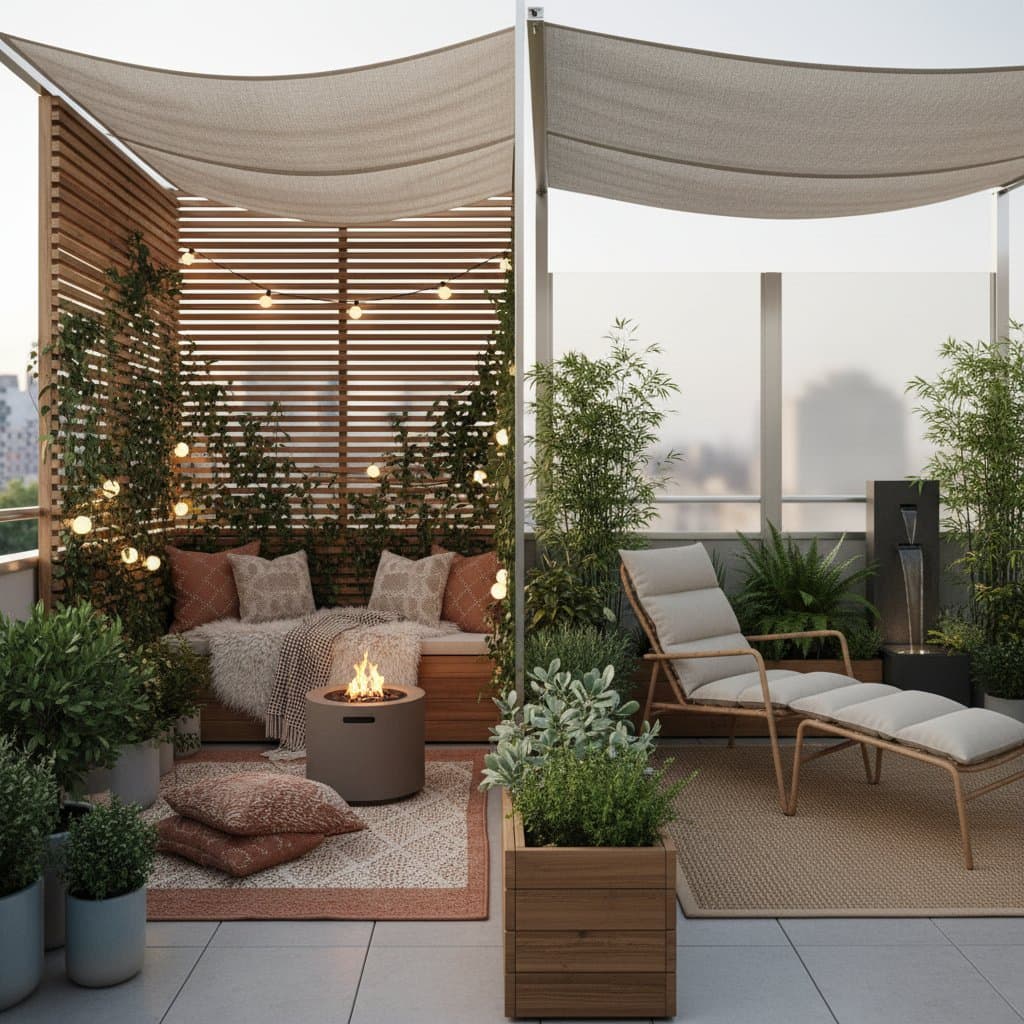
The Microclimate Hack for Year-Round Balconies
Balconies frequently encounter unpredictable weather conditions that limit their usability. One day, the space invites relaxation with morning coffee; the next, wind or cold renders it inhospitable. The solution lies in creating a microclimate, a controlled environment shaped by intentional design choices. This approach allows transformation of the balcony into a versatile outdoor area within a single weekend, ensuring enjoyment across all seasons.
Understanding Balcony Microclimates
A microclimate refers to a localized area where temperature, humidity, and airflow differ from the surrounding environment. On a balcony, elements such as barriers, vegetation, and reflective surfaces influence these factors. The primary objectives include shielding against strong winds, moderating intense sunlight, and retaining ambient warmth. Such modifications create distinct zones that maintain comfort during summer heat and winter chill alike.
Consider how urban balconies face unique challenges, like reflected heat from nearby buildings or drafts funneled through narrow streets. By addressing these specifics, the design promotes not only physical comfort but also psychological ease, encouraging longer stays outdoors. This foundational concept underpins the entire project, guiding material selection and placement.
Essential Tools and Materials
This project requires minimal investment and no structural alterations. Focus on versatile, durable items that integrate seamlessly with existing balcony features. The following list provides a starting point:
- Wind screens or bamboo fencing panels, measuring at least 4 feet (1.2 meters) in height to effectively deflect gusts.
- Outdoor rugs made from quick-drying materials like woven polypropylene, sized to cover primary seating areas.
- Large planters filled with evergreen shrubs or tall grasses, serving as living barriers.
- UV-resistant fabric panels for creating shade sails or privacy screens.
- Energy-efficient LED string lights or solar-powered lanterns to enhance evening ambiance.
- Portable electric heater or infrared heat lamp, selected for safe outdoor use with automatic shutoff features.
- Digital thermometer with humidity readout to monitor and fine-tune the environment.
These components allow experimentation without commitment. For instance, bamboo panels offer an affordable, natural aesthetic while providing robust wind protection. Prioritize items certified for outdoor durability to withstand rain and UV exposure.
Step-by-Step Implementation
Approach the setup methodically to maximize efficiency over the weekend. Allocate Saturday for observation and initial placement, reserving Sunday for refinements and testing.
-
Assess Wind and Sun Patterns. Dedicate the first hour to observing the balcony's exposure. Note prevailing wind directions by feeling breezes at various heights and tracking sun paths with a simple shadow test. Use painter's tape to mark high-impact zones on railings or floors.
-
Establish Wind Barriers. Position screens or planters along the most exposed edges. For optimal performance, ensure panels extend from railing height downward, leaving a 2-inch (5-centimeter) gap at the base for ventilation. This prevents moisture buildup while blocking up to 70 percent of wind speed.
-
Insulate the Floor Surface. Unroll outdoor rugs to cover concrete or wood decking, focusing on high-traffic areas. Opt for rugs with rubber backing for stability; layer thinner mats under thicker ones for added thermal resistance in cooler months.
-
Install Flexible Shade Elements. Secure fabric panels using tension clips or grommets attached to existing structures. Angle them to diffuse midday sun without darkening the space entirely. Test for tautness to avoid flapping, which can create noise and instability.
-
Incorporate Heating Solutions. Place the heater centrally near intended seating, maintaining a minimum 3-foot (0.9-meter) clearance from combustible materials. Choose models with tip-over protection and use grounded outlets to ensure safety.
-
Layer Ambient Lighting. Drape string lights along perimeters or suspend lanterns from overhead hooks at eye level. Select warm-toned bulbs (around 2700K) to foster a cozy atmosphere; solar options reduce energy needs and eliminate wiring hassles.
-
Evaluate and Refine. Spend time in the space at morning, afternoon, and evening intervals. Adjust elements based on thermometer readings, aiming for temperatures between 65 and 75 degrees Fahrenheit (18 to 24 degrees Celsius). Relocate barriers as needed to balance airflow.
This sequence builds progressively, allowing immediate feedback at each stage.
Essential Safety Considerations
Safety forms the cornerstone of any balcony modification. Heat sources demand particular vigilance; position them away from fabrics and foliage, and never operate unattended. Electrical setups require short, heavy-duty cords routed along walls, avoiding trip hazards.
Secure all panels and fabrics with weatherproof ties or weights to withstand gusts up to 30 miles per hour. For wet conditions, incorporate non-slip rug pads and ensure drainage paths remain unobstructed. Regularly inspect for wear, especially after storms, to maintain structural integrity.
Common Challenges and Solutions
Persistent chill often stems from incomplete sealing at ground level. Inspect for drafts by holding a tissue near corners; seal with weighted planters or foam edging if necessary. This simple fix can raise perceived warmth by several degrees.
Overly enclosed spaces may trap heat, leading to discomfort. Introduce vents by slightly elevating upper panel edges or using mesh inserts, which can reduce temperatures by up to 5 degrees Fahrenheit (3 degrees Celsius) while preserving privacy.
Mildew risks arise from damp rugs or poor drainage. Address by elevating rugs on risers and airing out components weekly. If issues persist, apply a mildew-resistant spray to fabrics and clean planters thoroughly.
Cost Breakdown and Timeline
Expect total expenses of $150 to $350 for a standard 100-square-foot balcony. Key investments include the heater ($50 to $100) and rug ($40 to $80), as they directly impact usability. Budget-friendly alternatives involve sourcing secondhand panels from local marketplaces or repurposing household pots as planters.
The project spans three to five hours of active work, plus observation time. Initial setup takes two hours; testing and tweaks add one to two more. This compact timeline suits busy schedules, with adjustments possible over subsequent days.
Ongoing Maintenance Practices
Preserve the microclimate through seasonal upkeep. Wipe down surfaces with mild soap quarterly, focusing on dust accumulation that hampers airflow. Prune plants to maintain height without overcrowding, and rotate them for even growth.
Store removable items like fabrics during extreme weather; inspect cords and fixtures annually for fraying. These routines, requiring under an hour per season, extend the setup's lifespan and efficiency.
Extending Comfort to Full Enjoyment
Once established, the microclimate invites personalization. Experiment with seating arrangements to define lounge or dining zones, or integrate water features for humidity control in dry climates. Track changes with the thermometer to quantify improvements, such as sustained temperatures during light rain.
This investment yields reliable outdoor access, turning fleeting moments into routine retreats. Begin small, observe results, and scale as confidence grows, ensuring the balcony evolves with your lifestyle.