
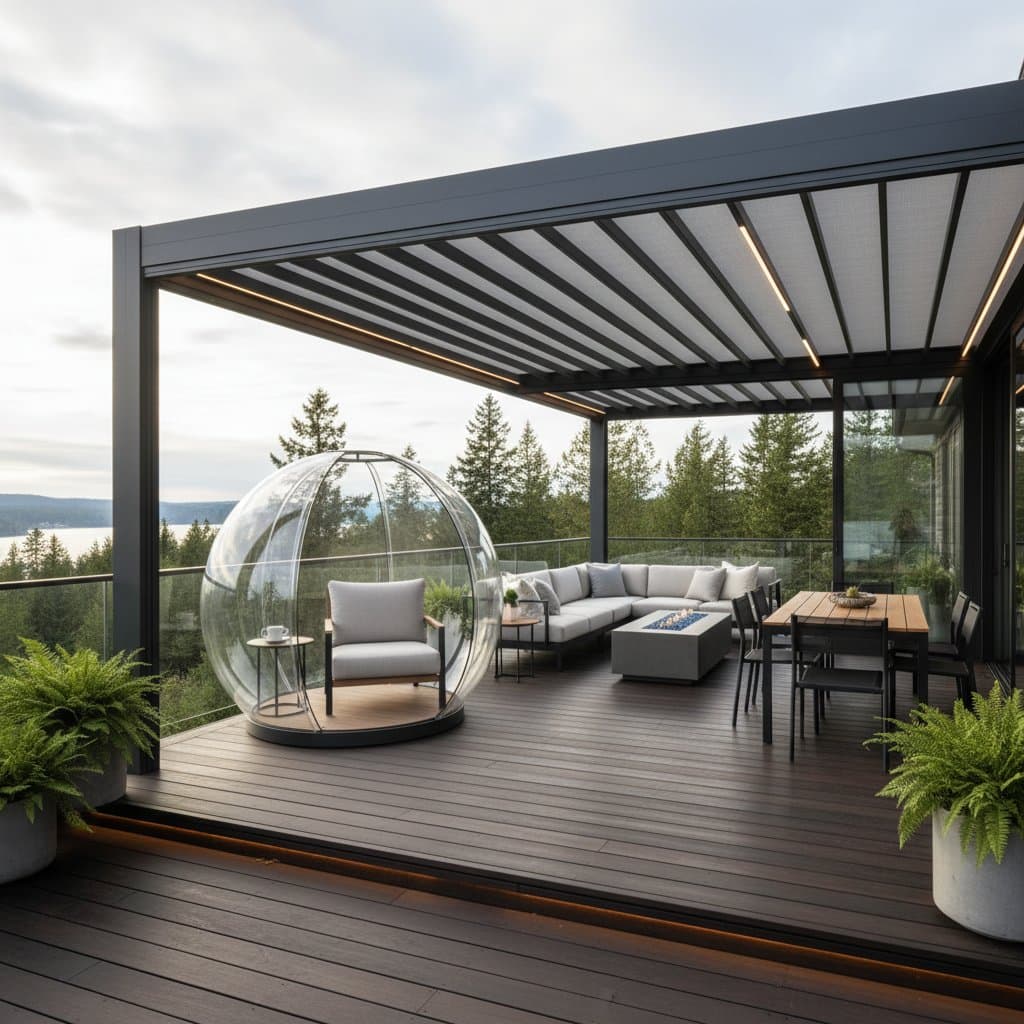
5. Finish With Side Protection
Enhance the enclosure by adding screens, sliding glass panels, or roll-down curtains to the sides. These elements effectively block wind and insects while preserving natural light and airflow. For comprehensive protection, opt for clear polycarbonate panels that repel rain yet allow sunlight to filter through, maintaining an open feel.
Apply outdoor-grade silicone sealant to all joints and seams. This step ensures a watertight barrier, preventing moisture from seeping into the structure over time. Inspect the installation site for any gaps and address them promptly to maximize longevity.
Safety Considerations
Before proceeding, verify that the deck's foundation can bear the additional weight from components like heavy pods or glass panels. Consult a structural engineer if uncertainty exists, as uneven loading can compromise stability.
Select stainless steel fasteners throughout the assembly to resist corrosion and avoid unsightly rust stains on surfaces. Position electrical cords elevated above potential water paths, using protective conduits where necessary.
Perform monthly tests on the retractable mechanisms. Listen for unusual grinding noises or observe for irregular movement, which signal the need for immediate adjustments or repairs. For heating options, select electric or infrared models over open-flame varieties to eliminate fire risks beneath canopies.
Install ground fault circuit interrupters on all outdoor electrical outlets. These devices provide essential protection against shocks in wet conditions. Additionally, secure any retractable elements during high winds to prevent sudden collapses or damage.
Common Troubleshooting Solutions
Leaking roof panels: Begin by tightening all fasteners and reapplying silicone sealant at every joint. Ensure the roof maintains a gentle slope of approximately one inch per foot, or 2.5 centimeters per 30 centimeters, to facilitate water runoff and avoid pooling.
Sagging canopy fabric: Detach the fabric carefully, then reseat it firmly along the track. Clear any accumulated debris from the rails and apply a light coat of silicone spray for smooth operation and to reduce friction.
Condensation buildup inside enclosures: Incorporate small vents positioned near the roofline to promote air circulation. In humid climates, a portable dehumidifier offers reliable control. During temperate conditions, leave side panels ajar slightly to allow moisture to escape naturally.
Noise from wind gusts: Fasten all cords and attachments securely, and confirm that side panels engage their locks fully. For fabric roofs, adjust tension evenly across the surface to minimize flapping and vibrations during breezy weather.
If issues persist, document the problem with photos and consult the manufacturer's guidelines. Routine inspections can prevent minor problems from escalating into costly overhauls.
Budgeting and Timeline Planning
Expenses depend on the project's scale, chosen materials, and features. A straightforward retractable pergola kit for a modest deck begins around 800 dollars, while advanced motorized versions with weather sensors climb to 5,000 dollars or more.
Living pods, which integrate walls and roofing, typically range from 6,000 to 15,000 dollars, influenced by options like integrated lighting or heating elements. Complete deck enclosures using glass or polycarbonate panels often start at 10,000 dollars, factoring in custom sizing and professional fabrication.
Allocate one weekend for installing a basic DIY pergola, assuming all tools and parts are on hand. More ambitious setups, such as pods or full enclosures, may require multiple weekends or skilled labor to complete safely.
When engaging a contractor, request a detailed written estimate covering materials, labor hours, and warranty terms. To manage costs, consider alternatives like waterproof canvas tarps in place of automated louvers, or existing outdoor curtains for temporary privacy screens.
Prioritize investments in robust structural anchors and compliant electrical wiring. These foundational elements ensure safety and extend the system's service life, justifying the expense over cheaper substitutes.
Ongoing Maintenance Practices
Preserve the weather-resistant qualities through annual cleaning routines and proactive inspections. These habits sustain appearance and functionality while averting premature wear.
Clean canopy fabrics using a solution of mild soap and water, applied with a soft brush. Allow complete drying before retracting to prevent mold growth in folded sections.
Examine metal frames annually for early rust signs. Sand affected areas lightly, then apply a fresh coat of outdoor enamel paint to restore protection.
Lubricate tracks, hinges, and other moving components twice yearly with a suitable spray. For wooden elements, reseal surfaces every two to three seasons using a high-quality marine-grade product.
During off-seasons, store removable items like cushions and textiles indoors in a dry location. This practice shields them from prolonged exposure and extends their usability.
Schedule a full system review each spring, checking for loose parts or fabric tears. Addressing these early maintains the deck's appeal and avoids unexpected disruptions.
Optimizing Storage in Outdoor Spaces
A clutter-free deck enhances usability and promotes better airflow. Integrate built-in storage benches to conceal cushions, tools, and accessories neatly.
House grilling equipment in weatherproof deck boxes with secure lids. Organize storage with labeled bins dedicated to specific purposes, such as dining essentials, gardening supplies, or recreational games, for effortless access.
Incorporate a slim wall-mounted shelf for lightweight items like potted plants or decorative lanterns, positioned to avoid obstructing pathways. Select durable materials such as resin wicker or powder-coated metal, which withstand moisture without deteriorating.
Design the layout to prioritize open areas for movement. This approach not only improves ventilation but also amplifies the sense of spaciousness, making the deck more inviting for gatherings.
Indicators for Professional Assistance
Engage a licensed contractor under these circumstances:
- The deck surface yields or bounces noticeably when walked upon, suggesting underlying weakness.
- The pergola or enclosure attaches directly to the home's exterior, requiring precise integration.
- Projects involve electrical installations or drainage modifications that demand local permits.
- Custom fabrication, such as tailored glass panels, exceeds standard DIY capabilities.
Professionals bring expertise in codes and tools, ensuring compliance and reducing risks. Obtain multiple quotes and verify credentials through references or licensing boards.
Steps to Get Started
Begin your project with these practical actions this weekend.
- Measure the deck dimensions accurately and sketch preferred locations for shade, shelter, or enclosure features.
- Clean the deck thoroughly and apply a fresh sealant to prepare the surface for attachments.
- Research compatible products, reviewing specifications for size, materials, and user feedback to match your needs.
Each enhancement builds comfort and prolongs enjoyable outdoor moments. A protected deck serves as a serene escape, a communal dining area, or a productive workspace, blending openness with reliable shelter.