
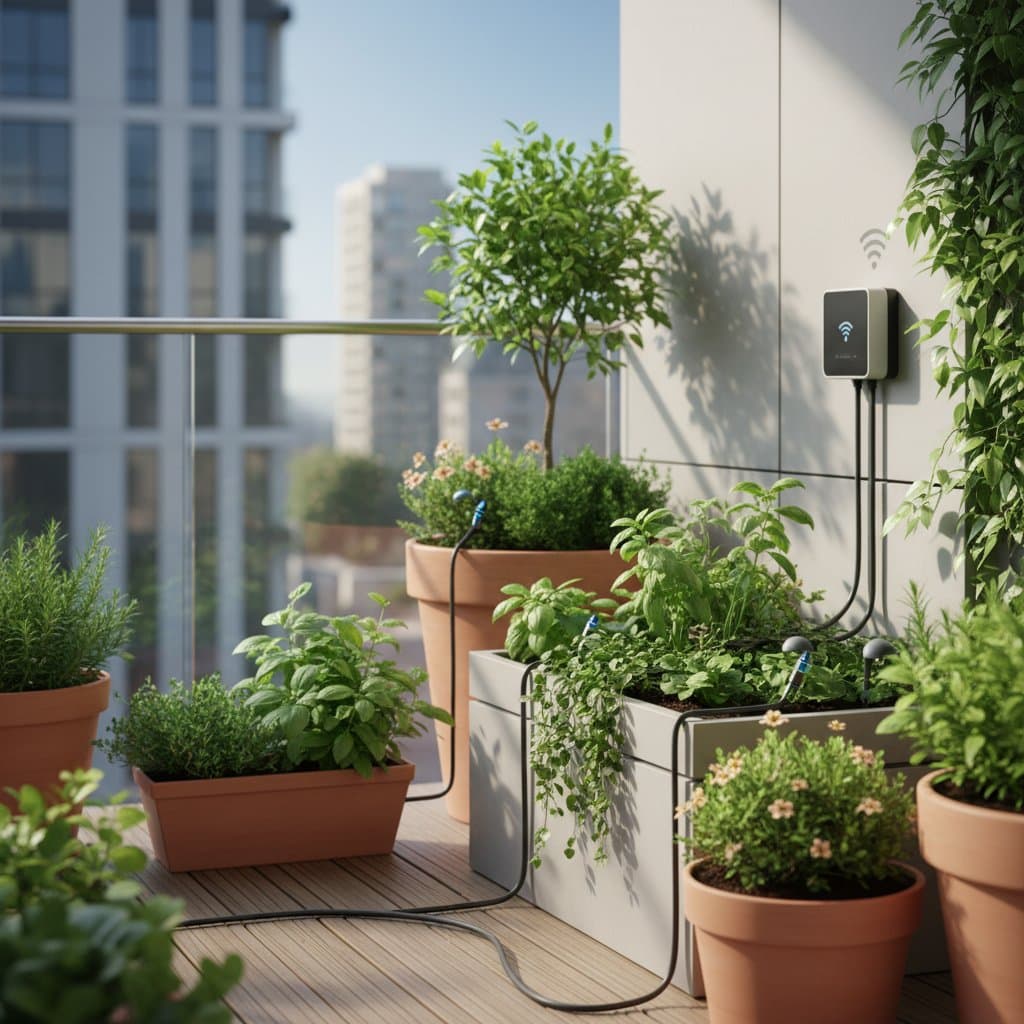
Introduction to AI Drip Irrigation for Balconies
Balcony gardening offers city dwellers a touch of nature, but manual watering poses challenges in limited spaces. AI drip systems address this by automating irrigation through intelligent sensors and controllers. These setups monitor soil moisture, weather patterns, and plant requirements to deliver water exactly when and where it is needed, ensuring healthy growth with minimal intervention.
Traditional drip irrigation relies on timers, but AI versions learn from data over time. They adjust schedules dynamically, reducing overwatering and waste. For urban balconies, this technology transforms routine chores into seamless automation, allowing more time for enjoyment.
Key Components of an AI Drip System
A complete AI drip system includes several interconnected parts. The smart controller serves as the brain, connecting to a mobile app for remote monitoring and adjustments. Moisture sensors, placed in pots, detect soil dryness and signal the controller to activate pumps or valves.
Tubing and emitters distribute water evenly from a water source, such as a balcony faucet. Pressure regulators and filters maintain consistent flow and prevent clogs. Optional add-ons like weather integration pull data from online forecasts to preempt rain or heat.
Selecting compatible components ensures reliability. Opt for systems with app-based calibration for accurate sensor readings. This foundation supports expansion as your garden grows.
Step-by-Step Setup Guide
Begin by planning your layout. Measure the balcony area, count pots, and identify the nearest water source. Sketch tubing routes to avoid tangles, ensuring emitters reach each plant's root zone without excess length.
Assemble the core kit: attach tubing to the controller, install filters and regulators inline, and connect emitters to pot stakes. Position sensors 2 to 4 inches deep in soil, avoiding direct contact with roots. Secure all connections with waterproof clamps to withstand balcony conditions.
Calibrate the system over 24 hours. Run an initial watering cycle manually, then let sensors dry naturally to establish baseline moisture levels. Use the app to set thresholds, starting with moderate sensitivity to match your plants' needs.
Test the full setup with two pots before scaling up. Monitor app notifications for the first week to refine timing. Proper installation prevents leaks and ensures even coverage.
Safety Tips
Prioritize safety during installation and use. Position electrical cords and the controller hub at least 12 inches above floor level to avoid water exposure. Select components rated for outdoor use, including IP65 waterproof ratings for connectors exposed to occasional rain.
Avoid drilling into load-bearing railings or walls unless you obtain building permission and use appropriate anchors. Direct tubing away from edges to contain runoff, preventing drips onto lower levels or public areas below.
Inspect the setup regularly for wear. Ground all electrical parts and use surge protectors if connecting to home power. These measures minimize risks in compact balcony environments.
Troubleshooting Common Issues
Problem: Plants remain dry despite system activation.
Solution: Inspect emitters for clogs caused by mineral buildup or debris. Soak affected emitters in a vinegar-water solution for 15 minutes, rinse thoroughly, and reinstall. Verify the main tubing for kinks that reduce pressure, and straighten as needed.
Problem: The system activates too frequently.
Solution: Access the app settings and decrease the upper moisture threshold by 5 to 10 percent. This adjustment delays triggers until soil truly requires water. Review historical logs to confirm patterns before further tweaks.
Problem: Water flow varies between pots.
Solution: Install pressure-compensating emitters calibrated at 0.5 to 1 gallon per hour. These devices ensure uniform distribution regardless of tubing length or elevation differences. Replace non-compensating emitters if inconsistencies persist.
Problem: Controller fails to respond to app commands.
Solution: Restart the Wi-Fi connection on both the controller and your device. Check sensor batteries and recharge if below 20 percent. Relocate the hub closer than 15 feet to the router, or add a Wi-Fi extender for stable signal.
Maintenance Routines
Regular upkeep extends the lifespan of AI drip systems and maintains precision. Perform monthly inspections to catch issues early. These simple habits prevent downtime and optimize performance.
Monthly Tasks:
- Flush tubing lines for two minutes with clean water to clear sediment.
- Examine emitters for scaling or blockages, cleaning with a soft brush if necessary.
- Gently wipe sensors with a damp, lint-free cloth to remove dust without scratching.
- Analyze app data logs for irregular cycles and adjust settings accordingly.
Seasonal Tasks:
- Drain all lines before winter to avoid freeze damage.
- Store unused sensors in a cool, dry place to preserve calibration.
- Swap out inline filters biannually or sooner if flow diminishes noticeably.
Consistent care ensures sensors provide reliable data and components function smoothly.
Storage Guidelines
During off-seasons, proper storage protects equipment from environmental damage. Disconnect and coil tubing loosely to prevent kinks, then place it in a sealed plastic bin away from moisture. Group sections by pot zones and label for quick retrieval.
Remove sensors and store them in a padded case to safeguard probe tips from bends. If the controller is weather-resistant, leave it mounted but powered off; otherwise, bring it indoors and position near an outlet for periodic charging.
Before reuse, inspect all parts for cracks or corrosion. A brief test run confirms readiness. Thoughtful storage minimizes replacement costs and setup time.
Budget and Time Investment
Initial costs for a basic balcony system remain accessible. Expect to spend $90 to $150 on a controller with two to four sensors, supporting up to 20 pots. Add $25 to $40 for tubing, emitters, and stakes.
Filters and regulators total $15 to $25. Overall, a starter kit fits under $250, with expansions available later. Installation requires 2 to 3 hours, plus one day for calibration as soil equilibrates.
Savings accrue quickly through reduced plant losses and water bills. Many users recoup expenses in a single season via healthier gardens and less manual labor.
Seasonal Care Adjustments
Adapt the system to changing conditions for year-round success. Each season demands specific tweaks to match plant cycles and weather shifts.
Spring: Reattach components, sanitize sensors, and execute a full test cycle. Increase emitter numbers for newly potted plants as they establish.
Summer: Monitor weekly moisture readings to reposition sensors if soil settles. Extend watering volumes by 10 to 20 percent during prolonged hot spells.
Fall: Reduce cycle durations as temperatures cool and growth slows. Clear any pooled water to deter pests.
Winter: Shut off water supply if freezes threaten. Relocate sensors inside to avoid exposure.
These adjustments sustain accuracy and hardware durability across seasons.
Professional Assistance Options
Certain balcony configurations require expert input. If no outdoor faucet exists, hire a licensed plumber to add a dedicated spigot or integrate a low-voltage pump with an indoor line. Ensure installations comply with local codes.
For electrical needs, consult an electrician to install a GFCI-protected outlet. This feature cuts shock hazards near water sources.
Advanced integrations, such as linking to smart home ecosystems for weather-synced schedules, benefit from technician guidance. Professionals handle complex wiring and ensure seamless operation for expanded systems.
Essential Insights
AI drip irrigation merges proven drip technology with adaptive intelligence. It promotes plant vitality while conserving resources through targeted delivery. Sensors gather data to refine operations, operating unobtrusively.
- Deploy at least two sensors per controller for precise monitoring.
- Choose emitters at 0.5 to 1 gallon per hour for container suitability.
- Flush lines monthly to sustain flow.
- Protect components indoors during inclement weather.
Installation shifts focus from tasks to tranquility, fostering lush balcony oases.
Getting Started Today
Launch your automated garden with targeted steps. First, assess your space by tallying pots and mapping water paths. This blueprint guides efficient routing.
Next, procure a compatible kit featuring app connectivity and multiple sensors. Prioritize user reviews for reliability in urban settings.
Finally, pilot the system on a few pots: connect, calibrate, and observe. Build confidence before full deployment. The upfront planning yields ongoing ease, with thriving plants rewarding your initiative.