
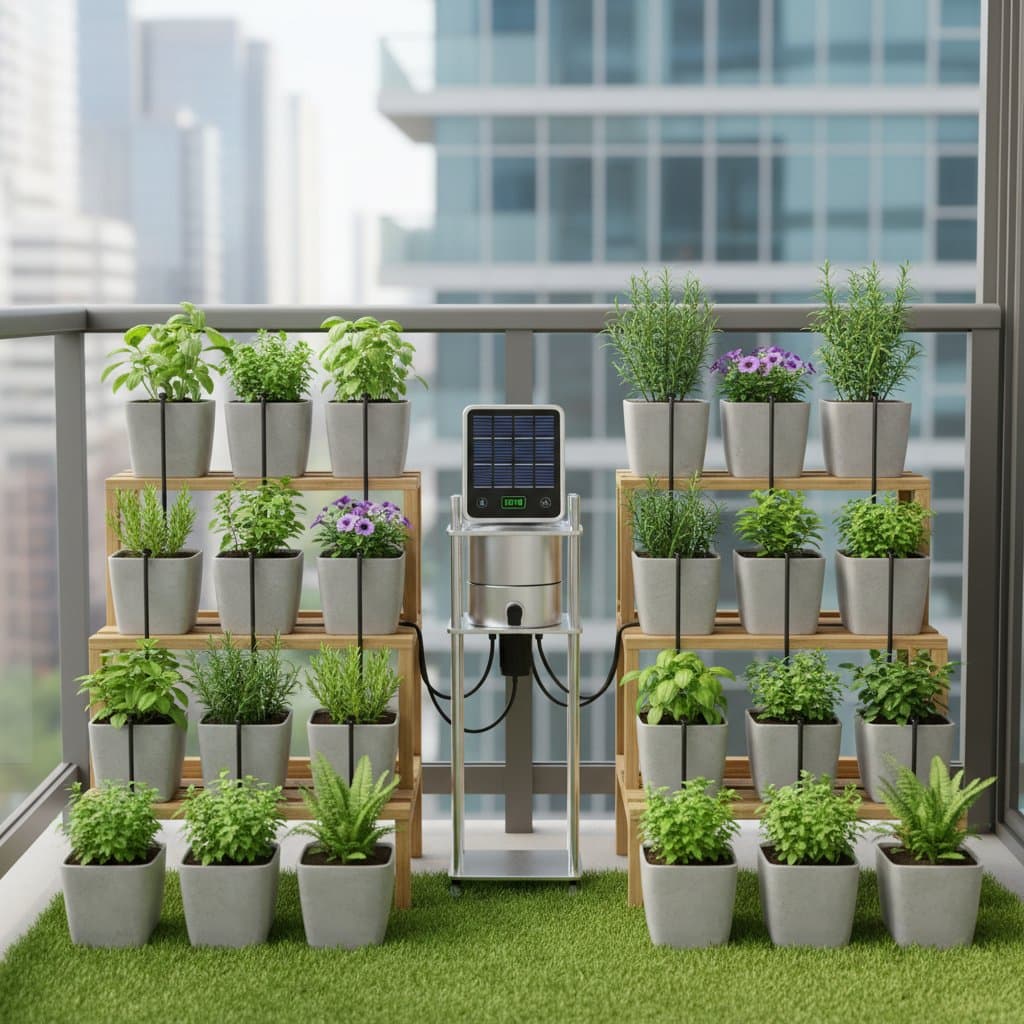
Introduction to Off-Grid Solar Drip Irrigation
Urban gardening presents unique challenges, particularly when electrical outlets prove scarce on balconies or rooftops. An off-grid solar drip irrigation system addresses this by harnessing sunlight to power a pump that delivers water precisely to plant roots. This method minimizes waste, ensures consistent moisture, and supports healthier growth for up to 20 pots in a compact space.
Such systems rely on a solar panel, rechargeable battery, submersible pump, tubing, and emitters. They operate silently and sustainably, reducing reliance on manual watering or grid power. Gardeners appreciate the automation, which frees time for enjoyment rather than chores.
This guide outlines the complete setup process, from gathering components to long-term care. With basic tools and about two hours of effort, you achieve a reliable hydration solution tailored to urban constraints.
Materials Needed
Assemble these essentials before starting:
- 5-gallon bucket or reservoir for water storage.
- 5-watt solar panel with mounting clips.
- 12-volt rechargeable battery (7 amp-hour minimum).
- Submersible 12-volt pump rated for low flow (200-300 gallons per hour).
- 1/4-inch drip tubing (50 feet) and 1/2-inch supply line (10 feet).
- 20 adjustable drippers or emitters (0.5-2 gallons per hour).
- Digital timer or controller compatible with 12-volt DC.
- Fittings: barbed connectors, tees, elbows, and end caps.
- Tools: scissors, zip ties, voltmeter, and vinegar for cleaning.
Source components from garden supply stores or online retailers specializing in irrigation. Opt for UV-resistant tubing to withstand outdoor exposure.
Step-by-Step Assembly
Follow these steps to build your system efficiently. Work in a shaded area to avoid direct sun on components during setup.
1. Prepare the Reservoir
Select a stable, level spot for your water bucket, such as a corner of the balcony floor. Fill it with clean, room-temperature water to avoid shocking plant roots. Position the solar panel nearby, angled toward the south for maximum sunlight capture throughout the day.
Secure the battery close to the panel using brackets or a non-slip mat. Connect the panel's positive and negative leads to the battery terminals, ensuring polarity matches to prevent damage.
2. Install the Pump
Submerge the pump fully in the reservoir, positioning its intake near the bottom to draw water effectively. Attach the 1/2-inch supply line to the pump outlet, pushing it firmly onto the barbed fitting until secure.
Route the supply line along the balcony's edge, avoiding sharp bends that could restrict flow. Use temporary clips to hold it in place during initial testing.
3. Connect the Solar Power and Timer
Wire the battery to the timer according to the manufacturer's diagram, typically using alligator clips or screw terminals. Set the timer for short intervals initially, such as 5 minutes every 4 hours, to match typical balcony watering needs.
Link the timer's output to the pump. Test the electrical circuit by placing the solar panel in sunlight and verifying the battery charges at 0.5 amps or more.
4. Lay Out the Tubing Network
From the supply line, branch into 1/4-inch drip tubing using tee fittings. Distribute lines evenly across your pots, aiming for one main line per 5-7 pots to maintain pressure.
Punch small holes in the tubing at each pot's base using an insertion tool. Insert emitters directly into these holes, adjusting flow rates based on plant size: lower for succulents, higher for thirsty vegetables.
5. Position the Emitters
Place each dripper near the soil surface, about 2 inches from the plant stem, to target roots directly. Secure tubing with clips or weights to prevent shifting in wind.
Cap the end of each line with an end cap to build pressure and ensure uniform distribution. Inspect all connections for tightness to avoid leaks.
6. Test the System
Activate the pump for one full cycle. Observe each emitter for consistent flow rates, ideally 0.5 gallons per hour per dripper. Adjust individual emitters if certain plants receive excess or insufficient water.
Time how long it takes for soil in each pot to reach optimal moisture, typically 8-12 minutes for 6-inch pots. Program the timer accordingly, scheduling one or two cycles daily to match evaporation rates in your climate.
7. Secure and Organize
With even watering confirmed, affix tubing along railings or planter edges using zip ties or adhesive clips spaced every 12 inches. Bundle excess lines near the reservoir for future modifications.
Elevate the reservoir slightly if needed to improve gravity-assisted flow in upper pots. This setup ensures durability against urban elements like wind and rain.
Troubleshooting Common Issues
Even reliable systems encounter hiccups. Address them promptly to maintain performance.
Uneven Water Distribution: Inspect for kinks in tubing or debris in emitters. Clean clogged drippers by soaking in a vinegar-water solution for 15 minutes, followed by thorough rinsing under running water.
Pump Failure to Operate: Measure battery voltage with a multimeter; levels below 11 volts indicate insufficient charge. Reposition the solar panel in direct sunlight for 2-3 hours to recharge fully.
Reservoir Depletion: Install a float valve to signal low levels, or mark a refill line at 1 gallon remaining. For 20 small pots, a 5-gallon reservoir sustains operation for approximately 5 days under normal conditions.
Leaking Connections: Trim tubing ends squarely with scissors and reinsert into fittings. Apply hose clamps around joints prone to loosening from temperature fluctuations.
Budget and Time Investment
A complete kit ranges from $50 to $90, depending on component quality. Purchasing individual parts may add $30, primarily for higher-wattage panels or larger batteries.
Initial assembly requires about two hours for setups serving 10-15 pots. Allocate an additional 30 minutes for testing and fine-tuning flow rates.
Weekly maintenance involves under 10 minutes: refilling, cleaning, and inspecting. Expansion to more pots demands minimal extra cost, as most pumps support up to 30 emitters before pressure diminishes.
Ongoing Maintenance Practices
Consistency preserves system longevity. Perform these tasks weekly.
- Refill the reservoir when levels fall below 1 inch from the pump intake to prevent air entry.
- Rinse filters under fresh tap water to remove sediment buildup.
- Examine tubing for algae; flush lines with a vinegar solution monthly to clear residues.
- Clean the solar panel surface with a soft, damp cloth to remove dust and maximize efficiency.
- Inspect battery terminals every few months for corrosion; apply dielectric grease if needed.
In regions with freezing temperatures, drain the pump and store indoors during winter. Retain a small amount of water in the pump to preserve internal seals.
Efficient Storage Solutions
Maximize limited balcony space with organized storage.
- Store the battery, timer, and spare fittings in a compact plastic crate secured against tipping.
- Coil unused tubing and suspend from a wall hook adjacent to the reservoir.
- Label emitters by plant species with waterproof tape to simplify adjustments.
- Maintain spares, including an extra pump and 2-3 replacement drippers, for immediate repairs.
Adapting to Seasons
Plant water needs vary with weather. Extend cycle times by 2-3 minutes during hot spells to combat increased evaporation. Reduce frequency in cooler months to avoid waterlogging.
At season's end, drain all lines and soak components in diluted vinegar to eliminate minerals. Air-dry thoroughly before storage or reuse.
Overcast periods limit charging; monitor flow and adjust panel angle to 45 degrees for better light capture. For vacations, upgrade to a 10-gallon barrel, which supports 10 days of unattended operation.
Professional Assistance Options
Persistent pump issues or expansions beyond 40 emitters warrant expert input. Consult a local irrigation specialist to optimize tubing size and pressure regulation. Inquire about low-voltage compatible fittings and safe grounding methods for elevated balcony installations.
Sustainable Benefits for Urban Gardeners
Implementing this solar drip system transforms balcony gardening into a low-effort, eco-conscious pursuit. Plants receive tailored hydration, leading to robust growth and higher yields. Beyond convenience, you contribute to water conservation and reduced energy use, aligning with sustainable living in the city. Start small, observe results, and refine for a flourishing green oasis year-round.