
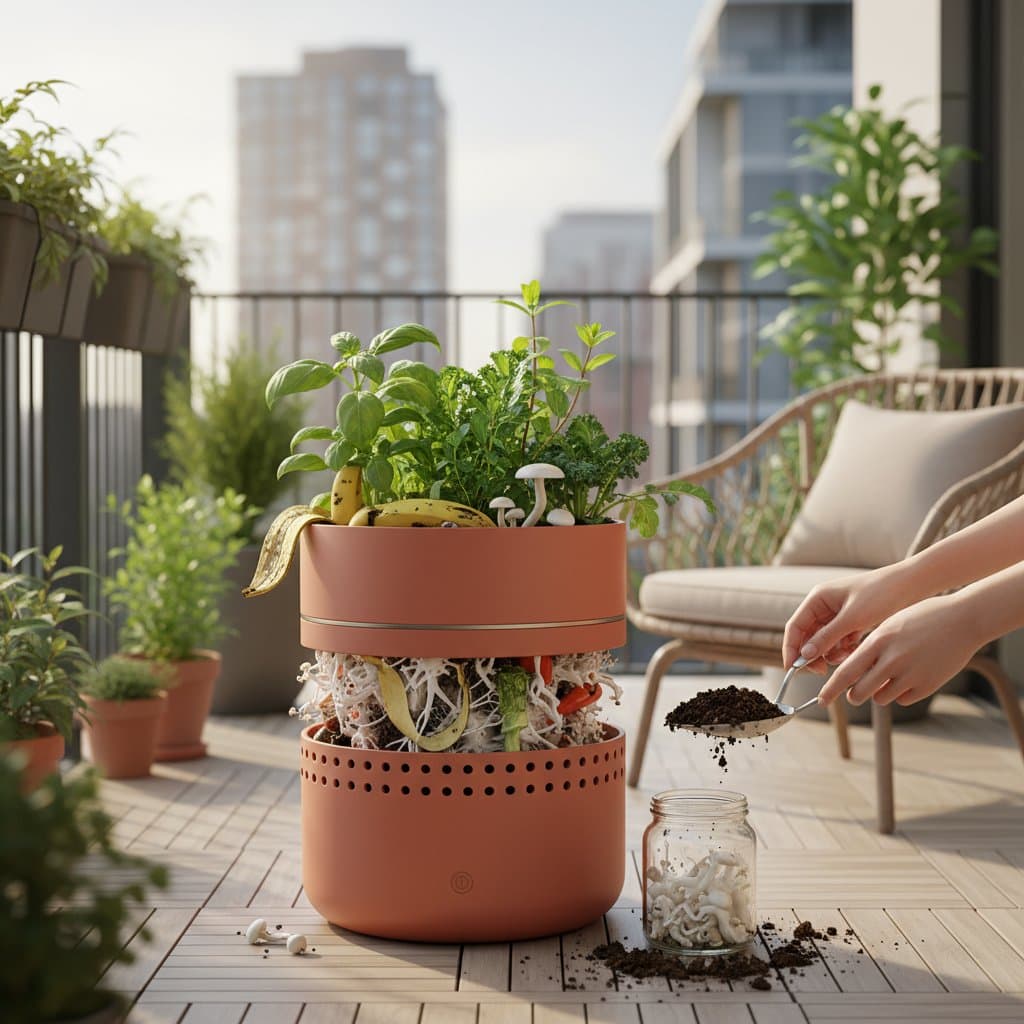
Introduction to Mushroom Composting on Your Balcony
Urban living often means limited space for gardening, yet balconies offer untapped potential for sustainable practices. A mushroom composter harnesses fungi to break down kitchen scraps into nutrient-rich soil without the need for large bins or constant turning. This method suits small spaces, produces odor-free results, and supports year-round production of fresh herbs and greens right at home.
By integrating this system, you recycle waste effectively while enriching your balcony garden. The process relies on mycelium, the root-like network of fungi, to decompose organic matter efficiently. Prepare to transform everyday scraps into a valuable resource that boosts plant health and reduces household waste.
Materials Needed
Gather these essentials before starting your mushroom composter. A five-gallon bucket with a tight-fitting lid serves as the main container. You will also need mushroom spawn, such as oyster or button varieties, which act as the fungal starter.
Additional items include a drill for ventilation holes, cardboard or newspaper for bedding, and kitchen scraps like vegetable peels and coffee grounds. Gloves protect your hands during setup, and a spray bottle maintains optimal moisture levels. These components ensure a functional, low-maintenance system tailored for balcony use.
Step 1: Prepare the Container
Select a clean, food-grade bucket and rinse it thoroughly with water. Drill small holes around the sides near the bottom for drainage and airflow, spacing them about two inches apart. Cover these holes with fine mesh or coffee filters to prevent pests from entering while allowing air circulation.
Next, drill a few larger holes in the lid for ventilation, and secure mesh over them as well. This setup prevents stagnation and supports the fungi's oxygen needs. Place the bucket on a stable, elevated surface to catch any drips.
Step 2: Create the Bedding Layer
Tear plain cardboard or newspaper into small strips to form the base layer, about two inches thick. This absorbent material balances moisture and provides a carbon source for the fungi. Lightly moisten the strips with a spray bottle until they feel damp but not soggy, like a wrung-out sponge.
The bedding prevents compaction and gives mycelium room to spread. Avoid glossy or printed paper, as inks may contain harmful chemicals. This foundational layer sets the stage for efficient decomposition.
Step 3: Introduce the Mushroom Spawn
Sprinkle one to two cups of mushroom spawn evenly over the bedding layer. Oyster spawn works particularly well for beginners due to its resilience in varied conditions. Gently mix it into the top inch of the material to integrate it without damaging the spawn.
The spawn introduces active fungi that colonize the waste. Source fresh spawn from reputable suppliers to ensure viability. This step kickstarts the biological process that turns scraps into compost.
Step 4: Add Initial Scraps
Chop kitchen scraps into small pieces, no larger than one inch, to speed decomposition. Begin with nitrogen-rich items such as fruit peels, vegetable trimmings, and eggshells. Layer about one inch of scraps over the spawn, then cover with another inch of damp cardboard strips.
This layering maintains balance between greens and browns, essential for fungal activity. Freeze scraps overnight if needed to kill any eggs from pests. Introduce the system gradually to allow mycelium to establish.
Step 5: Establish the Routine
Place the lid on the bucket and store it in a shaded balcony spot with temperatures between 60 and 75 degrees Fahrenheit. Check the moisture weekly by squeezing a handful of material; it should hold together without dripping water. Add fresh scraps every few days, always burying them under a dry layer to control odors.
Maintain this cycle to keep the composter active. Rotate the bucket occasionally for even airflow. Consistent care during the first two weeks builds a robust fungal network.
Step 6: Monitor Growth
After a few weeks, observe white, thread-like fuzz spreading through the material. This indicates healthy mycelium development. Small mushrooms may appear, but harvesting them remains optional since the primary aim focuses on decomposition.
When the mixture darkens and crumbles easily, it signals readiness for use. Patience during this phase yields superior compost quality. Document changes to refine your technique over time.
Step 7: Harvest and Reuse
Use a garden scoop to remove the finished compost, typically after six to eight weeks. Apply it directly around established container plants or blend it equally with potting soil for seed starting. Retain a small portion in the bucket to inoculate the next batch.
This reuse perpetuates the system efficiently. Test the compost's texture; it should feel light and earthy. Incorporate it sparingly at first to assess plant response.
Safety Tips
Position the composter away from direct rainfall to prevent waterlogging. Wear gloves at all times and refrain from inhaling fumes near the bucket. Exclude pet waste and materials treated with pesticides from the mix.
Wash hands thoroughly after handling and before meals. If green or black mold appears, discard the affected layer and incorporate additional dry material. These precautions safeguard health and maintain system integrity.
Troubleshooting Common Issues
Strong Odor
Excess moisture or poor aeration often causes unpleasant smells. Remedy this by adding dry bedding, stirring the contents lightly, and venting the lid for several hours.
Fruit Flies
Exposed food attracts these pests. Counter by covering each addition of scraps with dry material and ensuring mesh covers all vents securely.
Lack of Mycelium Growth
Insufficient humidity or expired spawn hinders progress. Increase moisture with daily misting and verify spawn freshness; replace if necessary.
Excessive Mushroom Formation
Optimal conditions promote mushroom growth. Harvest them if desired, or allow them to break down naturally within the compost.
Budget and Time Considerations
Assemble a basic mushroom composter for less than twenty dollars using recycled items. This affordability makes it accessible for urban dwellers.
Approximate Costs:
- Bucket and lid: 5 dollars
- Mushroom spawn: 10 dollars
- Miscellaneous materials: 5 dollars
Time Frame:
Expect harvestable compost in six to eight weeks, with warmer temperatures accelerating the process. Feed regularly to sustain year-round operation.
Cost-Saving Alternatives:
- Obtain spore plugs from local growers instead of commercial spawn.
- Shred junk mail or egg cartons for bedding.
- Gather free coffee grounds from neighborhood cafes.
Prioritize proper ventilation and moisture management to avoid complications.
Ongoing Maintenance
Feed the composter small amounts of scraps two to three times weekly, avoiding large additions that disrupt balance. This approach prevents anaerobic conditions and supports steady mycelium activity.
Weekly Checklist:
- Assess moisture levels and mist as required.
- Gently stir the upper layers.
- Examine for pests or mold growth.
- Harvest completed compost to prepare for fresh inputs.
Store the sealed bucket in shade when idle, and clean it with mild soap between uses to eliminate residue.
Optimizing Balcony Placement
Maximize limited space by selecting strategic locations for the composter.
Ideal Positions:
- Shaded areas with natural airflow.
- Beneath tables or plant stands.
- Within decorative crates for aesthetic appeal.
Positions to Avoid:
- Sunny exposures that cause overheating.
- Confined spaces lacking ventilation.
- Areas where leaks might affect those below.
Position drip trays underneath to protect surfaces and ensure safety.
Seeking Professional Advice
Persistent ammonia or sulfur odors despite adjustments warrant expert intervention. Rapidly spreading black mold also requires pause in operations. Consult local composting experts or fungal specialists for diagnosis and disposal guidance.
Mold can pose respiratory risks, so limit handling without advice. When purchasing spawn, inquire about suitable strains, temperature tolerances, and storage durations from vendors.
Applying Compost to Balcony Gardening
Mature compost enhances soil fertility, retaining water and supplying essential nutrients. Combine it in a one-to-one ratio with commercial potting mix for optimal results.
Suitable Balcony Crops:
- Leafy greens including lettuce, kale, and spinach.
- Herbs like basil, parsley, and mint.
- Quick-maturing vegetables such as radishes and green onions.
- Edible flowers like nasturtiums.
Use containers at least eight inches deep, filling with two-thirds soil and one-third compost. Seeds germinate faster, and plants exhibit vigorous, vibrant growth.
Adapting to Seasons
Summer demands frequent moisture checks due to quicker evaporation. Winter benefits from positioning near a warm wall for gentle heat.
Before travel, halt feeding a week prior and allow slight drying to pause activity safely. At season's end, replenish with fresh dry layers and inspect for container damage.
Getting Started Today
Launch your mushroom composter with readily available items from your kitchen. This simple system demands minimal space and expense while demonstrating waste's role in renewal.
Initial Actions:
- Gather scraps in a countertop bowl, focusing on coffee grounds, vegetable trimmings, and tea bags.
- Repurpose a lidded bucket by adding ventilation holes.
- Acquire oyster mushroom spawn, ideal for novice users in diverse waste environments.