
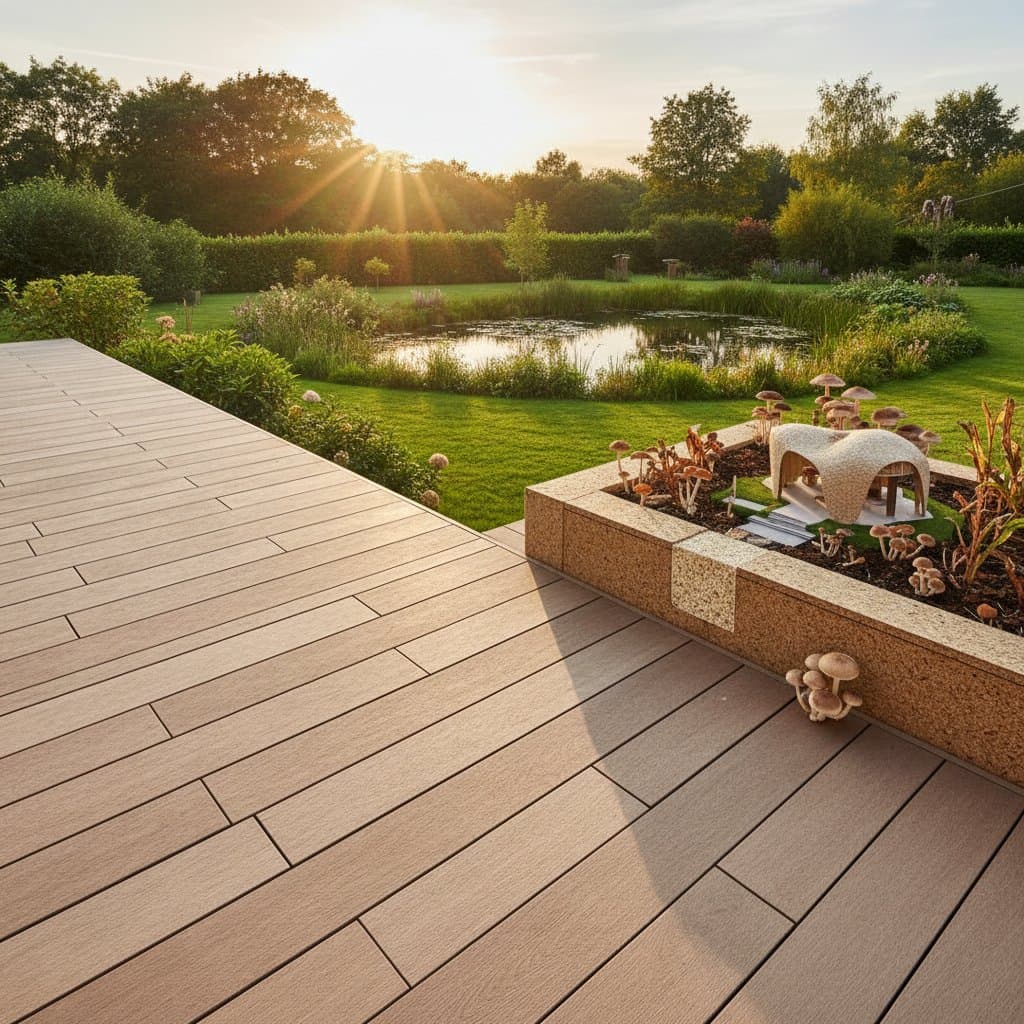
Introduction to Mycelium Decking
Homeowners seek durable outdoor surfaces that withstand weather while minimizing environmental impact. Mycelium boards emerge as a promising solution, grown from fungal networks rather than harvested from forests or manufactured with petroleum-based plastics. This material combines the resilience of natural fibers with the sustainability of biological processes, offering a viable alternative for patios, balconies, and garden decks.
Mycelium, the root-like structure of mushrooms, binds organic substrates such as agricultural byproducts into solid forms. Producers cultivate these boards in controlled environments, allowing the fungus to weave a dense matrix over weeks. The result yields panels that biodegrade fully at the end of their lifecycle, unlike composites that persist in landfills for centuries.
Key Benefits of Mycelium Boards
Mycelium decking excels in several areas that appeal to environmentally conscious builders and designers. First, it requires no trees or synthetic additives, reducing deforestation and pollution associated with traditional lumber and PVC composites. Each board incorporates waste materials like corn stalks or hemp hurds, diverting them from disposal sites.
Durability stands out as a core strength. These boards resist moisture and insects naturally, thanks to the antifungal properties of mycelium itself. Testing shows they endure freeze-thaw cycles better than some hardwoods, maintaining structural integrity over 20 to 30 years with proper care. Additionally, their low thermal conductivity keeps surfaces cooler in summer, enhancing comfort during barefoot walks.
From an aesthetic perspective, mycelium boards mimic the grain and texture of wood, available in shades from light oak to rich walnut. Customization options allow staining or sealing to match existing landscapes. Weight savings prove practical too; at half the density of cedar, they simplify handling during installation and reduce transportation emissions.
Installation Considerations
Setting up mycelium decking follows familiar processes but incorporates unique advantages. Begin with a stable foundation, such as concrete footings or pressure-treated joists spaced 16 inches apart. Cut boards using standard carbide-tipped saws, as the material yields cleanly without splintering.
Secure panels with corrosion-resistant screws, pre-drilling to prevent cracking in denser sections. Expansion gaps of one-eighth inch accommodate humidity changes, though mycelium exhibits less swelling than wood. For elevated structures, integrate hidden fasteners for a seamless look that discourages moisture buildup.
Professional installers note the material's workability rivals composites, with no need for specialized tools. In urban settings, where space limits options, mycelium's modularity supports creative designs like curved edges or integrated planters. Always consult local building codes, as some regions recognize mycelium as a novel green building product.
Maintenance and Care
Routine care remains straightforward, preserving the boards' appearance and longevity. Remove debris such as leaves or pollen with a soft-bristle broom weekly, especially in fall. Clean surfaces by rinsing with a hose and wiping with mild soap diluted in water; avoid pressure washers that might erode the natural seal.
Annual maintenance involves applying a penetrating natural oil or beeswax coating to enhance water repellency. This step restores any faded areas and protects against UV exposure. For minor damage, sand scratches lightly with 220-grit paper, then reseal the spot. Unlike many synthetic options, mycelium allows targeted repairs without discarding entire sections.
In harsh climates, inspect for uplift from frost heaves annually. Reapply sealant more frequently in coastal areas exposed to salt air. These practices ensure the deck remains functional and attractive, often outlasting expectations without chemical treatments.
Costs and Availability
Initial costs for mycelium decking align with mid-range composites, ranging from 4 to 6 dollars per square foot for materials alone. Labor adds 5 to 10 dollars per square foot, depending on complexity. As production expands through larger facilities, experts predict prices will decrease by 20 to 30 percent within the next few years.
Availability grows steadily, with suppliers stocking standard sizes of 5/4 by 6 inches, in lengths up to 12 feet. Online retailers and specialty lumber yards offer samples for testing. Lighter weight cuts shipping expenses, making bulk orders more economical than heavy tropical hardwoods.
Insulation benefits extend to energy savings; decks stay 10 to 15 degrees cooler than metal or dark composites, reducing the need for shaded coverings. Long-term value includes zero disposal fees, as spent boards compost in garden beds or municipal programs.
Practical Next Steps
Approach mycelium decking with informed planning to maximize benefits. Start small by constructing a bench or low platform to evaluate performance in your climate. Contact manufacturers for detailed specifications on load-bearing capacity, typically 50 pounds per square foot for residential use.
Inquire about warranties, which often cover 15 to 25 years against rot and warping. Source from certified producers adhering to standards like those from the Forest Stewardship Council for sustainable sourcing. Store unused boards horizontally in a ventilated shed to prevent mold.
Consult architects or contractors experienced in bio-based materials for custom projects. Track innovations through industry updates, as research advances fire resistance and colorfastness.
Embracing Regenerative Outdoor Living
Mycelium decking integrates seamlessly into regenerative landscapes, where structures contribute positively to ecosystems. It supports biodiversity by sequestering carbon during growth and enriching soil upon decomposition. Homeowners gain reliable outdoor areas that evolve with nature, fostering relaxation amid greenery.
Selecting these boards advances personal sustainability goals while influencing broader market shifts. Each installation demonstrates practical environmental stewardship, inspiring neighbors and communities. Over time, widespread adoption could redefine decking as a cycle of growth, use, and renewal rather than extraction and waste.