
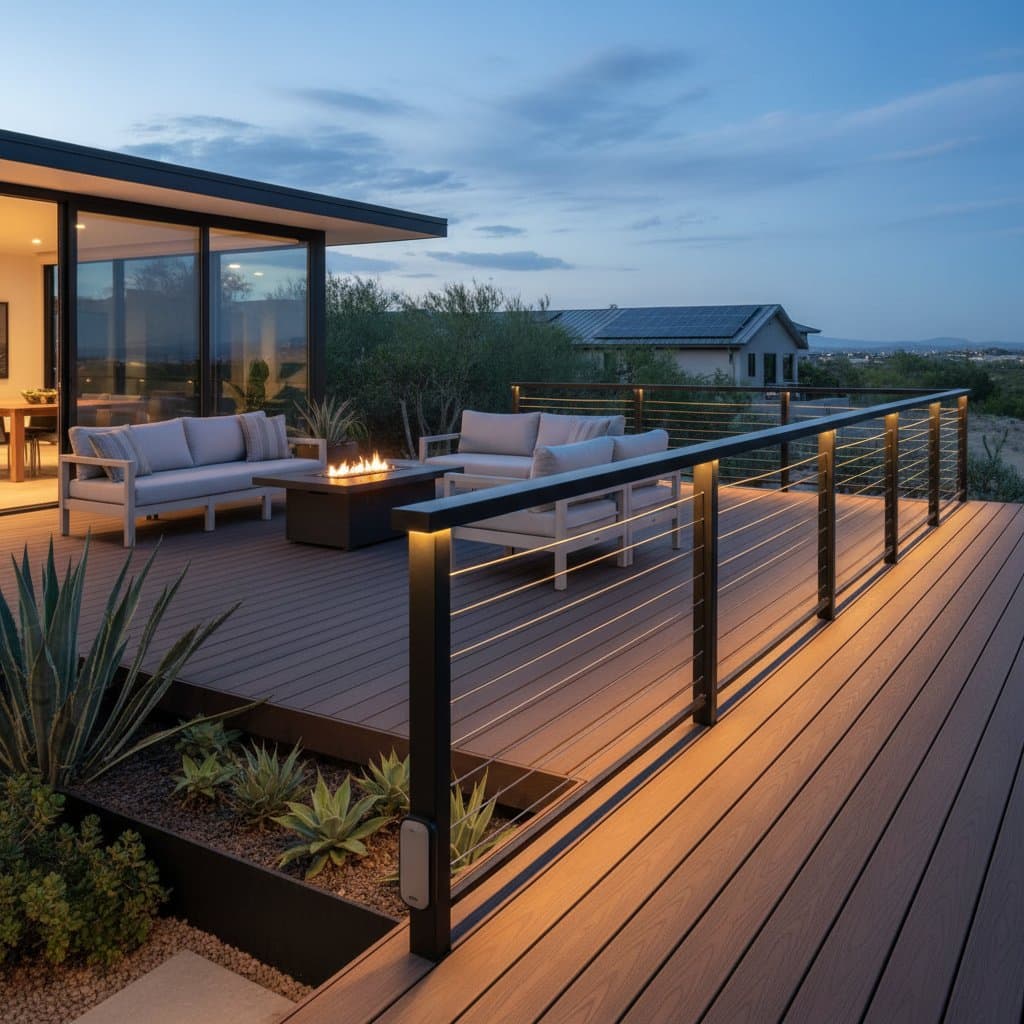
Understanding Solar Railings for Decks
Solar railings integrate photovoltaic technology into deck barriers, allowing them to generate electricity from sunlight while serving as structural supports. These systems typically consist of transparent solar panels mounted on railing frames, connected to hidden battery packs that store energy for nighttime use. Paired with low-energy LED lights, they eliminate the need for traditional wiring and ongoing electricity expenses, offering a sustainable solution for outdoor spaces.
Homeowners appreciate the dual purpose: safety-compliant railings that enhance visibility and security after dark. Installation requires basic electrical knowledge, but the payoff includes reduced environmental impact and long-term savings. This guide covers essential steps to implement and maintain such a setup effectively.
Essential Safety Precautions During Installation
Prioritize safety to prevent accidents when setting up solar railings. Protective gear forms the first line of defense against potential hazards.
- Wear heavy-duty gloves and impact-resistant safety glasses whenever manipulating glass panels or tools.
- Disconnect all relevant power sources at the breaker panel before attaching any cables or components.
- Position panels away from heat sources, such as grills or fire pits, to avoid thermal damage.
- For elevated decks, secure a sturdy extension ladder and enlist a second person to assist with lifting and aligning heavy panels.
These measures ensure a secure process and protect both installers and the system's integrity.
Basic Installation Overview
Installing solar railings involves measuring your deck, securing frames, and wiring components. Begin by evaluating sunlight patterns to maximize energy capture.
Select panels rated for at least 50 watts per linear foot, compatible with your railing height, usually 36 to 42 inches. Tools needed include a drill with masonry bits, wire strippers, silicone sealant, and a voltage tester. Secure the aluminum or composite frames to existing posts using corrosion-resistant brackets, then mount the panels flush to avoid gaps.
Connect batteries in a weatherproof enclosure beneath the deck or within posts. Route low-voltage wires to LED fixtures along the railing base, securing them with clips. Test the full circuit under sunlight before finalizing seals. This process typically spans a weekend for a standard deck section.
Resolving Common System Issues
Occasional glitches can arise in solar railing setups due to environmental factors or wear. Systematic checks help restore performance quickly without professional intervention.
Lights Fail to Activate
Insufficient charging often causes this issue, as LEDs require a minimum voltage threshold.
- Verify daily sunlight exposure exceeds five hours; reposition shading elements if necessary.
- Examine battery terminals for corrosion or looseness, tightening with insulated tools.
- Assess LED enclosures for cracks or water ingress, replacing affected units with IP65-rated alternatives.
Addressing these restores illumination reliably.
Reduced Power Output from Panels
Efficiency drops can stem from surface contaminants or obstructions.
- Wipe panels with a microfiber cloth and distilled water mixture to remove residues that absorb up to 25 percent of light.
- Relocate nearby plants or furniture that create shadows, aiming for unobstructed southern exposure.
- Employ a digital multimeter to measure output; panels should deliver 80 percent of rated voltage under clear skies.
Regular monitoring prevents prolonged underperformance.
Condensation Within Panel Assemblies
Moisture buildup compromises electrical contacts over time.
- Apply fresh outdoor-grade silicone along seams to restore waterproofing.
- Confirm the railing's slope facilitates runoff, adjusting mounts if water pools.
Prompt action preserves panel longevity.
Ongoing Maintenance Practices
Solar railings demand minimal intervention, yet consistent care sustains optimal output and durability.
Schedule monthly cleanings with a gentle, non-abrasive solution to prevent efficiency loss from buildup. Perform biannual wiring inspections, focusing on insulation integrity and connection security. Annually evaluate LED performance, swapping dim fixtures for energy-efficient, weatherproof replacements.
Batteries warrant attention every two to three years; test capacity with a load tester and replace lithium-ion units showing over 20 percent degradation. Organize spares like fuses and sealants in a labeled, moisture-free storage area for easy access.
Protecting Systems During Off-Seasons
Seasonal storage safeguards components from elemental stress when decks see less use.
Opt for UV-resistant, permeable covers to shield against debris while allowing ventilation. Avoid leaning objects against panels, as uneven pressure risks fractures. If dismantling for extended periods, cap and tag wires clearly to simplify reconnection.
These steps minimize winter damage and ease spring reactivation.
Cost Analysis and Timeline Expectations
Initial investments in solar railings surpass conventional options, but eliminate recurring fees and simplify construction.
Breakdown of Typical Expenses
- Solar panels and mounting hardware: $50 to $75 per linear foot.
- Integrated battery systems: $100 to $250 per unit, scaling with storage needs.
- LED lighting fixtures: $10 to $25 each, including mounting hardware.
A 12-foot deck segment might total $800 to $1,200 in materials. Professional installation adds $300 to $600, factoring in site specifics. Two-person DIY efforts fit into one to two days, yielding a fully lit, wire-free deck with perpetual zero energy costs.
Seasonal Care Routines
Adapting maintenance to weather patterns ensures year-round reliability.
Spring Preparation
Clear pollen residues with a hose rinse to restore transparency.
Inspect mounting hardware for rust, applying protective coatings as needed.
Summer Vigilance
Prune overhanging foliage to maintain full sun access.
Ventilate battery compartments during prolonged high temperatures to prevent overheating.
Fall Cleanup
Remove accumulated leaves promptly to avoid scratches.
Reinforce seals in anticipation of autumn storms.
Winter Protection
Sweep snow lightly to prevent ice adhesion.
Tilt panels slightly for natural melting and drainage.
Indicators for Professional Assistance
Certain symptoms signal the need for expert evaluation to avoid safety risks or voided warranties.
Seek a certified solar technician for persistent electrical irregularities, such as intermittent flickering. Address battery anomalies like excessive heat or physical deformation immediately. For structural damage, including shattered glass or bare wires, professionals ensure compliant repairs and code adherence.
They provide diagnostic tools and component sourcing beyond DIY capabilities.
Core Advantages of Solar Railings
These innovations convert ambient sunlight into practical deck power, merging aesthetics with utility.
Transparent photovoltaics preserve scenic views while producing clean electricity. Robust sealing and quality materials withstand outdoor rigors. Routine upkeep maximizes returns, often recouping costs within five years through avoided bills.
Steps to Implement Your System
Transition from concept to reality with targeted planning.
- Map sunlight availability by observing midday patterns over several days.
- Target an initial 6- to 12-foot segment to gauge real-world results.
- Solicit bids from suppliers, prioritizing systems with 10-year warranties and high-efficiency ratings.
This approach builds confidence and scalability for larger projects.