
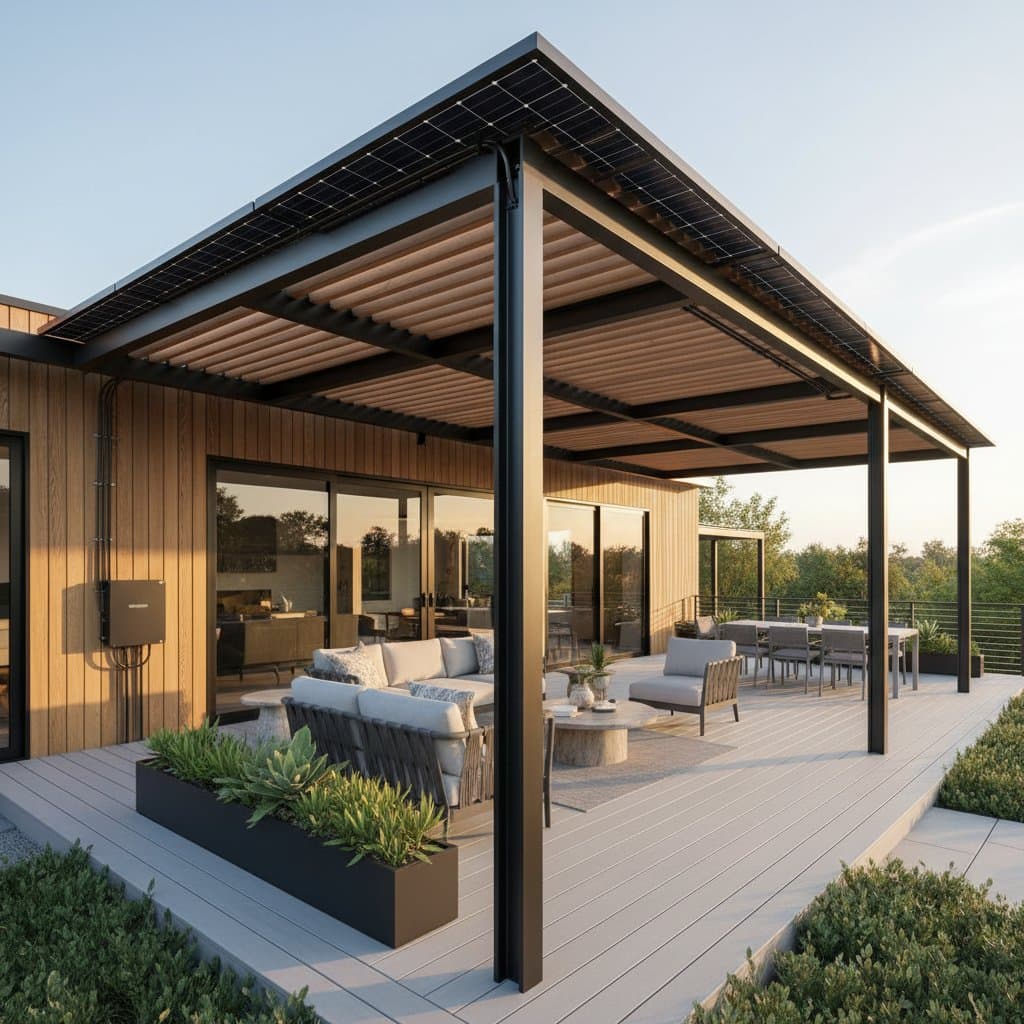
Introduction to Solar Deck Canopies
A solar deck canopy combines practical shade with renewable energy generation, turning your outdoor area into a productive asset. These structures mount photovoltaic panels over your deck, capturing sunlight to power household appliances or charge batteries. Beyond energy savings, they offer protection from harsh weather, extending usable deck time year-round.
Before starting, assess your deck's condition, sunlight exposure, and local building codes. Consult professionals early to ensure compliance and safety. With proper setup, a solar canopy can offset up to 20 percent of your electricity needs, depending on panel capacity and location.
Planning Your Solar Deck Canopy
Begin by measuring your deck dimensions and evaluating sunlight hours. Use online solar calculators to estimate energy output based on your region's average insolation, typically 4 to 6 hours of peak sun daily in urban areas. Factor in panel wattage; a standard 300-watt panel covers about 18 square feet.
Select materials suited to your climate. Aluminum frames resist corrosion, while polycarbonate or tempered glass roofing adds durability under the panels. Budget for permits, which may cost 100 to 500 dollars, and check homeowner association rules if applicable.
Sketch a design that integrates with your home's architecture. Aim for a canopy height of 8 to 10 feet to allow easy movement below. If your deck lacks a sturdy roof, reinforce joists to support the added weight of panels and frame.
Step 1: Prepare the Deck Foundation
Inspect the existing deck for structural integrity. Look for signs of rot, loose boards, or inadequate support posts. A professional inspection ensures the foundation can handle the canopy's load, estimated at 10 to 20 pounds per square foot including snow accumulation.
Clear the area of furniture and plants. Level the surface if needed, using shims under posts. Install additional footings or brackets where the frame will attach, securing them with concrete anchors for stability against wind loads up to 90 miles per hour.
Gather tools: drill, level, wrench set, ladder, and safety gear like gloves and harnesses. Source high-quality lumber or metal for the frame from reputable suppliers to avoid warping over time.
Step 2: Construct the Frame
Erect vertical posts at each corner and midway along the deck edges, spacing them 6 to 8 feet apart for even support. Use pressure-treated wood or galvanized steel, bolted firmly to the deck with lag screws.
Attach horizontal beams across the top, ensuring they are level using a laser level. Brace diagonals to prevent swaying. Apply weather-resistant coating to wood elements to extend lifespan beyond 15 years.
Test the frame's stability by applying pressure at joints. Adjust as necessary before proceeding. This step forms the backbone, so precision here prevents issues in later phases.
Step 3: Install Mounting Rails
Position the mounting rails atop the frame, aligning them parallel to the deck's length. Space rails according to panel dimensions, often 40 inches center-to-center, to match bolt hole patterns precisely.
Secure rails with stainless steel bolts, torquing to manufacturer specifications, typically 20 to 30 foot-pounds. This setup minimizes movement during gusts, preserving panel alignment and output efficiency.
Double-check alignment with a straightedge. Misaligned rails can cause uneven panel seating, reducing energy capture by up to 5 percent.
Step 4: Mount the Solar Panels
Hoist panels onto the rails using two people to avoid damage. Position them in a grid pattern, securing with mid and end clamps rated for outdoor use.
Maintain 1 to 2 inch gaps between panels for thermal expansion and ventilation. Optimal airflow prevents overheating, which can drop efficiency by 0.5 percent per degree Celsius above 25 degrees.
Orient panels south-facing in the northern hemisphere for maximum exposure. Tilt at your latitude angle, around 30 to 40 degrees in most U.S. cities, to optimize winter production.
Step 5: Wire the System
Route panel interconnect wires through conduits to a central junction box mounted on the frame. Use UV-resistant cables rated for 600 volts to withstand outdoor exposure.
Link the junction box to a ground-mounted inverter, which transforms DC output to AC for home use. Engage a licensed electrician for this phase; they will incorporate fuses and disconnect switches to mitigate risks like electrical shorts or arcs.
Label all connections clearly. Proper wiring ensures safe, efficient power flow, potentially generating 5 to 10 kilowatt-hours daily from a modest setup.
Step 6: Connect to the Grid or Battery
For grid-tied systems, the electrician integrates the inverter with your home's electrical panel via a transfer switch. Obtain utility approval and net metering agreement to receive credits for excess power.
Battery storage options, like lithium-ion units with 10 to 20 kilowatt-hour capacity, provide outage resilience. Charge controllers regulate flow to prevent overcharging, extending battery life to 10 years or more.
Hybrid systems combine both for flexibility. Weigh costs: grid-tie saves on batteries but requires interconnection fees, while off-grid setups demand larger storage for reliability.
Step 7: Test and Seal
Verify all electrical connections with a multimeter, confirming voltage matches expected output under sunlight. Engage the electrician for a full system certification.
Apply silicone-based sealant around frame joints, rail penetrations, and wire entries to block moisture ingress. This protects against corrosion in humid or rainy climates.
Conduct a load test by powering a device, monitoring for stable performance. Initial cleaning removes any installation residue, setting the stage for peak operation.
Essential Safety Tips
Power down the main breaker before any wiring work to eliminate shock hazards. Install ground fault circuit interrupters on all solar circuits for added protection against faults.
Work only on dry surfaces and postpone tasks during storms. Wear non-slip footwear and use fall protection on elevated decks.
Schedule a licensed electrician for final inspections and connections. Adhering to these practices minimizes risks and ensures code compliance.
Common Troubleshooting Issues
If power output falls short, inspect for shading from overhanging branches or structures. Regular cleaning eliminates dust buildup, which can impair performance by 10 to 20 percent.
Examine connections for looseness after storms; retighten clamps and bolts promptly. Persistent issues may indicate degraded components requiring replacement.
Inverter fault codes signal problems like overheating or grid sync failures; consult the manual for resets. For recurring errors, professional diagnostics prevent downtime.
Address water accumulation by verifying panel tilt; a 10 to 15 degree slope facilitates drainage and avoids efficiency losses from standing water.
Ongoing Maintenance Practices
Wash panels quarterly using soft brushes and lukewarm soapy water, rinsing thoroughly to avoid streaks. Skip harsh chemicals that could etch surfaces and void warranties.
Annually review wiring for insulation cracks or bird damage, enclosing vulnerable sections in PVC conduit. This routine preserves system integrity over decades.
In snowy regions, clear accumulations with a soft broom during daylight to restore production. Store tools in a ventilated area to avoid moisture-related degradation.
Cost Estimates and Timeline
Expect 6,000 to 10,000 dollars for a basic 10 by 12 foot canopy with 1 to 2 kilowatts of panels. Premium options with integrated lighting or retractable features climb to 15,000 dollars.
DIY framing spans three to five days, plus one to two for electrical work post-permitting. Contractor involvement streamlines the process but adds 20 to 30 percent to costs.
Request detailed quotes breaking down frame, panels, inverter, and labor. This transparency aids in financing through rebates or loans for solar projects.
Professional Assistance Indicators
Rely on licensed electricians for all grid integrations and inspections, as required by most jurisdictions. They navigate permits and ensure seamless home tie-ins.
For aging decks, hire a structural engineer to evaluate load-bearing capacity. Reinforcements like sistered joists handle the 3 to 5 pounds per square foot panel weight safely.
Inquire about warranties: panels often guarantee 80 percent output after 25 years, while inverters cover 10 to 12 years. Comprehensive coverage protects your investment.
Year-Round Care Schedule
In spring, refresh panel surfaces and reseal any weathered joints to prepare for active seasons.
During summer, prune shading foliage to maximize sunlight capture and prevent hot spots.
Fall maintenance involves debris removal post-foliage drop, safeguarding against blockages.
Winter checks focus on snow clearance and fastener integrity amid temperature swings.
Consistent upkeep sustains efficiency and extends the canopy's value.
Getting Started with Implementation
Measure your deck and sunlight patterns first. Inventory existing assets like a solid frame or partial roofing to minimize expenses.
Choose between comprehensive coverage or targeted shading for high-use zones. Consult local solar incentives to offset initial outlay and accelerate payback within 7 to 10 years.