
5. Test Stability
Apply gentle pulls to each corner of the shade sail. The fabric should remain firm without excessive movement or flapping. Introduce a light spray of water to observe the runoff pattern, ensuring no pooling occurs in the center. Fine-tune the slope or increase tension as needed to promote proper drainage.
6. Trim and Tidy
Sever any surplus rope lengths and seal the cut ends using a lighter to inhibit fraying. Securely tuck these ends out of sight. Step back to assess the overall balance, confirming that the sail's edges align smoothly within your line of sight.
Safety Considerations
Examine all anchors at least twice each season for signs of rust or displacement. Remove the shade sail in anticipation of severe storms, as high winds may overstress the attachment points. Refrain from climbing onto the sail or suspending objects from its structure. Maintain a minimum distance of three feet, or 0.9 meters, between the sail and any open grill flames or heating devices. Select hardware made from stainless steel or galvanized materials to resist corrosion effectively.
Common Issues and Solutions
Central sagging of the fabric.
Enhance tension by adjusting the turnbuckles uniformly across all points. If the sail exceeds the optimal size for the area, relocate one anchor point nearer to the structure or opt for a more compact sail dimension.
Accumulation of water on the surface.
Modify the incline to position one corner higher than the others. Alternatively, incorporate a short rope segment linking two corners to elevate one edge modestly.
Anchors becoming dislodged.
Substitute with larger, more robust bolts or shift the attachment to a sturdier section of wall or post. Verify that the underlying surface consists of solid wood, concrete, or brick for reliable support.
Appearance of fading or mildew.
Clean the affected areas with a solution of mild soap and water, followed by a thorough rinse. Allow complete drying prior to reinstallation. Steer clear of bleach, as it compromises the integrity of the fabric fibers.
Cost Estimates and Timeline
For a basic triangular shade sail configuration, anticipate the following expenses:
- Sail fabric: $60 to $120
- Hardware kit: $25 to $50
- Optional steel posts and concrete: $40 to $100
The overall investment typically falls between $85 and $270, influenced by the sail's dimensions and chosen materials. Homeowners with pre-existing anchor points can often finish the project in half a day. Tasks such as erecting posts or drilling into masonry could extend the effort by several additional hours.
To optimize expenses, leverage current deck beams or rail posts as attachment sites. Prioritize high-quality hardware, as inferior metals deteriorate rapidly in urban atmospheres and risk failure when subjected to load.
Routine Maintenance Practices
Shade sails require minimal upkeep, yet regular attention extends their service life to four to six seasons.
-
Cleaning: Direct a hose rinse combined with mild soap to eliminate accumulated dust or bird droppings.
-
Inspection: Scrutinize seams, corner reinforcements, and grommets for signs of deterioration. Substitute any worn ropes promptly.
-
Tension adjustment: Re-evaluate and tighten turnbuckles after the initial week of use and once more midway through the season.
-
Seasonal storage: In regions with severe winters, detach the sail, ensure it dries thoroughly, and roll it for indoor safekeeping.
Adhering to these protocols preserves the sail's performance and appearance over time.
Effective Storage Techniques
Proper handling during periods of disuse safeguards the shade sail from unnecessary wear.
-
Release tension from each corner methodically, detach the clips, and spread the sail flat on a clean surface.
-
Remove loose debris with a soft brush and rinse away stubborn dirt using a hose.
-
Permit full drying in a shaded, well-ventilated area to avert mildew growth.
-
Fold the sail into a loose rectangular shape, avoiding overly compact rolling that could crease the fabric.
-
Place it within a breathable fabric storage bag on an accessible shelf, positioned away from direct sunlight exposure.
Opt against sealed plastic containers, which can retain moisture. Incorporate small ventilation openings in the storage bag to maintain the sail's condition.
Scenarios Requiring Professional Assistance
Engage a qualified installer for projects involving wall penetrations above the second floor, attachments to load-bearing steel elements, or the integration of multiple sails into an intricate design. Request documentation verifying the hardware's load-bearing capacity and resistance to weather extremes. Professionals excel at orienting several sails to optimize both shade coverage and aesthetic appeal, often incorporating varied colors and forms for a dynamic visual effect.
Maximizing Your Shaded Deck
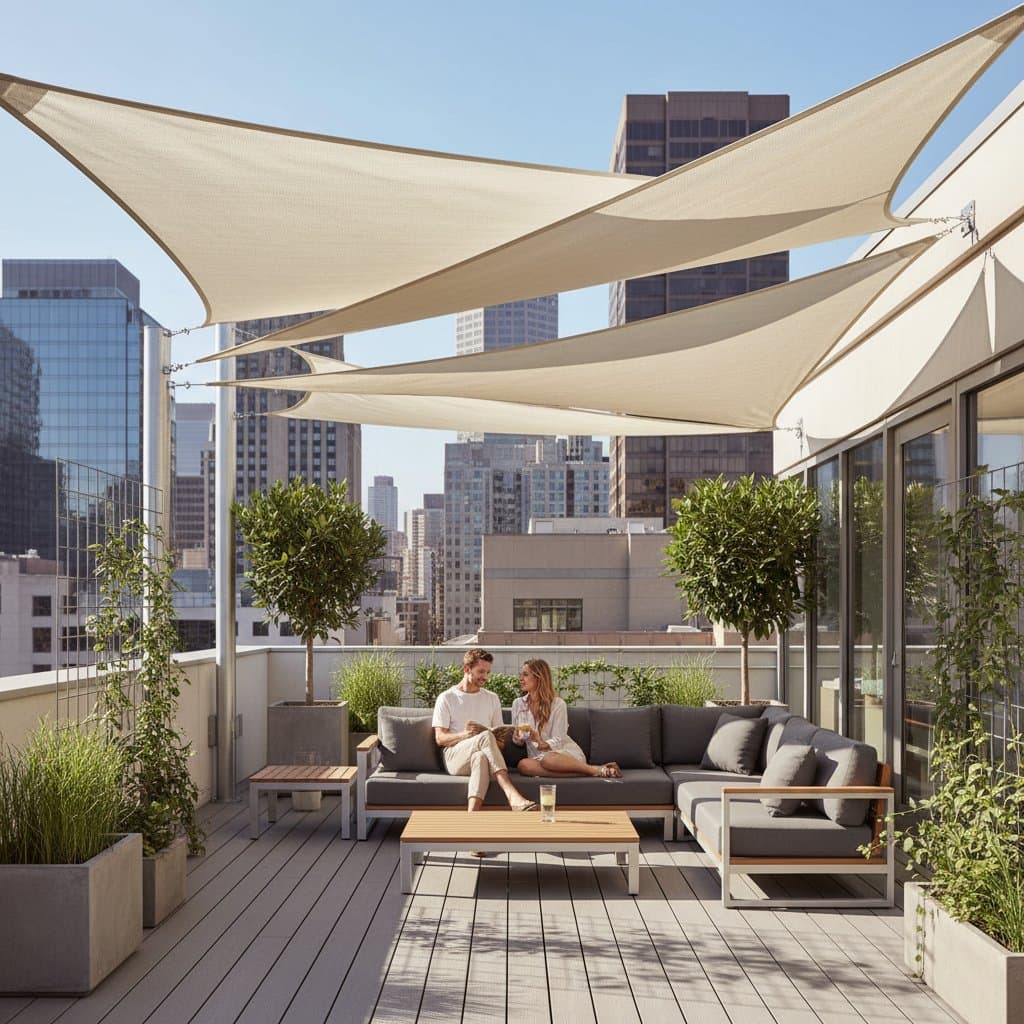
With the shade sail firmly in place, reposition outdoor furniture beneath its canopy and appreciate the transformation. Filtered light creates a gentler ambiance, while improved airflow enhances comfort. Enhance the setup by installing string lights along the perimeter or suspending planters from independent nearby hooks. The sail emerges as a defining architectural element, effectively converting the deck into a cohesive outdoor living area.
Practical Actions to Take Now
-
Analyze daily sun paths and draft a preliminary layout of your deck.
-
Select a sail dimension that accommodates at least one foot, or 30 centimeters, of clearance for hardware attachments on all sides.
-
Allocate a weekend for the installation, stability testing, and initial enjoyment of your newly shaded retreat.
A strategically installed shade sail elevates utilitarian decks into functional havens. It mitigates heat buildup, shields furnishings from sun damage, and infuses urban environments with sophisticated design. Through straightforward tools and methodical planning, achieve enduring comfort and elegance in your outdoor space.