
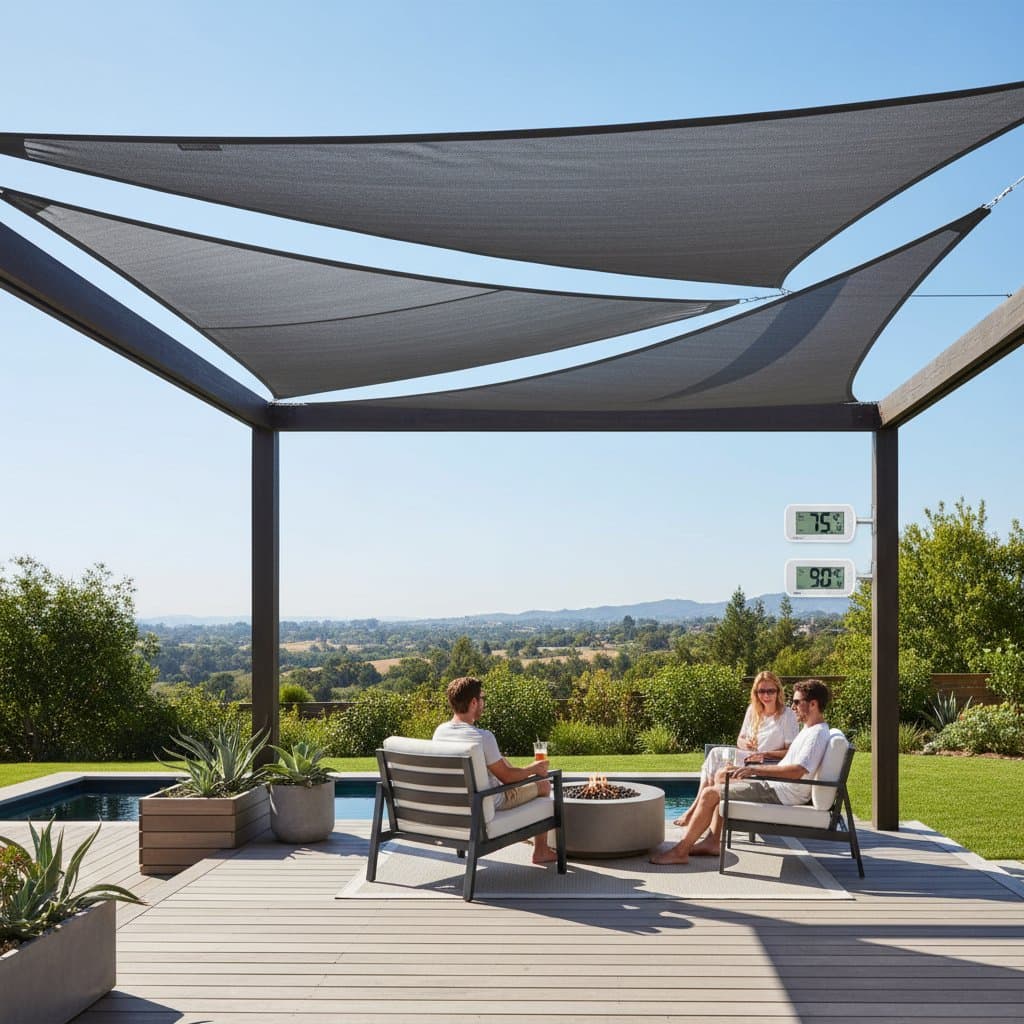
Cool Your Deck 15 Degrees with Solar Shade Sails
Hot decks often drive people indoors well before evening arrives. Direct sunlight on wood or composite decking can elevate surface temperatures by over 30 degrees above ambient air levels. A solar shade sail reduces this heat buildup while introducing a sleek, contemporary aesthetic to the outdoor area. The primary objective remains straightforward: lower deck temperatures by up to 15 degrees and establish a shaded retreat suitable for dining, relaxation, or children's activities.
Understanding Solar Shade Sails
A solar shade sail consists of a tensioned fabric panel that spans between secure anchor points to intercept sunlight and deflect heat. This design differs from traditional awnings, as sails offer flexibility in size, shape, and orientation to accommodate specific deck configurations. The specialized woven fabric blocks ultraviolet rays effectively while permitting airflow, which prevents the accumulation of moisture and maintains a cooler environment. Homeowners typically complete the installation process within a single day using standard tools.
These sails prove particularly valuable in urban settings, where space constraints limit shading options. They provide targeted coverage over high-traffic areas, such as seating zones or play spaces, without enclosing the entire deck. High-quality sails, often made from high-density polyethylene, resist fading and tearing, ensuring long-term performance across multiple seasons.
Essential Tools and Materials
Gather the following items before beginning the project:
- One to three solar shade sails, selected based on the deck's dimensions and desired coverage area
- Four to six anchor points, including sturdy posts, solid walls, or fascia board mounts
- Turnbuckles, pad eyes, and snap hooks to facilitate secure tensioning
- Measuring tape, a stable ladder, power drill, and masonry bit for attachments to brick or concrete surfaces
- Stainless-steel cable or weather-resistant rope for fine adjustments and support
Position each sail corner at varying heights, with differences of 12 to 18 inches, to promote efficient water drainage and prevent sagging during wet weather.
Consider the fabric's density rating, typically measured in percentages from 80 to 95, which indicates the level of UV blockage. Opt for lighter colors like white or beige to maximize heat reflection, especially in regions with intense summer sun.
Installation Steps
Follow these detailed steps to achieve a professional result.
-
Measure the deck precisely. Identify and mark anchor points that provide at least 12 inches of clearance around each sail edge, ensuring unobstructed airflow and access.
-
Evaluate structural integrity. Verify that every anchor can withstand a minimum pull of 50 pounds. Reinforce underlying wood framing with additional brackets if inspections reveal weaknesses.
-
Mount the hardware securely. Attach pad eyes or heavy-duty wall mounts to load-bearing surfaces. For freestanding posts, embed them at least 24 inches into concrete footings to counter wind forces.
-
Secure the sail corners. Employ snap hooks or D-rings to connect the fabric edges firmly, starting from the highest point to maintain tension as you proceed.
-
Apply even tension. Adjust turnbuckles incrementally on each side until the sail lies taut and flat, free from wrinkles or droops that could collect debris.
-
Verify drainage functionality. Simulate rainfall by spraying water across the surface and observe the flow to confirm it sheds properly without pooling.
During tensioning, wear protective gloves to avoid injuries from sharp cable ends or hardware edges. Work with a partner for stability when using ladders or handling heavy components.
Key Safety Considerations
Prioritize safety to prevent accidents and ensure durability.
-
Refrain from securing sails to fragile elements like railing posts or exterior siding, which may fail under stress.
-
Maintain a minimum three-foot separation between the sail fabric and any cooking grills or open flames to reduce fire risks.
-
Conduct thorough inspections of all fittings at the start of each season, checking for signs of rust, corrosion, or loose connections.
In windy areas, select reinforced sails with welded seams and consider adding wind vents to minimize flapping. Always consult local building codes for installations exceeding certain sizes.
Common Troubleshooting Solutions
Address issues promptly to maintain performance.
If the sail exhibits excessive flapping in breezes, retighten all corners uniformly, turning each turnbuckle one full rotation at a time.
Should rainwater accumulate in low spots, elevate the affected corner by six inches using adjustable hardware.
When heat persists beneath the sail, select fabrics with enhanced reflectivity, such as those rated above 90 percent for solar blocking, and ensure proper airflow by avoiding overly tight installations.
For persistent sagging, inspect anchors for slippage and replace any worn cables immediately.
Cost Estimates and Timeline
Budget $80 to $200 for a single medium-sized sail, including essential hardware. Projects covering larger decks or incorporating multiple panels may total $300 to $400. The average homeowner completes the setup in four to six hours, depending on site complexity.
Invest in corrosion-resistant stainless-steel components over inexpensive zinc alternatives, which deteriorate rapidly in humid or coastal environments. Factor in potential costs for professional reinforcement if the deck structure requires upgrades.
Ongoing Maintenance Practices
Preserve the sail's condition through regular care.
Clean the fabric twice per season with a solution of mild soap and water, applied using a soft-bristled brush to remove dirt and pollen buildup. Allow complete drying before reapplying tension to avoid mildew.
Remove the sail during prolonged storms with winds exceeding 30 miles per hour to prevent damage. Store it in a dry, protected location.
Replace any hardware showing cracks, deep rust, or deformation to uphold safety standards. Annual deep cleans with a low-pressure hose extend the fabric's lifespan beyond five years.
Implementing Effective Shade Coverage
Begin by targeting the most frequented section of the deck, such as the lounge or dining area, for initial installation. Expand with additional sails as needed to create overlapping shade patterns or introduce complementary colors for visual interest.
A properly installed solar shade sail not only mitigates surface heat but also safeguards outdoor furniture from fading and extends usable time in the space. Perform springtime checks on anchors, refresh the fabric with a gentle rinse, and relish a more inviting, temperate deck throughout the warmer months.