
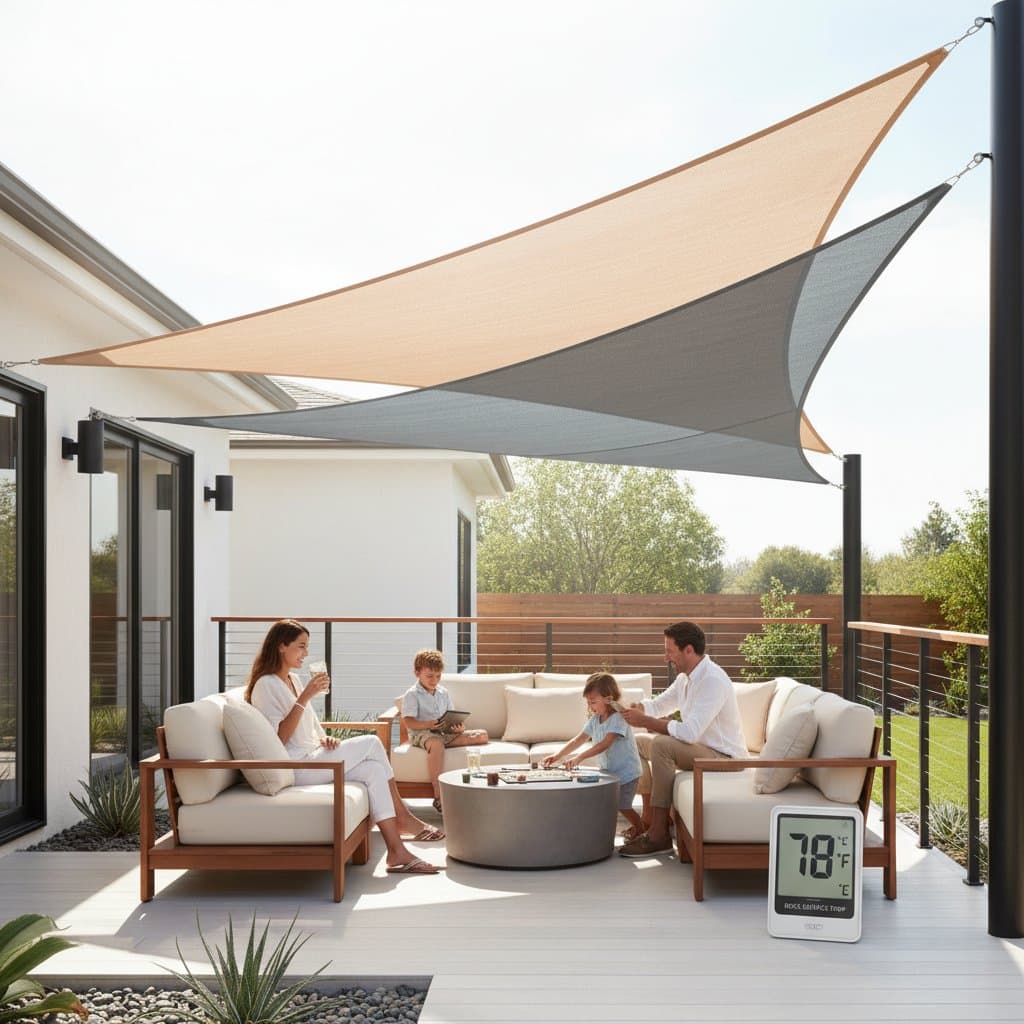
Why Shade Sails Cool Decks Effectively in 2026
Decks often become uncomfortably hot by midday, and traditional umbrellas fail to provide comprehensive coverage. Shade sails address this issue through flexible shading options, reduced surface temperatures, and contemporary aesthetics. These structures employ tensioned fabric to block solar heat and glare, creating a pleasant outdoor environment during peak summer conditions. The following sections explain their functionality, selection criteria, and secure installation methods.
Overview of Shade Sails
A shade sail consists of a durable fabric sheet stretched and secured at three or more anchor points. This design filters ultraviolet rays and direct sunlight, lowering the temperature of surfaces beneath by up to 20 degrees Fahrenheit. The angled configuration promotes natural airflow, resulting in a cooler space compared to enclosed structures like pergolas or solid roofs. Shade sails suit various applications, including decks, patios, play zones, and compact garden areas.
The primary objective remains straightforward: achieve shaded comfort while preserving openness to natural light and breeze. Proper placement ensures both benefits materialize without compromising the area's usability.
Essential Tools and Materials
Installation requires minimal equipment, allowing most homeowners to complete the task within a few hours.
Tools:
- Tape measure, extending at least 25 feet (7.6 meters)
- Cordless drill equipped with appropriate bits
- Adjustable wrench for securing fittings
- Sturdy ladder reaching the height of anchor points
- Stud finder for wooden surfaces or masonry bit for concrete
- Protective gloves and safety glasses
Materials:
- Shade sail(s) dimensioned to fit the deck size
- Comprehensive mounting hardware kit, including turnbuckles, pad eyes, and carabiners
- High-strength rope or stainless steel cable for tension adjustment
- Additional anchors or support posts if existing structures prove inadequate
- Weatherproof sealant to protect drilled openings
A standard 12-foot by 12-foot (3.6-meter by 3.6-meter) sail adequately shades a medium-sized deck. For larger areas, install two or more sails with slight overlaps to ensure uniform coverage.
Installation Steps
1. Measure and Plan the Layout
Identify the precise area requiring shade. Employ string or chalk lines to experiment with various configurations and angles. Select anchor points positioned at minimum 8 feet (2.4 meters) above the deck surface; elevated points enhance ventilation. Account for 10 to 12 inches (25 to 30 centimeters) of clearance between each sail corner and anchor to accommodate tensioning components.
2. Select and Prepare Anchors
Prioritize robust existing features such as house walls, fascia boards, or established trees. For new installations, embed posts at least 2 feet (0.6 meter) into concrete footings. Ensure posts incline subtly away from the sail's center to maintain structural integrity under load.
3. Attach Mounting Hardware
Secure pad eyes or wall anchors firmly in place. Seal all drilled holes with weather-resistant compound to block moisture entry. Initially connect turnbuckles or ropes to the corners, keeping connections slack to facilitate positioning.
4. Position and Tension the Sail
Fasten each corner to its designated anchor using clips or snaps. Gradually tighten turnbuckles or ropes to eliminate sagging, achieving a taut surface that resonates firmly when lightly struck. Fine-tune the angles so one corner hangs lower to direct rainwater away; aim for a 10-inch (25-centimeter) drop across every 10 feet (3 meters) of width.
5. Verify Tension and Structural Safety
Inspect the sail from below for any undulations. Adjust tension until the fabric remains stable in moderate breezes. Test all anchors for stability; reinforce any that exhibit movement prior to regular use.
6. Final Cleanup
Trim excess rope or cable lengths. Stow the ladder and tools securely. Clean the deck surface beneath the installation to remove any residue from drilling activities.
Essential Safety Considerations
Always wear gloves during cable handling to prevent injuries from sharp edges. Refrain from attaching to fragile elements like trim boards or gutters. Maintain clearance from overhead power lines and precarious branches. Opt for stainless steel components to avoid corrosion-related discoloration on the fabric. In regions prone to winds exceeding 30 miles per hour (48 kilometers per hour), select compact sails or incorporate quick-release mechanisms for storm removal.
Common Troubleshooting Solutions
Sagging Fabric: Release tension at one corner, elevate the adjacent corners, then re-secure evenly. A uniform hyperbolic curve ensures wind resistance and longevity.
Water Accumulation: Steepen the slope or depress one anchor point slightly. Persistent pooling accelerates fabric degradation over time.
Edge Fraying: Carefully trim damaged sections and seal with a heat source, or apply reinforced binding tape. Examine for abrasion caused by adjacent metal surfaces.
Unstable Anchors: Upgrade to longer fasteners or relocate to more substantial supports like beams or dedicated posts.
Cost Estimates and Timeline
A basic shade sail setup with included hardware typically ranges from $90 to $250. Additional expenses for support posts or oversized sails may elevate the total to $400. Key factors influencing price include fabric durability and hardware robustness.
Most single-sail projects require approximately three hours after anchor preparation. Incorporating posts or multiple sails extends the effort to a full afternoon.
Cost-saving strategies encompass:
- Selecting UV-resistant polyethylene over high-end canvas alternatives
- Utilizing preexisting deck posts as anchor sites
- Purchasing bulk hardware kits from reputable online suppliers
Invest in reliable anchors and tensioning elements; substandard fittings risk catastrophic failure.
Ongoing Maintenance Practices
Wash the fabric biannually using mild soap and lukewarm water. Steer clear of bleach or abrasive tools that could compromise the material. Rinse completely and allow air drying in the tensioned position to avoid creasing.
Conduct annual spring inspections of anchors. Readjust turnbuckles to counteract any loosening. Swap out corroded elements promptly. In snowy climates, dismantle sails before winter onset to avert structural damage; store folded units in a moisture-free indoor container.
Seasonal Care Guidelines
Spring Preparation:
Clean and reinstall the fabric following storage. Examine ropes and cables for wear. Secure anchors firmly ahead of rising temperatures.
Summer Upkeep:
Rinse away pollen and debris on a monthly basis. Reposition for optimal sun tracking as seasonal light shifts. Integrate low-voltage lighting fixtures beneath for extended evening enjoyment.
Fall Disassembly:
Thoroughly clean and dry all components. Mark corners for simplified reassembly. Seal wood mounts and inspect posts for integrity.
Winter Storage:
House fabric in breathable containers indoors. Apply protective coatings to metal parts against rust formation.
Adhering to this schedule preserves the installation's performance across multiple years.
Efficient Storage Techniques
For multiple sails, tag each by dimensions and installation site. Layer folded pieces in sealed plastic bins with moisture absorbers. Organize hardware in dedicated, labeled pouches to streamline future setups.
Suspend compact sails on broad hooks within a sheltered space for rapid post-cleaning drying. Rotate folding patterns seasonally to minimize lasting folds.
Indicators for Professional Assistance
Engage a specialist when:
- Roof-mounted anchors exceed second-story elevations.
- The deck foundation lacks capacity for post embedding.
- Custom geometries demand exacting tension calibration.
Inquire about fabric density, load-bearing capacities of anchors, and adherence to regional wind standards. A professional evaluation guarantees safety and regulatory compliance.
Key Benefits and Implementation
Shade sails mitigate deck heat through effective solar blocking and enhanced ventilation. They present a budget-friendly alternative to fixed roofing while requiring minimal installation time. Strategic design yields significant temperature reductions, fostering inviting spaces for relaxation and outdoor activities.
Select resilient fabrics, robust hardware, and reliable anchors to maximize efficacy. Maintain consistent tension and drainage angles for optimal function. Regular cleaning and seasonal storage extend the system's durability, ensuring sustained comfort year after year.