
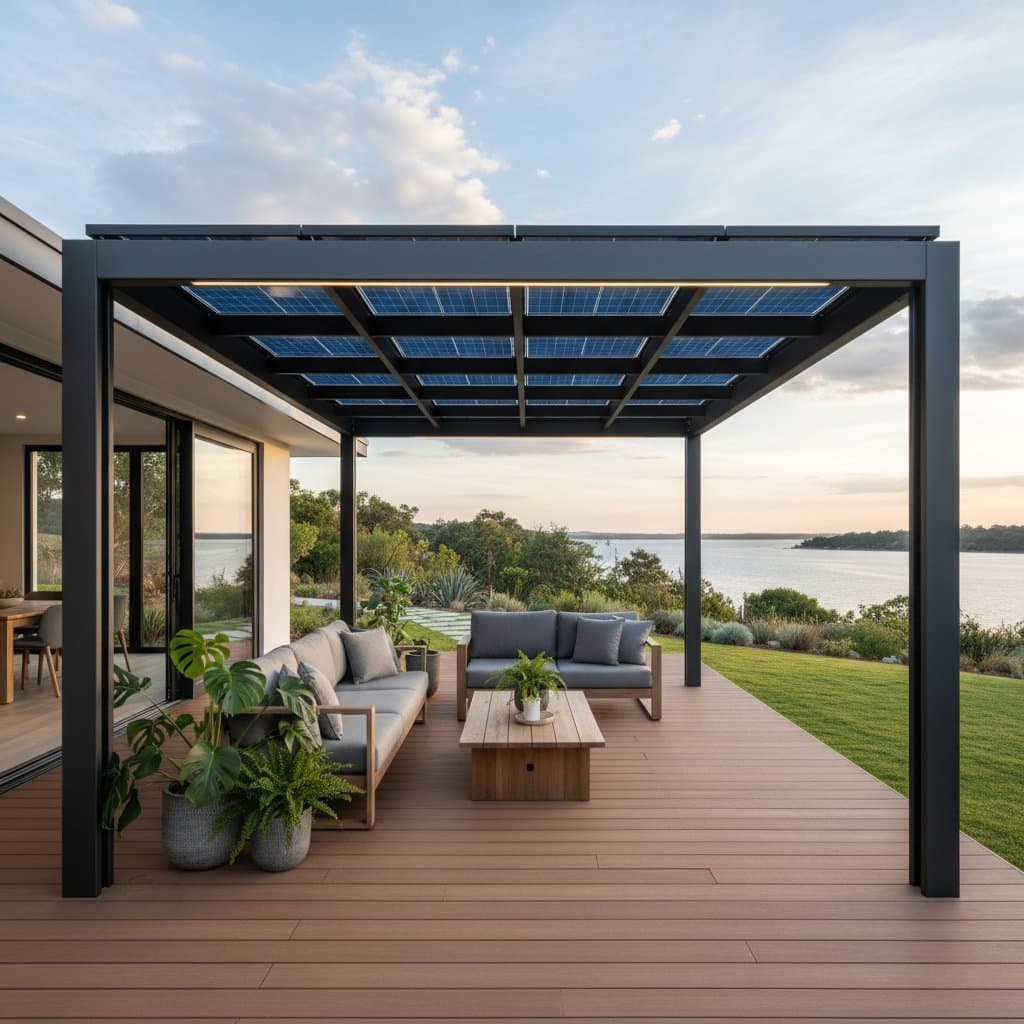
Solar Pergolas: Shade Meets Power for Decks
A deck serves as a seamless extension of indoor living, offering openness and comfort under ideal conditions. Direct sunlight often renders these spaces uncomfortable during peak hours, limiting their enjoyment. A solar pergola addresses this challenge by providing shade through integrated photovoltaic panels that also generate electricity.
This structure filters harsh light, reduces glare, and produces clean energy to offset home consumption. The result is a more inviting outdoor area that contributes to energy independence. The following sections explain the mechanics of solar pergolas and guide the planning process to suit specific deck configurations and preferences.
Overview
A solar pergola consists of a freestanding or attached framework topped with a roof that supports photovoltaic panels. Unlike traditional pergolas with open slats, this version incorporates solar modules to shade the space below while capturing sunlight for power generation.
These panels link to an inverter, which transforms direct current into alternating current suitable for household use. Certain setups integrate with the home's electrical panel, while advanced models include battery storage for off-peak utilization. In urban settings with constrained roof access, solar pergolas offer a practical solution for renewable energy without altering existing structures.
Tools and Materials
Preparation involves selecting durable components and verifying the deck's structural integrity. Consult an engineer if necessary to assess load-bearing capacity, as added weight from panels requires reinforcement.
Materials:
- Pressure-treated lumber or powder-coated aluminum for the frame
- Solar panels, typically four to eight units for compact decks
- Mounting brackets and stainless-steel screws
- Conduit piping for secure wiring pathways
- Inverter and weather-resistant junction box
- Sealant along with UV-resistant connectors
- Concrete footings or anchors for freestanding installations
Tools:
- Drill equipped with masonry and wood bits
- Circular saw for precise cuts
- Stable ladder or scaffolding platform
- Level and retractable measuring tape
- Protective safety glasses and heavy-duty gloves
Budget allocation ranges from $4,000 to $10,000, influenced by dimensions, material choices, and panel efficiency. Aluminum options demand higher initial investment yet require minimal ongoing care compared to wood.
Steps
1. Measure and Plan the Frame
Identify the precise location on the deck for the pergola placement. Position posts at standard eight-foot intervals to optimize stability. Evaluate joist strength to support approximately three to four pounds per square foot from the panels and framework.
2. Set Posts and Crossbeams
Secure posts to the deck's framing or dedicated footings using corrosion-resistant anchors. Ensure vertical alignment with a plumb line. Fasten crossbeams and rafters employing galvanized bolts, maintaining a subtle five-degree roof pitch to facilitate water drainage.
3. Install Solar Mounting Rails
Affix rails directly to the rafters prior to panel placement for concealed wiring. Maintain a minimum two-inch clearance between panel undersides and beams to promote airflow and prevent overheating.
4. Add Solar Panels
Position panels with assistance from at least one other person to avoid damage. Clamp each securely using hardware designed for exterior exposure. Route initial wiring per the panel manufacturer's specifications, avoiding twists or exposed connections.
5. Connect Electrical Components
Extend conduit from panels to the inverter and junction box location. Electrical connections demand professional oversight if the installer lacks certification, ensuring compliance with local codes and safety standards.
6. Test and Finish
Activate the inverter post-connection and monitor initial power generation. Apply sealant to all seams, followed by protective coating or staining on the frame to guard against environmental wear.
Safety Tips
Disconnect power sources before manipulating any electrical elements. Employ a safety harness for tasks at height. Install panels in dry conditions to minimize slip risks.
Select stainless or galvanized fasteners exclusively to resist rust formation. Obtain necessary permits for both structural modifications and electrical integrations prior to commencement. Municipal authorities typically mandate inspections before utility grid connection.
Troubleshooting
For inconsistent shading patterns, prune obstructing branches or recalibrate panel angles to maximize solar exposure. Address water accumulation by adjusting the roof incline for improved drainage.
Inspect and reinforce conduit clamps if wiring appears slack. To resolve diminished output, gently clean panels using a soft-bristle brush and diluted soap solution, as accumulated debris can impair performance by 15 percent or more.
Persistent problems warrant consultation with a qualified solar specialist for inverter diagnostics and voltage assessments.
Budget and Time
A DIY installation for a modest solar pergola spans three to five days, assuming prior experience with construction and basic electrical tasks. Professional teams often complete the project in two days, with labor fees ranging from $1,500 to $3,000 based on site specifics.
Cost savings arise from opting for pressure-treated wood over aluminum or phasing in additional panels over time. Prioritize certified, UL-listed electrical elements and sealed connectors to uphold reliability and safety.
Maintenance
Established solar pergolas demand little routine attention yet benefit from periodic checks to sustain output. Hose down panels quarterly using plain water to remove surface contaminants.
Renew wood treatments annually to avert decay, and retighten hardware following severe weather events. Conduct seasonal reviews of wiring for signs of abrasion or pest interference. Monitor generation data via the inverter's interface to detect anomalies promptly.
With diligent care, these systems endure for over two decades, delivering consistent performance.
Smart Storage Moves
The enclosed area under the pergola suits items requiring protection from elements while allowing ventilation. Suitable storage includes collapsible patio seating, elevated firewood holders, shade-tolerant potted greenery, and weather-sheltered bicycles or wagons.
Incorporate post-mounted hooks or slim shelving units for organization. Power low-wattage LED lighting from the solar output to extend usability into evenings without grid reliance.
Integrating Solar Pergolas into Your Outdoor Routine
Observe peak sun exposure on your deck to identify optimal placement. Draft a scaled diagram aligning with your layout, then review zoning regulations for approvals. This addition not only cools your space but also advances sustainable living, yielding long-term savings and environmental benefits.