
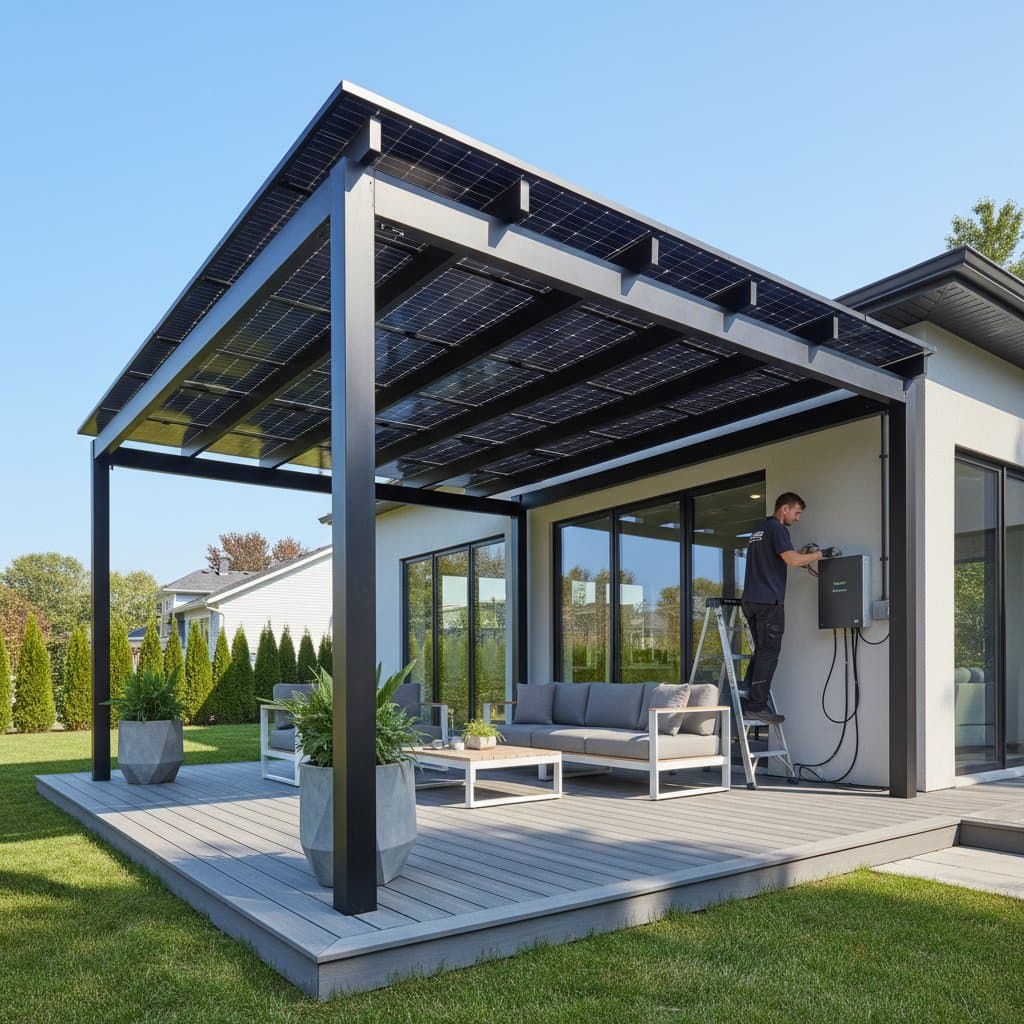
Solar Pergolas: Shade Your Deck, Power It Sustainably
Homeowners seek shade for outdoor spaces while aiming to reduce energy costs. A solar pergola addresses both needs effectively. This structure provides a shaded area on the deck and converts sunlight into electricity for home use. The result combines comfort with financial savings.
This guide covers the essentials of solar pergolas, including their design, operation, costs, and installation. Readers gain insights into safe construction, ongoing maintenance, and performance optimization across seasons. By the end, you possess the knowledge to integrate this feature into your property.
Overview
A solar pergola consists of a freestanding or attached framework topped with integrated solar panels. These panels form a protective canopy that blocks harsh sunlight and captures energy for power generation. Unlike traditional solar installations, this setup enhances the aesthetic and functional appeal of outdoor areas.
Connect the system to your home's electrical grid for broader use, or operate it off-grid to supply devices such as outdoor lighting, ceiling fans, or compact refrigeration units. Systems typically generate 1 to 3 kilowatts, based on panel efficiency and coverage area. This output offsets a portion of household electricity demands or fully energizes patio amenities.
Key advantages include:
- Provision of shade that reduces deck surface temperatures by up to 15 degrees Fahrenheit (8 degrees Celsius)
- Generation of renewable energy without occupying additional lawn space
- Enhancement of property value through modern design elements
- Long-term reduction in utility expenses
Tools and Materials
Professionals handle most installations, though individuals with experience may manage preliminary tasks. Essential components for a standard project encompass:
- Frame materials: Pressure-treated wood, galvanized steel, or powder-coated aluminum suitable for exterior exposure
- Solar panels: Six to twelve units, each measuring approximately 3 by 5 feet (0.9 by 1.5 meters), selected for compatibility with the structure
- Mounting hardware and wiring: UV-resistant brackets and marine-grade cables to withstand environmental elements
- Inverter and conduit: Microinverters or string inverters paired with PVC-sheathed conduits for safe energy conversion and transmission
- Foundation elements: Concrete footings or ground anchors extending at least 12 inches (30 centimeters) to ensure structural integrity
For existing pergolas, verify load-bearing capacity. The frame must support 3 to 4 pounds per square foot from panel weight and wind forces.
Steps
Step 1: Plan Your Layout
Begin by measuring the deck dimensions and outlining post locations with stakes or chalk lines. Optimal panel tilt ranges from 25 to 35 degrees to maximize solar exposure. Orient the structure southward using a compass or solar tracking application, accounting for local latitude adjustments.
Consider overhangs for additional shade and access paths around the perimeter. Consult zoning regulations early to avoid setbacks.
Step 2: Build or Reinforce the Frame
Excavate holes for posts and pour concrete footings, allowing 24 to 48 hours for curing. Secure posts with galvanized lag bolts and cross-bracing for lateral stability. Attach horizontal beams and rafters using corrosion-resistant fasteners, ensuring all elements remain plumb with a level tool.
Safety precaution: Equip yourself with heavy-duty gloves, safety goggles, and a dust mask during material preparation and assembly.
Step 3: Install the Solar Panels
Position panels atop rafters, aligning them for uniform coverage. Secure each with adjustable stainless steel clamps, maintaining 1 to 2 inches of clearance beneath for ventilation. Route wiring through grommets or channels, following manufacturer guidelines for series or parallel configurations to optimize output.
Inspect seals around edges to prevent moisture ingress.
Step 4: Connect the Electrical System
Position the inverter in a sheltered location near the pergola base or within the home. Encase wires in conduit along the frame to shield against rain and UV degradation. Disconnect the home's main power supply prior to any grid-tied connections.
Safety precaution: Engage a certified electrician for the final integration, including ground fault protection and compliance checks.
Step 5: Test and Adjust
Activate the system and monitor initial performance with a digital multimeter or integrated app. Verify consistent voltage across panels, targeting 30 to 40 volts per unit under peak conditions. Fine-tune angles or remove obstructions if generation falls below expectations.
Document baseline readings for future comparisons.
Troubleshooting
- Reduced power output: Rinse panels using a solution of mild detergent and lukewarm water; accumulated pollen or debris often diminishes efficiency by 20 percent.
- Intermittent or unstable power: Inspect inverter terminals and cable insulation for corrosion or loose fittings.
- Leakage issues: Apply silicone sealant or metal flashing around mounting points and seams to restore waterproofing.
Common problems stem from environmental buildup or connection wear. Conduct quarterly reviews to identify issues proactively.
Maintenance and Storage
Regularly remove organic debris like leaves or droppings with a soft-bristle brush and damp cloth. Prune overhanging branches to preserve full sun exposure. During snowy periods, gently sweep accumulations before midday to minimize thermal stress on panels.
Organize spare components, such as connectors and tools, in weatherproof containers beneath the deck. Retain installation manuals and warranties in a accessible file for reference.
Budget and Time
Expect expenditures from $6,000 to $12,000, influenced by scale, material durability, and energy capacity. Wooden frames offer affordability but require biennial sealing; aluminum variants provide superior longevity with minimal upkeep.
Professional installation spans two to five days, while experienced DIY efforts extend to one week. Initiate with a modest two-panel array, scaling up as budget allows.
When to Call a Pro
Seek expert assistance for load assessments, grid interconnections, or complex integrations. Inquire about:
- Panel efficiencies exceeding 18 percent for superior yield
- Comprehensive warranties covering 25 years on panels and 10 on inverters
- Adherence to local building codes and incentive programs
Professionals manage permits efficiently, ensuring legal compliance and insurance eligibility.
Seasonal Reminders
- Spring: Examine all fasteners and reseal joints following winter expansions and contractions.
- Summer: Perform monthly rinses to counteract heat-induced soiling.
- Fall: Remove foliage from surfaces and drainage paths to prevent clogs.
- Winter: Monitor for ice buildup and clear as temperatures rise.
Plan Your Solar Pergola Project
Assess your deck's sun patterns with a sunlight calculator or observation over several days. Request estimates from suppliers for kit options and frame variants. Proceed with a site evaluation to confirm feasibility and customize your sustainable upgrade.