
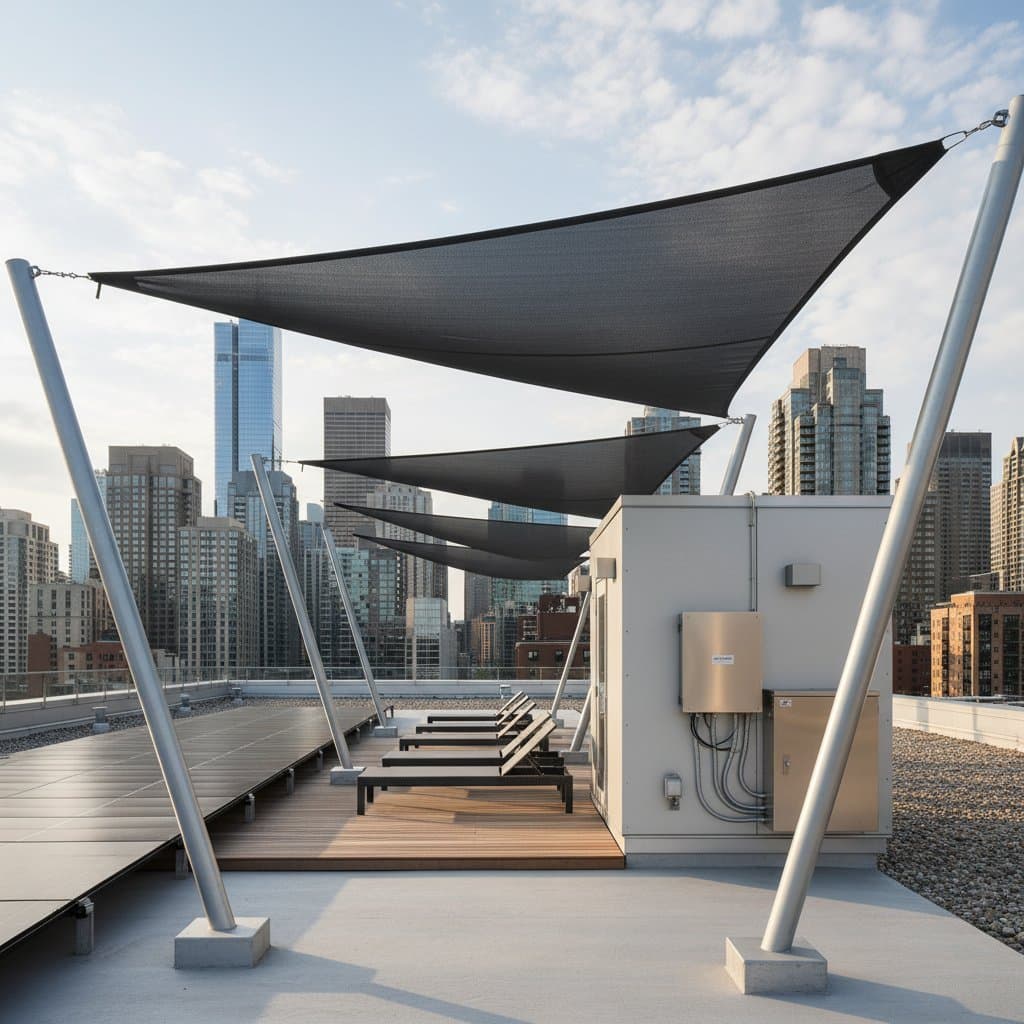
Introduction to Solar Shade Sails
Solar shade sails represent a versatile solution for urban rooftops. These structures combine shading functionality with solar energy generation, using flexible photovoltaic materials to capture sunlight. Property owners benefit from reduced cooling demands and supplemental power, making them ideal for homes, offices, and commercial spaces in dense city environments.
The design typically involves tensioned fabric panels mounted on sturdy posts or existing structures. Sunlight strikes the panels to produce electricity, while the shade below mitigates heat buildup. This dual role addresses common urban challenges like high energy bills and limited green space.
Before proceeding, assess your rooftop's suitability. Consider load capacity, sun exposure, and local regulations to ensure a successful implementation.
Planning and Design Essentials
Select sail size based on available roof area and energy goals. A standard 12-foot by 12-foot panel suits small setups, while larger arrays cover extensive surfaces. Opt for high-efficiency monocrystalline cells embedded in durable, weather-resistant fabric.
Determine mounting points carefully. Use corrosion-resistant aluminum or galvanized steel posts anchored into concrete footings or roof parapets. Ensure a minimum 10-degree tilt toward the south for optimal solar capture in northern hemispheres.
Incorporate microinverters for each panel to maximize output, especially in partially shaded urban settings. These devices convert DC power to AC on-site, minimizing losses from long cable runs.
Installation Steps
1. Prepare the Site
Clear the installation area of debris and obstacles. Verify roof integrity with a structural engineer if spans exceed 20 feet. Mark anchor locations using a laser level for precision alignment.
Gather tools including drills, wrenches, cable cutters, and a multimeter. Wear protective gear such as gloves, safety glasses, and harnesses for elevated work.
2. Install Posts and Anchors
Dig footings at least 3 feet deep for freestanding posts, filling with concrete that cures for 48 hours. For attached installations, bolt brackets securely to roof beams, using expansion anchors rated for wind loads up to 90 mph.
Space posts 10 to 15 feet apart, depending on sail dimensions. Apply anti-seize compound to threads to prevent corrosion over time.
3. Attach the Fabric
Unroll the solar sail and position it over the frame. Secure corners with stainless steel D-rings and shackles, pulling evenly to achieve uniform tension.
Connect turnbuckles on cables, adjusting in quarter-turn increments. Use a tension gauge to maintain 500 to 800 pounds of force per attachment point.
4. Wire the System
Route PV cables along posts, securing with UV-rated zip ties every 2 feet. Connect panels in parallel to the microinverter, ensuring polarity matches.
Install the inverter near the power source, grounding all metal components to a common rod driven 8 feet into the earth. Seal connections with silicone to block moisture ingress.
5. Final Checks
Inspect all hardware for tightness. Run a continuity test on wiring to confirm no shorts. Document the setup with photos for warranty and inspection purposes.
6. Test and Monitor
After connection, observe the inverter display for voltage and current readings. Monitor panel performance across various times of day, noting any shadows from nearby structures.
Trim obstructing branches or reposition elements to sustain consistent output. Use monitoring software if available to log daily production and identify trends.
Regular testing ensures the system operates at peak efficiency, allowing adjustments as needed.
Safety Tips
Position ladders on stable, level surfaces and secure them at the top with ropes or straps. Refrain from work in high winds, as partially installed sails may catch air and become unstable.
Employ UV-resistant wiring and protective conduit to avoid degradation from sun exposure. Refrain from stepping on the sail material, which lacks the strength for human weight.
In regions prone to thunderstorms, add a lightning rod and surge protection devices to safeguard the electrical components.
Troubleshooting Common Issues
Low Power Output:
Examine panels for accumulated dirt or debris. Clean gently with a soft cloth and mild soap solution, rinsing thoroughly. Investigate potential shading from trees or adjacent buildings; prune or realign as necessary.
If output remains suboptimal, measure voltage at connection points to isolate faulty components. Consult the manufacturer's specifications for expected ranges under current conditions.
Fabric Sagging:
Adjust turnbuckles incrementally, no more than a half turn each. Inspect seams and stitching for signs of wear or loosening.
Persistent sagging may indicate fabric fatigue after multiple seasons, necessitating panel replacement to restore tension and performance.
Water Pooling or Leaks:
Enhance the tilt angle by 2 to 5 degrees or install a central tension strap to promote drainage. Ensure edges feature unobstructed paths for water flow.
Regularly verify seam integrity to prevent long-term damage from moisture.
Noise During Wind:
Identify loose cables that may vibrate against frames. Insert rubber washers at metal contact points to dampen sounds.
Secure all fittings tightly and apply lubricant to moving parts for smoother operation.
Inverter Failure to Start:
Verify fuses and breakers are intact, then reset the device. If the display remains inactive, reach out to the manufacturer or a licensed electrician for diagnostics.
Document error codes if present to expedite professional support.
Budget and Timeline Considerations
A basic setup featuring one sail and a microinverter ranges from $2,000 to $3,500, influenced by fabric quality and wiring complexity. Multi-sail configurations integrated with building electrical systems may exceed $10,000.
Allocate one full day for assembly once components arrive, plus additional time for any required municipal inspections. Factor in potential delays from permitting processes.
Cost-Saving Options:
- Select lightweight aluminum posts over steel to reduce material expenses and ease handling.
- Leverage existing rooftop solar wiring for shared circuits to minimize new installations.
- Opt for grid-tied systems without batteries if regulations permit, avoiding storage costs.
Essential Investments:
Prioritize robust anchors, proper grounding, and waterproof connectors. These elements safeguard structural stability and electrical safety over the system's lifespan.
Maintenance Practices
With proper upkeep, solar shade sails endure 10 to 15 years of service. Schedule inspections at the start of each season to address wear proactively.
Cleaning Procedures:
Hose down surfaces monthly to remove dust buildup. For stubborn residues like pollen, apply mild soap with a soft-bristled brush, followed by a clear water rinse.
Steer clear of abrasive cleaners or bleach, which may compromise the photovoltaic laminate integrity.
Quarterly Inspection Routine:
- Examine cables for fraying and posts for rust development.
- Ensure electrical connectors stay dry and fully sealed.
- Evaluate panel efficiency through output measurements to detect performance declines early.
Replace tension hardware promptly; inexpensive items like shackles prevent costly fabric repairs.
Storage Strategies
For seasonal removal during harsh weather, dismantle sails and store them flat in a moisture-free environment. Roll the fabric loosely to avoid creases in the solar film that could impair functionality.
Label each piece by dimensions and attachment details for streamlined reinstallation. Maintain a dedicated kit with backup cables and fasteners to resolve issues swiftly.
Proper storage extends usability and simplifies future setups.
Professional Assistance Indicators
Engage experts for scenarios involving roof modifications, complex electrical integrations, or grid connections. Professionals ensure compliance and optimal performance.
Key questions for contractors include:
- The maximum load your roof supports.
- Permit requirements in your jurisdiction.
- Grounding protocols for the frame.
- Recommended inverter selections aligned with energy targets.
Certified installers can also guide rebate applications and incentive programs to offset expenses.
Seasonal Maintenance Schedule
Spring Preparation:
Review anchor points, tighten cables, and cleanse panels to capitalize on increasing sunlight.
Summer Oversight:
Track generation rates closely, as elevated temperatures may impact efficiency. Maintain clear ventilation under the sails.
Fall Cleanup:
Remove accumulated leaves and check seals against impending wet conditions.
Winter Protection:
Dismantle if snow loads threaten; store indoors to avert structural stress until spring.
The Dual Benefits Explained
Solar shade sails enhance energy dynamics through shading and generation. The canopy lowers underlying surface temperatures by up to 20 degrees Fahrenheit, approximately 11 degrees Celsius, thereby decreasing reliance on air conditioning.
Simultaneously, the photovoltaic layer converts incident sunlight into usable electricity more effectively than traditional flat-roof installations, which suffer from heat-related losses.
This integrated approach mirrors larger-scale applications like solar canopies over parking areas, adapted for residential and small commercial use.
Implementation Guide
Begin modestly with a single 12-foot sail to power lights or devices, observing initial returns before scaling. Confirm roof access and anchoring feasibility upfront.
Acquire necessary tools, measure meticulously, and optimize tilt for maximum exposure. Delegate electrical tasks to specialists if wiring presents challenges, while managing structural elements independently.
Post-installation, utilize inverter interfaces to monitor production. The cumulative impact often exceeds expectations, yielding cooler environments and tangible savings.
Over the initial year, experience reduced utility costs and elevated outdoor usability. These installations position urban rooftops as contributors to sustainable energy networks.
Next Actions:
- Research your building's load capacity and applicable solar policies.
- Obtain quotes for a starter kit and inventory existing tools.
- Schedule a site assessment to refine your design.