
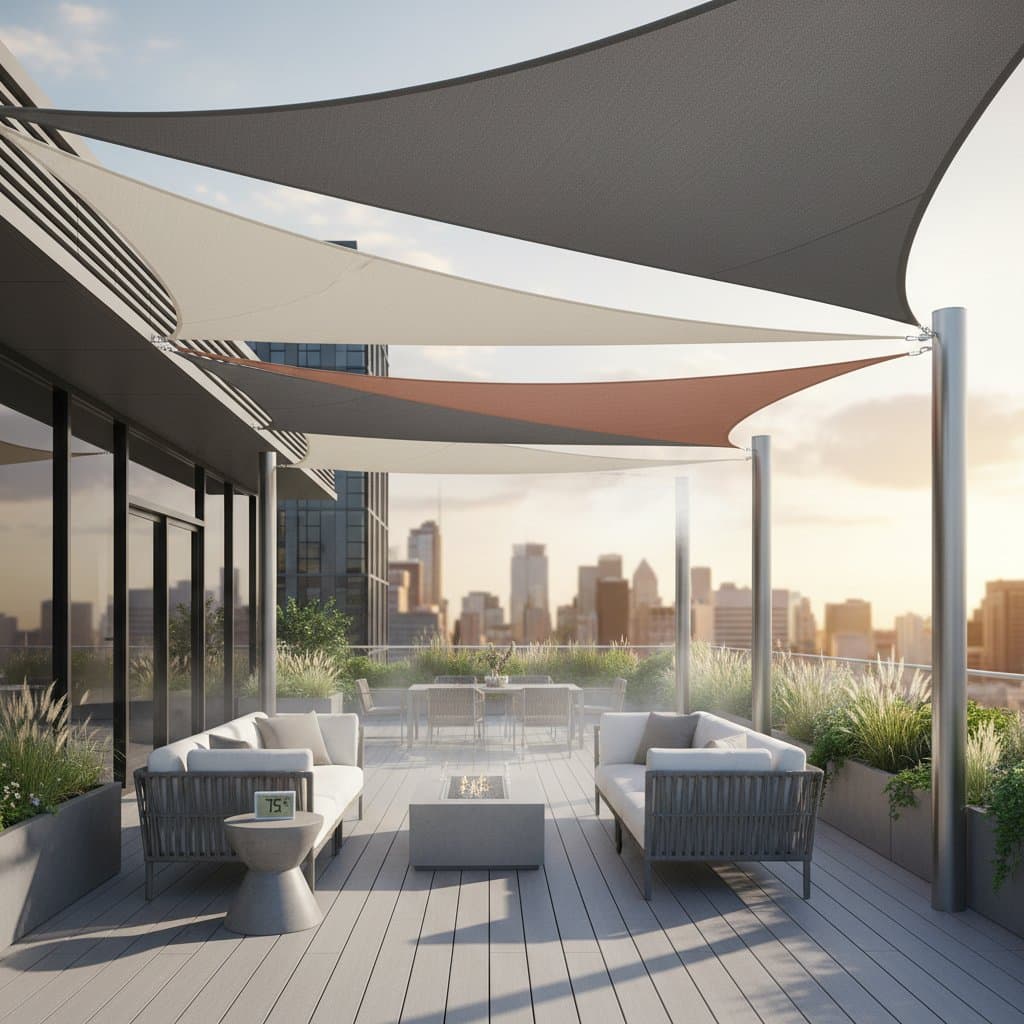
Shade Sails: Enhance Comfort on Your Rooftop Deck
Rooftop decks in urban environments often face intense sunlight, resulting in hot surfaces and stifling air that limit usability. Shade sails provide an effective solution by spanning open spaces to intercept direct rays, thereby reducing temperatures and extending the time you can enjoy the area. These structures create shaded retreats without the need for permanent fixtures.
This guide outlines the essentials of shade sails, including selection criteria, installation procedures, and long-term care. Readers gain practical knowledge on required tools, anchor placements, and seasonal adjustments to withstand urban weather conditions.
Understanding Shade Sails
A shade sail consists of a tensioned fabric panel supported by multiple anchor points, functioning as a lightweight canopy. The material, typically high-density polyethylene, filters up to 95 percent of ultraviolet rays while permitting airflow to prevent heat buildup. On clear days, this coverage lowers ambient temperatures beneath the sail by approximately 15 degrees Fahrenheit.
Shade sails prove ideal for city rooftops due to their low-profile design and simple setup. Three or four connection points suffice to shade lounging areas, cooking zones, or recreational spaces. Compared to fixed structures like pergolas, shade sails offer affordability, portability, and ease of removal.
Essential Tools and Materials
Preparation involves assembling specific items to ensure a smooth process. Allocate one to two hours for a modest deck installation, depending on complexity.
Materials
- One to three shade sails, selected based on the area to cover
- Stainless steel turnbuckles, with a minimum of three per sail
- Pad eyes or eye bolts for secure attachments
- Nylon or stainless steel ropes for applying tension
- Carabiners or quick links for connections
- Measuring tape for precise layouts
- Level and marker for alignment
- Surface-specific hardware, such as masonry anchors for concrete or lag screws for wood
Tools
- Power drill equipped with appropriate bits for the deck material
- Adjustable wrench for tightening components
- Sturdy ladder to access installation heights safely
- Safety glasses and gloves for protection
Installation Process
Step 1: Measure and Design the Layout
Begin by assessing the target shading zone and recording dimensions. Identify three or four anchor locations that outline a triangular or quadrilateral shape, ensuring structural integrity. Maintain a minimum 8-inch gap from each sail corner to the anchor to accommodate hardware; position one corner at least 12 inches below the opposite for effective water drainage.
Step 2: Secure the Anchor Points
Drill pilot holes at marked positions for pad eyes or eye bolts. Fasten each with hardware matched to the surface type: masonry anchors for brick or concrete, lag screws for wooden decks. Verify stability by applying test pressure; reinforce any that yield to prevent detachment during wind exposure.
Step 3: Connect and Tension the Sail
Attach carabiners or quick links from sail corners to turnbuckles, then link to anchors. Gradually tighten turnbuckles to draw the fabric taut, achieving a subtle inward curve along edges without sagging. Adjust incrementally if flapping occurs, turning hardware one rotation at a time until stability is achieved.
Step 4: Verify Alignment and Drainage
Step away to evaluate the overall form. Fine-tune positions so water channels toward the lowest corner, avoiding level setups that invite pooling and material strain.
Step 5: Confirm Tension and Durability
Apply light pressure to the sail's center; deflection should not exceed one inch. Retighten as necessary and lock all fittings with nuts or pins for permanence.
Key Safety Considerations
Wear gloves during cable adjustments to guard against sharp edges. Refrain from anchoring into compromised masonry; repair cracks prior to proceeding. Maintain a three-foot buffer from heat sources like grills or fire pits to mitigate fire risks. In anticipation of strong winds, sails may catch air like sails; release tension or dismantle them ahead of severe weather.
Common Issues and Solutions
Sagging Material: Ensure turnbuckles reach full extension. If unresolved, shift an anchor outward by several inches to heighten pull.
Pooled Water: Drop the drainage corner an extra six inches for better flow.
Edge Fraying: Snip stray threads and seal with fabric protectant; replace the entire panel if damage extends.
Unstable Anchors: Inspect fasteners biannually. Incorporate washers or extended screws if the substrate shows degradation.
Cost Estimates and Timeline
Pricing for shade sails depends on dimensions and quality. A 12-foot triangular unit ranges from $30 to $60, with hardware kits at $20 to $40 apiece. A complete three-sail rooftop array typically totals under $250 for DIY efforts. Expect two to three hours for planning, securing, and calibrating. Professional assistance for elevated or complex anchors adds $150 to $300, varying by accessibility and building specifications.
Routine Maintenance Practices
Wash sails quarterly using mild soap and water, avoiding bleach that degrades fibers. Rinse completely and air-dry prior to re-tensioning. Examine seams for deterioration and swap out rusted elements like turnbuckles or links. During winter, relocate sails indoors to shield from snow accumulation, which burdens the structure.
Seasonal Preparation Guidelines
Prior to summer installation:
- Examine anchors for corrosion or play.
- Launder and dry sails thoroughly.
- Coat with UV-resistant spray to prolong durability.
Ahead of autumn:
- Dismantle before prolonged rains or gales.
- Clean and store flat to avoid folds.
- Check mounts for water-induced wear.
Effective Storage Strategies
Fold sails neatly and place in breathable containers to allow air circulation. Steer clear of sealed plastics that foster dampness. Tag items by dimensions or zones, such as "eastern lounge" or "barbecue area," for efficient retrieval. Organize fittings in marked pouches to streamline future setups.
Indicators for Professional Assistance
Engage experts for concrete or metal decks where anchoring expertise is lacking. Specialists assess load-bearing capacity and install reinforcement plates as required. Consult them for multi-tenant buildings with access restrictions or weight guidelines. Specify corrosion-resistant hardware and obtain documentation on anchor penetration depths.
Advanced Techniques for Optimal Results
Integrate varied sail geometries to accommodate irregular spaces, overlapping by one foot minimum to seal light paths. Opt for pale hues to maximize heat reflection or deeper tones for intensified shade, aligned with your sunlight patterns. For nighttime use, affix low-voltage LED strips to borders for ambient lighting. Employ quick links over knots for swift disassembly in inclement weather. Maintain a dedicated wrench for routine tension verifications.
Achieve Lasting Outdoor Comfort
Implementing shade sails transforms exposed decks into versatile extensions of living space. Follow these steps to install securely, maintain diligently, and adapt seasonally. Your rooftop becomes a reliable venue for relaxation and social events year-round.