
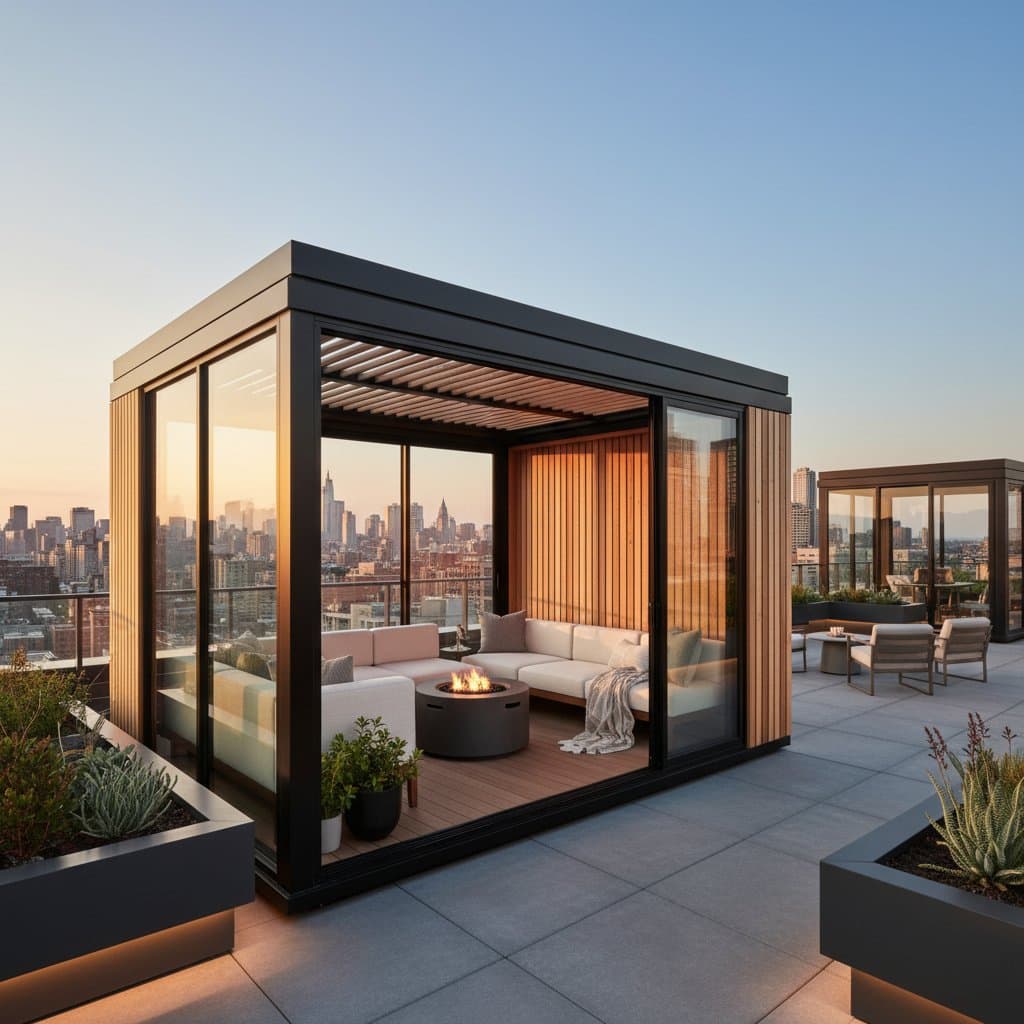
Prefab Pods: Transforming Urban Rooftops into Functional Outdoor Spaces
City dwellers often overlook rooftops as potential extensions of living space. Prefab pods address this oversight by providing modular enclosures that create private, weather-resistant areas atop buildings. These structures maximize vertical real estate for relaxation, productivity, or entertainment while adhering to urban constraints.
This article examines prefab pods in detail. It explains their design principles, installation requirements, and long-term upkeep. Readers gain practical insights to evaluate, install, and maintain these additions effectively.
Understanding Prefab Pods
A prefab pod consists of factory-assembled components designed for rooftop deployment. These units arrive in prefabricated sections that assemble on-site with basic tools, minimizing disruption. Typically constructed from durable materials like aluminum or composites, pods withstand urban elements while remaining lightweight.
In dense urban environments, rooftops represent untapped potential. Prefab pods unlock this space by forming enclosed or semi-enclosed zones suitable for various uses. Options range from open-air lounges to insulated offices, each enhancing quality of life without altering building footprints.
Key advantages of prefab pods include the following:
- Rapid assembly that requires few permits and little downtime
- Scalable designs adaptable to roof dimensions from 64 to 200 square feet
- Reduced structural stress through materials weighing under 30 pounds per square foot
- Integrated weather barriers for consistent usability across seasons
- Aesthetic uniformity that complements modern architecture
Essential Tools and Materials
Preparation ensures a smooth prefab pod installation. A team of two to four individuals can complete the process in under eight hours with organized supplies. Structural assessment precedes all work; rooftops generally bear 20 to 50 pounds per square foot, but professional verification confirms suitability.
Required tools:
- Cordless power drill equipped with assorted bits
- 25-foot measuring tape and digital level
- Adjustable socket wrench set for various bolt sizes
- Full-body safety harness with compatible roof anchors
- Precision utility knife and caulking gun for sealing
Necessary materials:
- Modular pod panels in aluminum, galvanized steel, or fiber-reinforced composites
- Corrosion-resistant mounting brackets and stainless steel bolts
- Polyurethane-based weatherproof sealant
- Moisture-resistant insulated flooring or interlocking deck tiles
- Detachable pergola kits for supplemental shading
Installation Process
Installation proceeds methodically to guarantee stability and performance. Organize components beforehand and verify measurements against the manufacturer's specifications. Professional consultation proves essential for complex roofs or high-rise settings.
Step 1: Evaluate Roof Conditions
Clear the installation zone of loose gravel, leaves, or standing water. Assess surface flatness, allowing no more than 1 inch of variance over the pod's base area. Repair any membrane tears or apply primer to seams for optimal adhesion.
Step 2: Verify Accessibility and Capacity
Map the site to ensure 3 feet of perimeter clearance for airflow and maintenance access. Calculate total weight distribution and secure temporary barriers below if hoisting equipment enters play. Coordinate with building management for elevator or stairwell usage.
Step 3: Position the Foundation
Position the base frame according to provided templates, aligning with roof contours and drainage lines. Employ ballast trays or adhesive pads for non-invasive attachment, preserving waterproofing integrity. Secure anchors progressively, achieving uniform tension across all points.
Step 4: Erect Enclosure Panels
Fasten vertical panels sequentially, starting from corner anchors. Apply sealant along every overlap and edge before full tightening. Position the overhead panel with coordinated lifts, ensuring plumb alignment via level checks at multiple points.
Step 5: Integrate Utilities and Enhancements
For electrical integrations like outlets or LED fixtures, engage certified professionals to route wiring through sealed conduits. Affix shade extensions, such as 8-by-10-foot pergola assemblies, using pod-compatible brackets. Test connections for functionality prior to enclosing access panels.
Step 6: Outfit the Interior
Lay flooring substrates that interlock without adhesives, promoting easy removal. Incorporate space-efficient elements like modular benches and wall-mounted shelves. Select UV-resistant fabrics for upholstery to endure prolonged exposure.
Step 7: Validate and Secure
Simulate rainfall by hosing the assembly for 10 minutes, observing for infiltration at junctions. Adjust seals and fasteners as required, then document the setup with photographs. Schedule initial follow-up inspection within one month.
Safety Protocols
Rooftop work demands rigorous precautions to mitigate risks. Equip all participants with harnesses tethered to fixed points whenever heights exceed 6 feet. Adhere strictly to load ratings, distributing weight evenly to avoid overload.
Additional measures include non-slip footing on access routes and wind speed monitoring; halt operations if gusts surpass 20 miles per hour. Delegate electrical tasks exclusively to licensed experts. Maintain emergency kits with first-aid supplies and communication devices on site.
Common Issues and Resolutions
Anticipate potential challenges to address them promptly. Regular inspections prevent minor problems from escalating into structural concerns.
Seepage at Joints:
Examine connections for degraded caulk. Scrape away residue, then extrude fresh silicone in a uniform layer. Re-torque adjacent hardware after 24 hours of curing.
Interior Humidity:
Install passive vents or low-voltage exhaust fans to promote circulation. Monitor relative humidity levels below 60 percent for occupant comfort.
Vibration or Rattling:
Audit bolt tightness against manual specifications. Insert neoprene gaskets between panels to dampen resonance from wind or traffic.
Base Instability:
Level the foundation using adjustable spacers. Recheck after load application to confirm even settling.
Upkeep Guidelines
Sustained durability relies on routine care tailored to urban exposures. Materials like powder-coated metals endure over a decade with consistent attention.
Clean surfaces biannually using pH-neutral solutions and soft brushes. Examine seals quarterly, reapplying as needed to block moisture ingress. Apply lubricant to moving parts annually and clear adjacent drains to facilitate runoff.
In regions prone to accumulation, remove snow depths exceeding 6 inches promptly. For fabric components, inspect for tears and store during extreme weather to extend lifespan.
Storage Considerations
Selectivity in design allows disassembly for seasonal relocation. Most units remain in place, but modular variants facilitate off-site housing.
Disassemble by reversing installation sequence, tagging parts for reassembly. Organize fasteners in compartmentalized containers and protect surfaces with foam barriers during stacking. Archive documentation in waterproof folders for reference.
Cost and Timeline Estimates
Investments in prefab pods range from $8,000 for basic enclosures to $25,000 for advanced configurations with utilities. Factors influencing price include panel composition, dimensions, and add-ons like automation.
Assembly timelines vary: uncomplicated shades require 4 to 6 hours, while full enclosures with integrations span 1 to 2 days. Factor in labor fees of $1,000 to $3,000, plus contingencies for permits or transport, totaling 10 to 15 percent above base estimates.
Seasonal Maintenance Schedule
Adapt care to environmental shifts for optimal performance.
Spring Preparation:
Tighten all hardware and cleanse accumulated grime. Restore sealants on exposed edges to counter expansion cycles.
Summer Oversight:
Evaluate shading efficacy and enhance ventilation against heat buildup. Service cooling accessories like misting systems if equipped.
Fall Cleanup:
Evacuate debris from bases and secure loose elements. Relocate textiles indoors to shield from dampness.
Winter Protection:
Monitor for freeze-thaw damage and minimize openings to retain warmth. Apply anti-corrosive treatments to metal surfaces.
Professional Assistance Indicators
Certain scenarios necessitate expert intervention to ensure compliance and safety.
Seek specialists for structural modifications, utility installations, or heavy-component handling exceeding 150 pounds per unit. Address any post-installation leaks or shifts immediately. Request warranties covering waterproofing and engineering validations from providers.
Essential Insights
Prefab pods elevate rooftop utility through innovative engineering. They deliver privacy and versatility in constrained urban settings.
Prioritize climate-appropriate selections: aluminum for corrosion resistance, composites for thermal efficiency. Confirm dimensions against access routes, typically capping at 4 feet wide. Opt for membrane-friendly mounts and integrate drainage from the outset.
Implementing Your Rooftop Vision
Assess your rooftop's solar patterns and prevailing winds to site the pod optimally. Consult building codes and secure approvals early. Research suppliers specializing in urban adaptations, then prototype layouts with simple sketches.
For existing setups, integrate pod extensions to amplify shaded zones. A compact 8-by-8-foot unit often suffices to refresh daily routines, fostering extended outdoor engagement.