
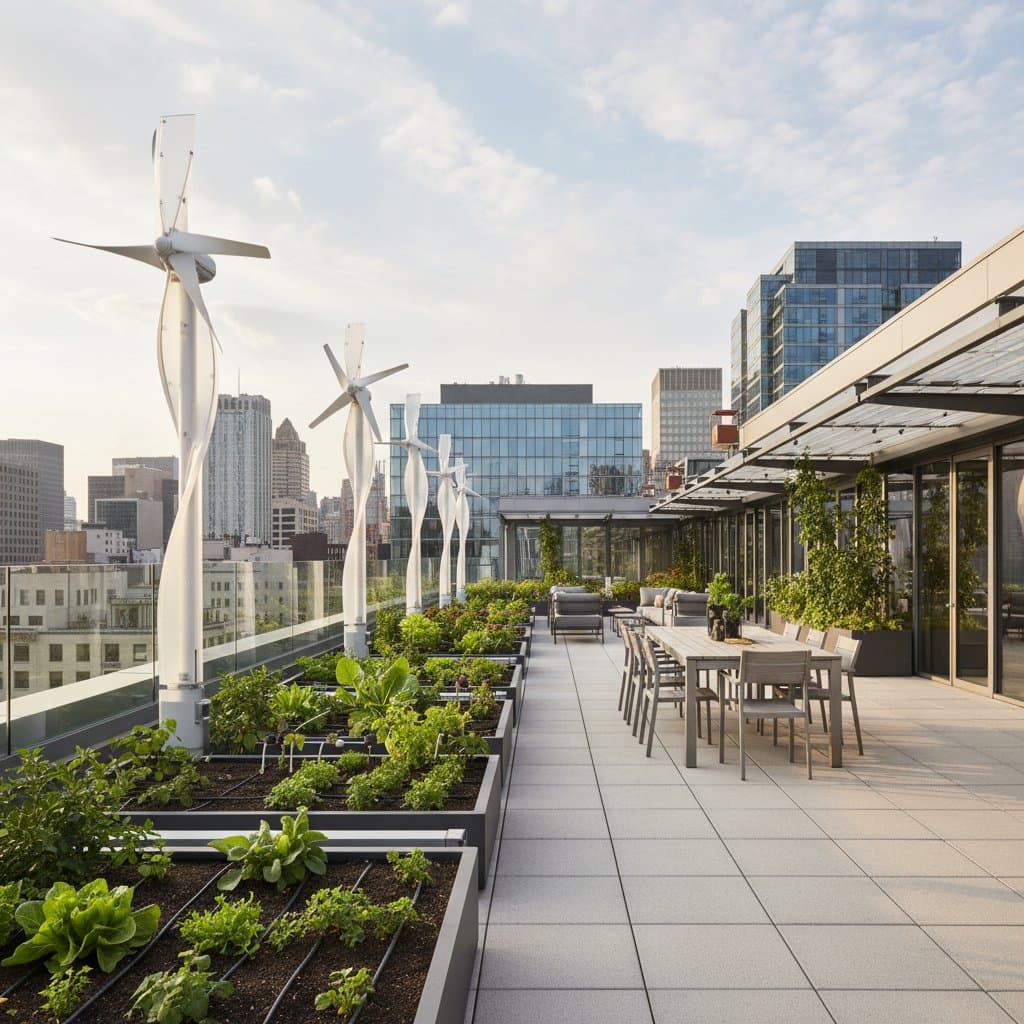
- Planters or raised beds: Opt for durable, 12-inch-deep units made from recycled plastic or fabric to accommodate root vegetables without excessive weight.
- Soil medium: Select a lightweight, well-draining potting mix enriched with organic compost for optimal nutrient retention and aeration.
- Micro wind turbines: Choose models rated at 400 to 1,000 watts, featuring quiet operation and corrosion-resistant blades for urban durability.
- Support structures: Use galvanized steel poles and brackets designed for rooftop mounting, ensuring they distribute loads evenly.
- Electrical components: Include marine-grade cables, a grid-tie inverter, and deep-cycle batteries for energy storage and conversion.
- Irrigation tools: Install drip hoses, moisture sensors, and automated timers to conserve water and maintain consistent hydration.
- Protective equipment: Equip with heavy-duty gloves, safety goggles, and full-body harnesses for elevated work.
- Installation toolkit: Prepare a comprehensive set including adjustable wrenches, cordless drills, levels, and tape measures.
Prior to procurement, consult a structural engineer to verify the roof's load-bearing capacity, typically requiring at least 25 pounds per square foot. This step prevents costly repairs and ensures long-term stability.
Installation Process
1. Site Evaluation and Layout
Conduct a thorough rooftop survey to identify prevailing wind directions, shaded areas, and existing drainage routes. Divide the space into designated zones: allocate areas for turbine placements, garden arrays, and secure storage. Position turbines at least 8 feet from parapets or obstructions to maximize airflow and minimize turbulence effects on surrounding plants.
Document measurements and sketch a preliminary layout, factoring in access paths for maintenance. Consider seasonal variations, such as potential snow accumulation in colder climates, to refine the design.
2. Foundation Preparation
Secure the base by placing interlocking rubber mats or composite pavers beneath all load points. These elements distribute pressure uniformly and safeguard the underlying roofing membrane from damage. Employ non-penetrating clamps or weighted anchors to avoid compromising waterproofing; always perform tasks on dry, stable surfaces to mitigate slip hazards.
Test the setup's stability by applying gradual pressure, simulating wind loads and planter weights. Adjustments at this stage prevent future shifts or imbalances.
3. Turbine Assembly and Mounting
Secure each turbine to its designated pole using manufacturer-recommended hardware. Align the nacelle to face the dominant wind vector, typically determined from site observations or local weather data. Route electrical cables along protected pathways, securing them with UV-resistant clips spaced every 12 inches to prevent tangling or exposure.
House the inverter and battery bank in a sealed, ventilated enclosure positioned indoors or in a sheltered rooftop nook. This configuration protects sensitive electronics from moisture and extreme temperatures.
4. Garden Configuration
Position planters in staggered rows, maintaining 18-inch intervals for unobstructed access and airflow. Fill each unit with the prepared soil blend, reserving a 2-inch headspace to accommodate watering without overflow. Select shallow-rooted varieties like leafy greens, basil, cherry peppers, and compact tomato cultivars, placing taller specimens on perimeter edges to preserve turbine efficiency.
Incorporate trellises for vining plants to verticalize growth, saving horizontal space and enhancing biodiversity. Monitor initial establishment to ensure even light distribution across the array.
5. Irrigation Integration
Extend drip lines parallel to planter rows, connecting to a programmable controller or gravity-fed rain barrel system. Integrate soil moisture sensors that activate watering cycles when levels fall below 40 percent saturation, promoting efficient resource use.
Calibrate the setup to deliver precise volumes, adjusting for evapotranspiration rates influenced by wind exposure. This automation reduces manual intervention while preventing over- or under-watering.
6. Electrical Integration
Link turbine outputs through the inverter to a dedicated sub-panel or outlet circuit, suitable for low-voltage applications like LED grow lights or ventilation fans. Install a digital watt-hour meter to monitor generation, anticipating 100 to 300 watts per turbine during moderate winds of 10 to 15 miles per hour.
Conduct continuity tests on all connections to eliminate shorts or inefficiencies. Ground the system per electrical standards to enhance safety.
7. Initial Testing and Adjustments
Operate the full assembly for an extended trial period, observing turbine rotation and planter stability. Verify that generated power integrates seamlessly with storage or grid systems. If gusts cause plant displacement, install permeable windbreaks like bamboo screens to diffuse airflow without impeding overall energy capture.
Fine-tune based on real-time data, such as repositioning elements for optimal synergy between the garden and turbines.
Prioritizing Safety
Safety underpins every aspect of rooftop hybrid systems. Wear slip-resistant footwear and secure harnesses tethered to fixed points whenever working near edges. De-energize circuits prior to any wiring modifications to avoid shocks.
Elevate turbine hubs to a minimum of 7 feet above the walking surface, preventing accidental contact with rotating blades. Limit planter weights through lightweight fills and modular designs, distributing loads to avoid localized stress. Clearly label all electrical junctions and access points for quick identification during inspections.
Regular drills for emergency scenarios, including high winds or power surges, build confidence in system handling.
Common Issues and Solutions
Excessive Turbine Vibration: Inspect and torque all fasteners to specifications; realign poles if misalignment contributes to resonance. This issue often stems from uneven mounting or blade imbalances.
Reduced Energy Yield: Remove accumulations of dust, pollen, or urban particulates from blades. Evaluate sightlines for obstructions like adjacent buildings that alter wind corridors.
Vegetation Distress: Symptoms of desiccation or leaf scorch indicate excessive exposure; erect low-profile barriers or cluster planters to create microclimates. Adjust irrigation thresholds accordingly.
Drainage Problems: Elevate bases using sturdy risers or shims to facilitate runoff, preventing root rot from standing water. Clear debris from scuppers seasonally to maintain flow.
Cost Considerations and Timeline
A basic installation featuring two turbines and ten planters typically costs between $1,200 and $2,500, with turbines and anchoring hardware accounting for the largest shares. Factor in potential rebates for renewable energy components to offset expenses.
Completion requires about two full weekends: dedicate the first to structural and turbine work, the second to gardening and electrical finalization. Budget-friendly alternatives include upcycled containers for planting and salvaged materials for cable routing, provided they meet durability standards. Invest reliably in core mechanical and electrical elements to safeguard performance and longevity.
Ongoing Upkeep Practices
Perform bimonthly inspections of turbine fasteners, tightening as needed to counter vibration-induced loosening. Gently wash blades with a soft brush and diluted soap solution to eliminate contaminants, restoring aerodynamic efficiency.
Annually replenish garden soil with compost amendments to sustain fertility. Implement crop rotation across planters to mitigate soil-borne diseases and nutrient depletion. Winterize by evacuating water from irrigation lines and securing loose components against frost expansion.
Maintain a digital or notebook record tracking daily energy production and weekly harvests. Analyze trends to inform upgrades, such as adding solar supplements during low-wind periods.
Adapting to Seasons
Spring Preparation: Introduce cool-season crops like spinach and chives; lubricate turbine mechanisms and validate inverter functionality post-winter dormancy.
Summer Management: Deploy shade fabrics over sensitive seedlings during peak heat; ventilate battery compartments to regulate internal temperatures.
Fall Transition: Gather mature yields such as radishes and kale; sanitize vacant planters and coil excess hoses for storage.
Winter Protection: Brake turbine rotations during gales exceeding 40 miles per hour; insulate soil surfaces with organic mulch to shield roots from freeze-thaw cycles.
Efficient Storage Strategies
Consolidate bulk items like soil amendments and reserve pots in sealed, weatherproof containers positioned adjacent to entry points. Segregate electrical spares in a moisture-proof case to prevent corrosion.
Implement a labeling system categorizing contents by function, streamlining retrieval during routine tasks. Periodically audit storage to discard deteriorated materials, keeping the area organized and accessible.
Engaging Professional Expertise
Seek a licensed electrician for complex inverter integrations or capacity evaluations to comply with regulations. Engage a roofing specialist for pre-installation membrane assessments, especially on structures over 10 years old.
Halt operations immediately if signs of structural compromise, such as water intrusion or deflection, appear. Professional intervention restores integrity and averts liabilities.
Realizing Sustainable Rooftop Potential
Implementing a hybrid rooftop system empowers urban dwellers to reclaim space for productivity and independence. These setups not only supply homegrown nourishment and offset energy bills but also contribute to broader ecological goals. Start small, iterate based on observations, and witness the transformative impact of integrated green technology.