
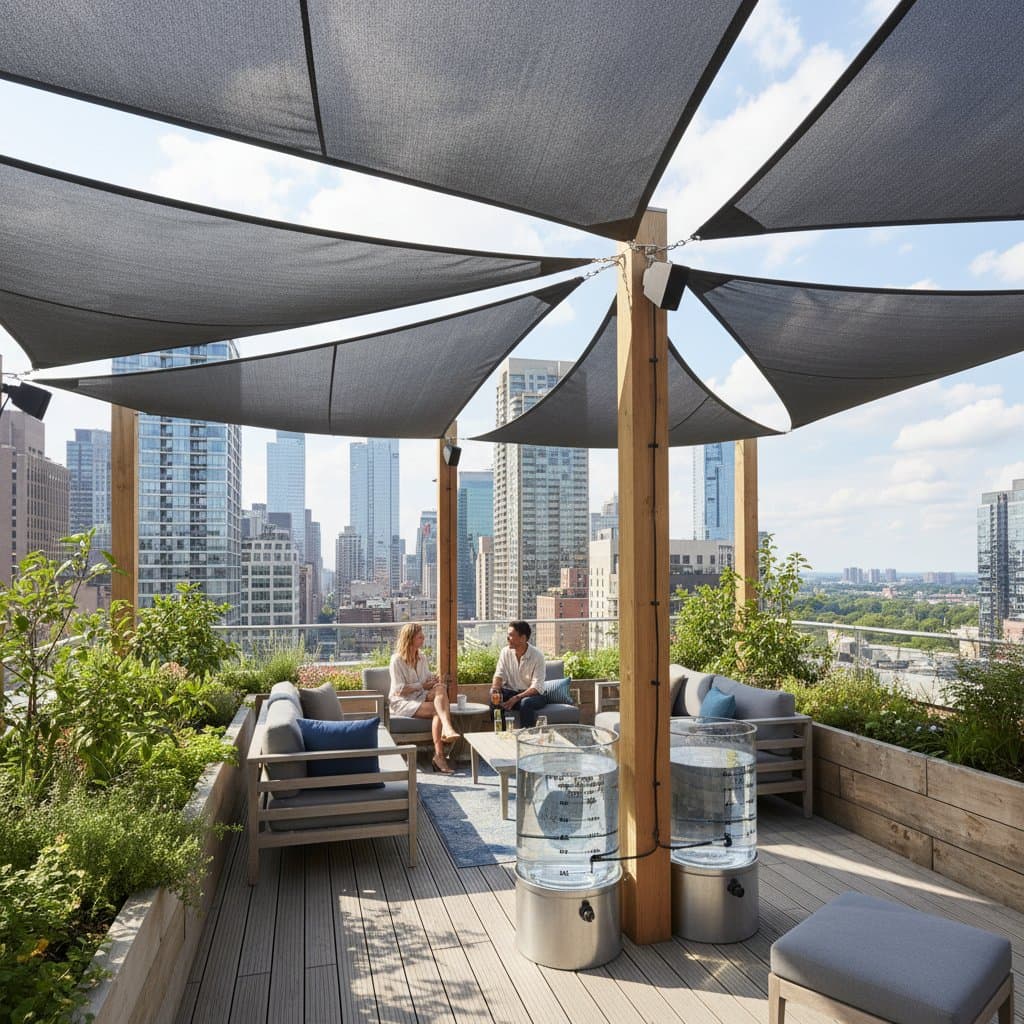
3. Secure the Shade Sail
Position each corner of the shade sail at the designated mounting points. Employ turnbuckles and stainless-steel shackles to attach the reinforced corners firmly. Adjust the tension gradually and evenly across all corners to achieve a taut surface with only slight sag, typically less than two inches in the center. Verify that the lowest corner directs toward the intended drainage point to facilitate smooth water flow.
Select hardware rated for outdoor use, such as galvanized or marine-grade stainless steel, to withstand weather exposure. If the sail spans more than 15 feet, consider adding intermediate supports to distribute weight evenly and prevent fabric stress during wind gusts.
4. Integrate the Water Collection System
Affix a durable, UV-resistant hose or PVC pipe to the lowest corner of the sail, ensuring a secure seal with clamps or fittings. Route the conduit downward to the inlet of your rain barrel, maintaining a consistent slope of at least one inch per foot to promote gravity-fed drainage. Install a fine-mesh screen or first-flush diverter at the entry point to filter out leaves, dust, and insects.
Place the rain barrel on a level, reinforced platform capable of supporting at least 500 pounds when full. Designate an overflow outlet that channels excess water to a storm drain or garden bed, preventing flooding during intense downpours. For optimal water quality, position the barrel in partial shade to minimize algae growth.
5. Test the Installation and Fine-Tune
Simulate rainfall by spraying water across the entire sail surface with a garden hose. Observe the water path to confirm it funnels efficiently toward the low corner without stagnation. If uneven pooling appears, increase tension on the higher corners or elevate one mounting point by four to six inches using adjustable brackets.
Secure all hoses and connections with UV-resistant zip ties or metal clips to resist wind displacement. Run a full test cycle, filling the barrel partially, to check for leaks in the system. Document any adjustments in a maintenance log for future reference.
Essential Safety Considerations
Always wear a full-body harness secured to a reliable anchor when operating near roof edges, especially on sloped or high structures. Maintain a safe distance from electrical lines, power conduits, and HVAC units during post or bracket installation to avoid accidental contact.
In regions prone to freezing temperatures, drain the rain barrel completely or disconnect it from the system to prevent ice expansion from damaging the container. Ensure all pathways on the rooftop remain unobstructed by hoses, tools, or extension cords to minimize tripping hazards. Consult local building codes before installation to confirm compliance with weight and wind load requirements.
Common Issues and Solutions
Issue: Water accumulates in the sail's center.
Solution: Redistribute tension by tightening turnbuckles at the higher corners or install a slight ridge line to create dual drainage paths. Recheck after adjustment and test with water.
Issue: Seams develop leaks over time.
Solution: Clean the affected area thoroughly, then apply a specialized waterproof sealant tape along the inner seams. For extensive damage, source replacement fabric panels from the manufacturer and resew using heavy-duty UV-resistant thread.
Issue: The rain barrel overflows during prolonged rain events.
Solution: Attach an overflow hose to divert surplus water to a designated drainage area, such as a rooftop planter or ground-level gutter. Alternatively, connect a second barrel in series with a linking pipe to increase storage capacity without manual intervention.
Ongoing Maintenance Practices
Inspect the shade sail fabric at the start of each season for tears, fading, or mildew spots, addressing minor issues promptly to extend lifespan. Clean the surface quarterly using a solution of mild soap and water applied with a soft-bristle brush, followed by a thorough rinse to remove residue that could impede water flow.
Examine cables, turnbuckles, and mounting hardware for signs of corrosion or loosening, replacing any compromised components immediately. Retighten connections as needed to maintain optimal tension, particularly after high-wind events. Flush the rain barrel monthly by draining a portion of the water and refilling to stir and remove settled sediment, preserving water purity for irrigation use.
Store replacement hardware in a sealed, weatherproof container to protect against moisture. Lubricate metal fittings annually with a silicone-based spray to inhibit rust formation. For sails with polyurethane coatings, refresh the protective layer every two years using a manufacturer-recommended waterproofing spray to sustain both water runoff efficiency and ultraviolet resistance.
Off-Season Storage Guidelines
Prior to removal for winter storage, clean the shade sail thoroughly and allow it to air-dry completely in a shaded area. Fold the fabric loosely to avoid creases, then store it in a breathable cotton or mesh bag that permits air circulation. Select a cool, dry location away from direct sunlight, heaters, or damp basements to prevent degradation.
Empty and rinse rain barrels with a vinegar solution to eliminate algae, then dry the interiors before stacking or covering them securely. Organize hoses, fittings, and tools in labeled bins for easy access during reinstallation. Perform a full inventory check to ensure all parts remain intact and functional.
Cost Estimates and Timeline
A basic setup featuring a single shade sail and a 55-gallon rain barrel generally ranges from $250 to $600, including essential hardware and filters. More elaborate configurations with multiple sails, custom framing, and larger storage tanks may cost between $1,000 and $1,500, depending on material quality and size.
Installation requires approximately four to six hours for a standard single-sail system, assuming materials are pre-assembled. Monthly cleaning and inspections demand less than 30 minutes, making the routine straightforward for homeowners. Factor in potential permits or professional consultations, which could add $100 to $300 in urban areas.
Seasonal Care Schedule
Spring Preparation: Reinstall the shade sails after winter storage, inspect all seams and hardware for winter damage, and flush the rain barrels to remove any residue.
Summer Utilization: Direct harvested water toward potted plants, rooftop gardens, or evaporative cooling misters to maximize sustainability benefits.
Autumn Maintenance: Remove accumulated leaves and debris from the sail surface weekly, and assess tension to correct any sagging caused by seasonal humidity changes.
Winter Protection: Fully drain all barrels and either remove the sails or loosen tension to accommodate potential snow loads without structural strain.
Indicators for Professional Assistance
Engage a certified installer if your rooftop exceeds 20 feet in height, involves complex structural modifications, or requires integration with existing drainage systems. Seek expert help for large-scale projects spanning multiple sails or when local wind speeds regularly surpass 50 miles per hour, as these demand engineering assessments for safety. Professionals can also handle custom fabrications or repairs beyond basic maintenance, ensuring long-term durability.
Core Benefits Summary
Shade sails equipped for rainwater harvesting deliver dual functionality by reducing rooftop temperatures by up to 20 degrees Fahrenheit and supplying a reliable, chemical-free water source. Implement a 10- to 20-degree slope to optimize drainage efficiency and prevent water retention. Consistent upkeep preserves the integrity of both the canopy and collection components, minimizing repair needs.
Even modest installations can capture up to 600 gallons over a typical rainy season, sufficient to irrigate a 200-square-foot garden without municipal water reliance. These systems enhance urban resilience by integrating shade, water conservation, and green space in one efficient design.
Steps to Implement Your System
Begin with a targeted area, such as a 10-by-10-foot section of your rooftop, and install a single sloped shade sail connected to a 55-gallon barrel. Monitor the initial setup through a few rain events, noting fill rates and temperature reductions to refine performance.
Expand gradually by adding adjacent sails to form a shaded network that amplifies cooling and collection. Incorporate elements like modular planters or weather-resistant furniture to personalize the space. Track environmental factors, including prevailing winds and solar exposure, to adjust the configuration for peak efficiency.
Observe how the system adapts to your specific rooftop conditions, making incremental tweaks to slope and tension. This iterative approach ensures the setup evolves with your needs, fostering a more inviting and self-sufficient outdoor environment.