
Installation Steps
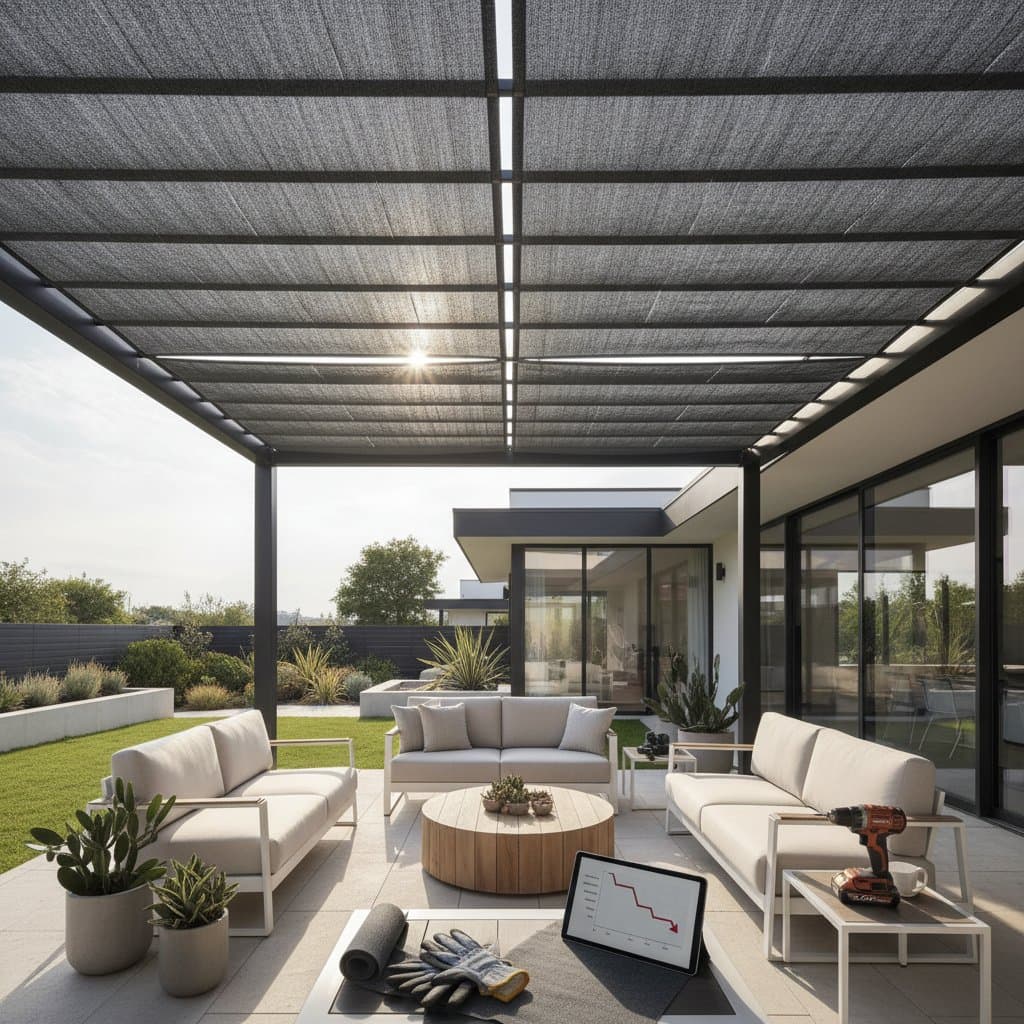
Before beginning installation, ensure you have the necessary tools: a drill with bits for wood or metal, a level, weatherproof cable ties, a multimeter for testing, and insulated wire cutters. Select a sunny location for your pergola to maximize energy production. Follow these steps to install solar shade fabrics securely and efficiently.
1. Prepare the Pergola Structure
Inspect the pergola beams for stability. Reinforce any weak points with additional brackets if needed. Measure the span between beams to determine fabric panel sizes, ensuring at least six inches of overlap on each side for proper tension.
Attach mounting clips every two feet along the beams. These clips secure the fabric edges and distribute weight evenly. Use stainless steel hardware to resist rust in outdoor conditions.
2. Install the Fabric Panels
Unroll the solar fabric panels and position them across the pergola top. Start from one end and work toward the other to avoid bunching. Secure the edges with the provided clips, pulling the fabric taut to eliminate sagging.
Adjust the angle slightly if possible, aiming for a 10 to 30-degree tilt toward the south for optimal sunlight capture. This orientation can increase energy yield by up to 20 percent in northern hemispheres.
3. Connect the Wiring
Each fabric panel features small connectors along the edge. Plug these into the junction box, matching positive and negative markings precisely. Apply weatherproof seals around each connection to prevent moisture ingress.
Route the main cable along a beam, securing it with ties every foot. Direct the cable to the charge controller, which should reside in a shaded, protected spot to avoid overheating.
4. Add the Power Components
Link the charge controller to a battery or inverter suited to your needs. For instance, a 12-volt battery stores energy generated during the day for use in evening lighting. To integrate with home circuits, engage a licensed electrician to ensure compliance and safety.
Select components rated for outdoor use, with capacities matching the fabric's output, typically 50 to 200 watts per panel. This setup allows for scalable expansion as your energy requirements grow.
5. Test the System
Employ a multimeter to verify voltage output. Under bright sunlight, expect steady power flow within the specifications of your fabric model, often 12 to 24 volts. Low readings may indicate loose connections or suboptimal panel angles; inspect and adjust accordingly.
Run a full test cycle over an hour to confirm consistent performance. Document initial readings for future comparisons during maintenance.
Safety Considerations
Disconnect the battery prior to any wire adjustments to avoid electrical hazards. Maintain dry conditions for all connectors, shielding them from water spray with covers. Wear gloves when manipulating sharp metal clips to prevent cuts.
For grid-tied installations, professional oversight is essential. Solar fabrics pose minimal risk when mounted correctly, yet improper wiring can lead to short circuits or minor shocks.
Common Issues and Solutions
Low Power Output
Dirt accumulation reduces efficiency significantly. Clean the fabric surface using a soft brush and mild soap solution. This simple action can restore up to 25 percent of lost performance by removing dust and pollen.
Check for shading from overhanging branches as well. Trim nearby vegetation to ensure unobstructed sunlight exposure throughout the day.
Uneven Shading
Shadows from adjacent objects disrupt energy generation. Relocate plants or furniture that cast intermittent shade. Even brief obstructions can reduce output across the fabric's conductive threads.
Consider adding reflective surfaces nearby to bounce additional light onto the panels, enhancing overall yield.
Loose Fabric Edges
Flapping edges create noise and wear. Tighten the clips or install support rods at two-foot intervals. Proper tension minimizes movement and prolongs the fabric's durability.
Inspect tension seasonally, as temperature fluctuations can cause expansion or contraction.
Ongoing Maintenance
With routine care, solar shade fabrics endure 10 to 15 years of service. Clean the surface regularly and examine wiring annually. Store replacement clips and connectors in a sealed, dry container for quick access.
Cleaning Procedure
-
Disconnect the system from power sources.
-
Prepare a solution of mild soap and water in a bucket.
-
Wipe the fabric gently with a sponge or soft cloth.
-
Rinse thoroughly using a garden hose on low pressure.
-
Allow the fabric to air dry completely before reconnecting.
Steer clear of harsh chemicals or abrasive tools, which may damage the photovoltaic coating.
Storage Guidelines
For seasonal removal, such as before winter storms, roll the fabric rather than folding it. Utilize a tube with a six-inch diameter to avoid creases that could impair flexibility. Position the stored roll in a cool, dry area, away from direct sunlight to preserve material integrity.
Label each roll clearly with dimensions and connector details. This practice simplifies reinstallation and reduces setup time.
Cost and Installation Timeline
Basic kits for small pergolas range from 600 to 1,200 dollars, encompassing fabric, charge controller, and battery. Custom larger setups may cost 2,000 to 3,000 dollars, influenced by coverage area and power capacity. Plan for four to six hours of work with an assistant.
Benefits include decreased electricity consumption and reduced indoor cooling demands. The system often recoups its cost within five to seven years through energy savings and incentives.
Seasonal Care Schedule
-
Spring: Examine clips for wear and clean after pollen dispersal.
-
Summer: Track voltage and battery charge on a weekly basis.
-
Fall: Clear leaves and debris to avert moisture accumulation.
-
Winter: In snowy regions, remove and store the fabric to prevent structural damage from accumulated weight.
Regular attention ensures reliable operation year-round.
Professional Assistance
Engage a certified solar installer or electrician for home grid connections or smart system integrations. Inquire about voltage compatibility with your inverter, adequate grounding, and surge safeguards. Verify adherence to local building codes for outdoor wiring.
Experts can optimize battery sizing and confirm safe power distribution, maximizing your investment.
Getting Started with Your Solar Pergola
Solar shade fabrics enable your pergola to deliver both comfort and renewable energy. Begin modestly with one or two panels, then scale up as desired.
Take these initial actions:
-
Measure your pergola dimensions and assess average daily sunlight exposure.
-
Evaluate fabric choices based on watts per square foot.
-
Map out wiring routes and select storage solutions aligned with your objectives.
Equipped with basic tools and a solid plan, you will create an outdoor haven that provides shade, produces clean energy, and enhances efficiency daily.