
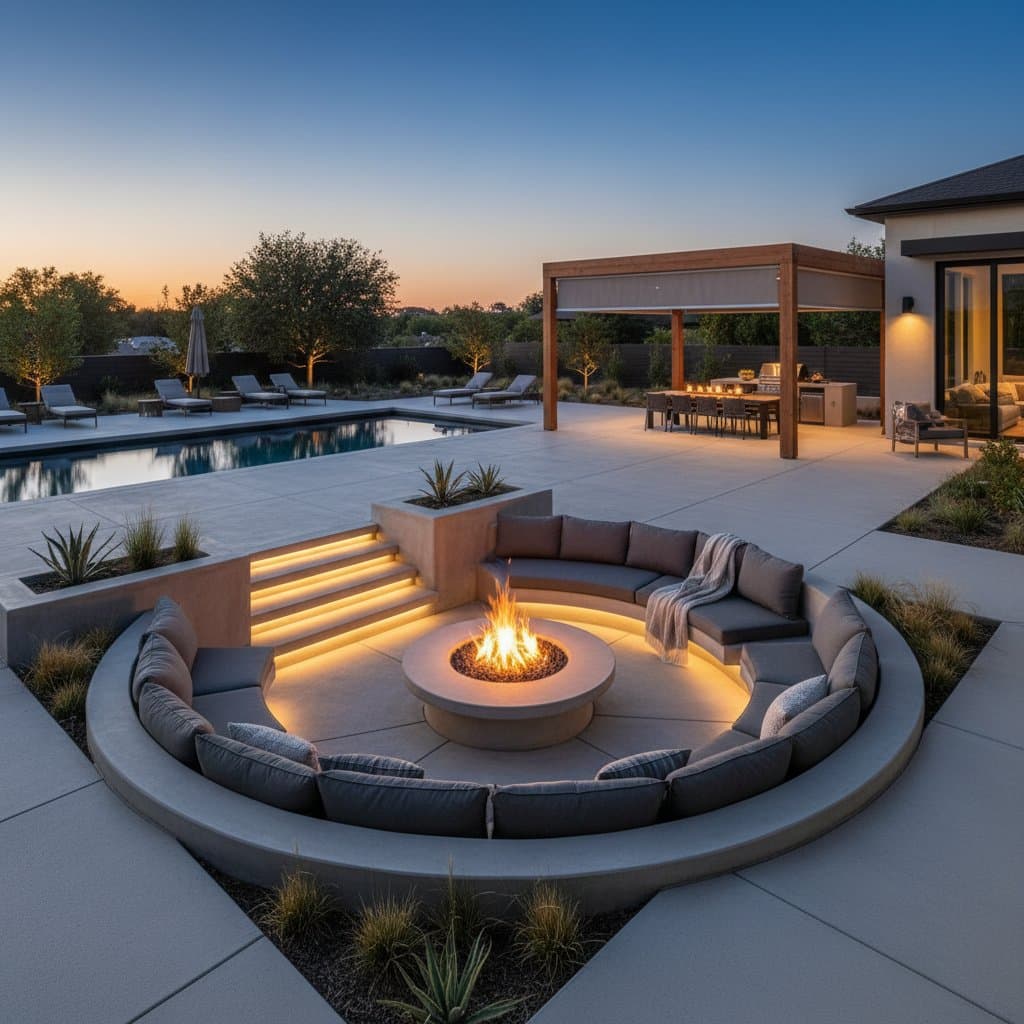
Introduction to Sunken Fire Pits
Sunken fire pits represent a compelling trend for outdoor spaces in 2025. These features lower the fire basin into the ground, creating a sense of enclosure and intimacy that encourages gatherings. Unlike elevated fire pits, sunken designs integrate seamlessly with the landscape, offering a sculptural element that enhances backyard aesthetics while providing warmth and functionality.
This guide provides a comprehensive overview of designing and constructing a sunken fire pit. Readers will find detailed steps for safe installation, material selections, and ongoing care. By following these instructions, individuals can transform an ordinary yard into a versatile retreat suitable for year-round enjoyment.
Planning Your Sunken Fire Pit
Before beginning construction, assess the site carefully. Choose a level area at least 10 feet from structures, trees, or flammable materials to comply with safety standards. Measure the desired pit diameter, typically 4 to 6 feet, and seating radius of 8 to 12 feet.
Sketch a layout that includes the fire ring, seating wall, and drainage path. Consider local building codes, especially for fire features and retaining walls. Gather permits if the project involves gas lines or exceeds certain dimensions.
Select materials based on durability and style. Fire-rated bricks or precast concrete rings form the core, while retaining wall blocks create the seating. Natural stone caps add comfort for seating, and gravel ensures proper drainage.
Step-by-Step Construction Guide
1. Mark and Excavate the Site
Outline the pit using stakes and string, marking a circle 4 to 6 feet in diameter for the fire basin and an outer ring 8 to 12 feet across for seating. Dig the central pit to a depth of 18 to 24 inches, sloping the sides slightly for stability. Remove sod and soil, setting it aside for later use.
Excavate a shallower trench, 6 to 12 inches deep, around the perimeter for the seating wall foundation. Compact the base with a tamper to prevent settling. This preparation ensures a solid foundation resistant to shifting over time.
2. Prepare the Base
Line the pit bottom with landscape fabric to block weeds. Add 4 inches of compacted gravel for drainage and stability. Level the surface meticulously, as uneven bases lead to cracks in the fire ring.
Install a geotextile fabric over the gravel to separate it from surrounding soil. This layer promotes longevity by reducing erosion and material migration during heavy rains.
3. Install the Drain
Position a 4-inch perforated pipe from the pit center to an edge that slopes away from the structure. Extend the pipe 5 to 10 feet outward to direct water dispersal. Cover the pipe with 2 inches of gravel to facilitate flow without clogging.
Test the drainage by pouring water into the pit and observing runoff. Adjust the slope if necessary to ensure complete evacuation within minutes, preventing water accumulation that could damage materials.
4. Build the Fire Ring
Place the steel or precast concrete fire ring in the center, securing it with high-temperature adhesive if required. Encircle it with fire-rated bricks or blocks, arranging them in a tight formation that leaves no gaps for heat escape.
Apply mortar sparingly, selecting only products rated for temperatures exceeding 1000 degrees Fahrenheit. Allow the assembly to cure for 24 hours before testing with a small fire to verify integrity.
5. Create the Seating Wall
Stack retaining wall blocks around the outer edge, maintaining a 12-inch gap between the fire ring and the inner wall for safe circulation. Apply construction adhesive between layers to enhance stability without relying on mortar in heat-exposed areas.
Construct the wall to a height of 18 to 24 inches for comfortable seating. Crown the top with flat stone slabs or pressure-treated wood for a smooth, ergonomic surface that withstands outdoor exposure.
6. Backfill and Finish
Fill the space behind the seating wall with a mixture of gravel and soil, compacting in 6-inch layers to avoid voids. Grade the surrounding ground to slope away from the pit, promoting natural runoff.
Lay pavers, flagstone, or crushed gravel around the perimeter to create a defined, mud-free zone. Edge the area with landscape timbers or metal strips for a polished boundary that integrates with the yard.
7. Add Lighting and Accessories
Incorporate low-voltage LED path lights along the seating edge or recess strips beneath the caps for ambient illumination. Route all wiring away from the heat source, burying it in conduit for protection.
Select a custom-fitted metal cover to shield the pit from debris and weather when idle. Optional additions include built-in speakers or planters to elevate the space into a multifunctional outdoor room.
Safety Considerations
Maintain a minimum 3-foot clearance between flames and seating surfaces to minimize burn risks. Burn only dry, seasoned hardwoods or utilize approved gas log sets to control emissions.
Prohibit the use of accelerants like lighter fluid within stone enclosures, as they produce hazardous flare-ups. Equip the site with a spark-arresting screen for wood fires and keep sand or a Class ABC extinguisher accessible.
Inspect the installation annually for wear, ensuring no loose stones or exposed wiring compromise safety. Educate all users on protocols to foster responsible enjoyment.
Troubleshooting Common Issues
Excessive smoke in seating zones: Evaluate prevailing winds and introduce a ventilation gap in the upwind wall. Elevate the fire ring on refractory bricks to enhance draft and disperse smoke upward.
Water accumulation post-rainfall: Inspect and unclog the drain line, supplementing with additional gravel if saturated. In clay-heavy soils, integrate a French drain or submersible pump to accelerate clearance.
Fractures in mortar or stone: Identify and replace affected components promptly. Opt for expansion joints in high-heat areas to accommodate thermal stress and avert future damage.
Damp seating cushions: Opt for marine-grade fabrics with drainage holes and store items in sealed containers during inclement weather. Quick-dry inserts maintain comfort without mildew risks.
Budget and Timeline Estimates
A straightforward DIY project spans two weekends, with excavation and assembly demanding the bulk of effort. Material procurement requires advance planning to avoid delays.
Expect $400 to $900 for essentials like blocks, gravel, and the fire ring. Professional services range from $1,200 to $3,000, factoring in custom finishes and labor for complex sites.
Cost efficiencies arise from repurposed materials such as reclaimed bricks. Investments in gas conversions or weatherproof furnishings yield long-term convenience.
Ongoing Maintenance Practices
Remove cooled ashes weekly during active seasons using a metal scoop to prevent buildup. Clean surfaces with a stiff brush and pH-neutral soap, rinsing thoroughly to eliminate residues.
Flush drainage pipes annually with a garden hose to clear sediment. Reapply penetrating sealers biennially to stone elements, shielding against soot stains and moisture penetration.
Employ a snug cover post-use to deter leaves and precipitation. These routines preserve appearance and functionality, extending the feature's service life beyond a decade.
Storage Solutions for Outdoor Essentials
The below-grade design limits concealed storage, yet strategic integrations resolve this. Construct a hinged bench atop the seating wall, featuring compartments for pillows and utensils.
Affix rust-resistant hooks to adjacent fences for hanging implements like pokers. Position firewood in elevated, covered racks positioned 10 feet distant to mitigate fire hazards and insect issues.
These adaptations maintain tidiness, ensuring the area remains inviting without clutter.
Professional Assistance Indicators
Engage certified professionals for gas or propane integrations, walls surpassing 18 inches, or installations requiring heavy machinery. Such expertise ensures compliance with fire regulations and structural codes.
Inquire about soil analysis for stability, frost heave prevention, and utility clearances. Verify permits for fuel lines, including emergency shutoffs. This investment safeguards against liabilities and enhances durability.
Implementing Your Design
A sunken fire pit redefines outdoor living by fostering connection amid natural surroundings. It withstands seasonal shifts, inviting use from spring barbecues to autumn evenings.
Commence with precise measurements and a detailed blueprint. Schedule excavation during dry weather, assembling components methodically. Finalize with a trial lighting to confirm performance, then celebrate the enhanced yard dynamic.