
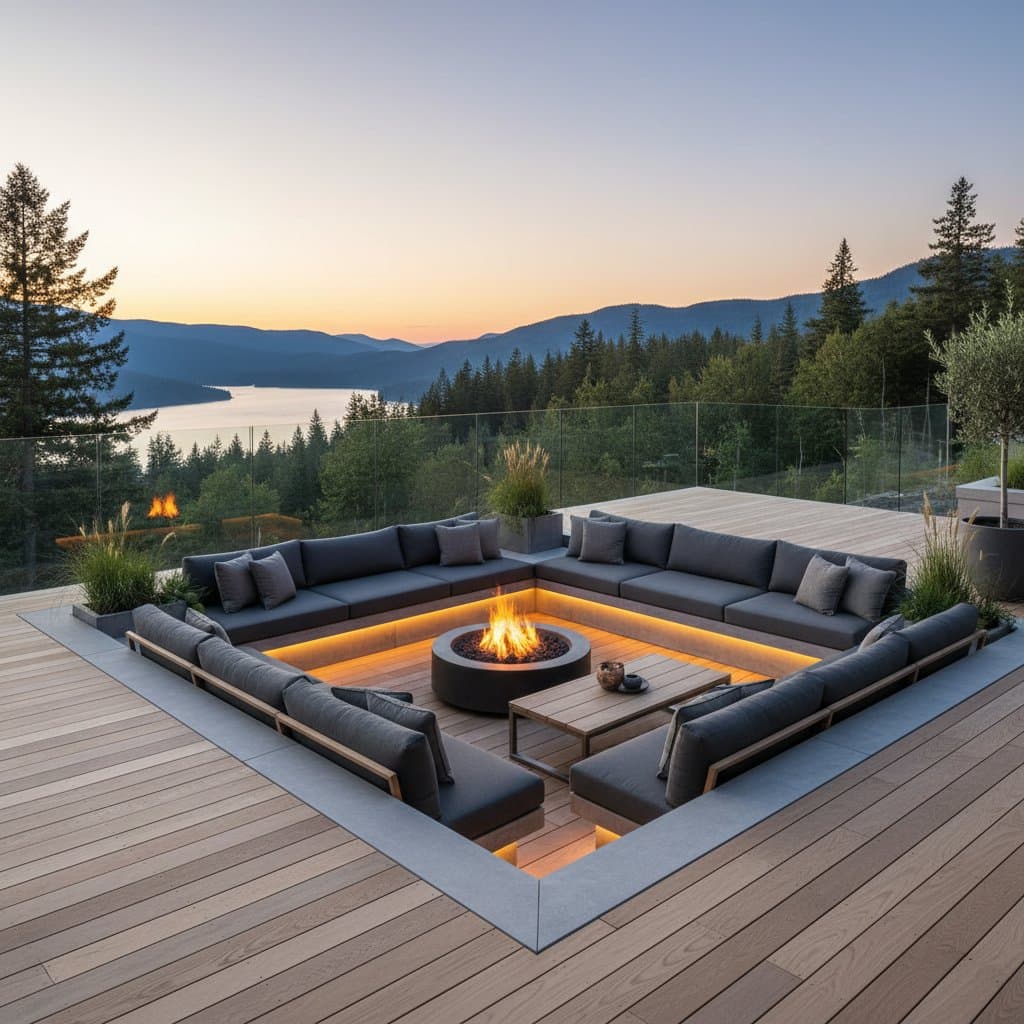
Sunken Fire Pits: The 2025 Revolution in Deck Design
Decks deserve to serve as genuine escapes rather than mere extensions of indoor living. A sunken fire pit elevates a standard deck into a welcoming haven where warmth, dialogue, and aesthetic appeal converge seamlessly. This emerging trend redefines outdoor environments by delivering enduring comfort across all seasons.
The objective remains straightforward: fashion a communal area that offers shelter while preserving openness, provides heat without hazard, and fosters sociability amid tranquility. Individuals may construct such a feature independently through meticulous preparation or direct professionals to execute the finer points with precision.
Understanding Sunken Fire Pits
A sunken fire pit constitutes a recessed seating zone that descends several inches or even feet beneath the primary deck level. The central fire basin resides amid integrated benches or modest retaining walls. This depressed configuration shields against breezes, concentrates thermal output, and positions the flames as the focal point for both visual interest and social interaction.
Comfort and aesthetics drive its popularity. The reduced elevation imparts a layer of seclusion absent traditional enclosures. It encourages participants to congregate closely, ensuring uniform heat distribution. Thoughtful incorporation of drainage systems and flame-resistant surfaces extends usability throughout the year, adapting to varying weather conditions.
Essential Tools and Materials
Allocate at least one full weekend for hands-on labor, plus additional days for curing processes involving concrete or mortar. Assemble the following essentials prior to commencement:
- Measuring tape extending at least 25 feet
- Circular saw paired with a drill
- Level tool and string line for alignment
- Concrete mix or paver stones for foundational elements
- Rebar reinforcements or gravel base to enhance stability
- Metal fire ring insert for the core basin
- Heat-resistant caulk or sealant for joints
- Pressure-treated lumber or composite boards for deck surfacing
- Outdoor-rated screws and anchors for secure fastening
Protect yourself with gloves, eye protection, and a respirator during activities that generate dust or involve proximity to open flames.
Step-by-Step Construction Guide
-
Select the optimal location. Choose a position no closer than 10 feet to any buildings, trees, or fencing. Verify that the underlying deck framework possesses sufficient strength to bear the weight of supplementary materials.
-
Measure and outline the pit. Opt for a 6-foot diameter to suit typical deck dimensions. Delineate the circular boundary using chalk or a taut string line anchored to a central stake.
-
Cut and construct the frame. Extract deck boards from the designated area, then erect a frame using pressure-treated lumber around the perimeter. This structure bolsters the depressed section effectively.
-
Excavate or adjust the subfloor. Lower the base by 12 to 18 inches through digging or structural modification. Compact the underlying soil thoroughly, then layer in 4 inches of gravel to facilitate proper drainage.
-
Erect the foundational wall. Stack concrete blocks or pavers to create a circular enclosure. Maintain evenness at the upper edge with a mason's line for accuracy.
-
Position the fire ring. Insert the metal ring into the core, preserving a 2-inch clearance from the enclosing wall to promote adequate airflow.
-
Incorporate seating elements. Construct low-profile benches encircling the edge. Select non-combustible materials for any components situated near the heat source.
-
Finalize with sealing and testing. Apply heat-resistant sealant to all seams, then assess ventilation prior to igniting the initial fire. Commence with a modest flame to evaluate air circulation patterns.
Prioritizing Safety
Maintain a 10-foot clearance radius free from combustible items. Position firewood storage no nearer than 3 feet to the pit. Avoid employing lighter fluid or chemical accelerants. Install a spark screen in regions prone to gusts.
Incorporate a drain line or compact sump at the basin floor to avert water accumulation. For natural gas configurations, engage a certified technician to handle piping installation and pressure verification. Position a fire extinguisher within easy reach at all times.
Cost and Timeline Considerations
A fundamental DIY sunken fire pit typically ranges from $400 to $900 in expense, influenced by dimensions and selected finishes. Budget increases with additions like gas infrastructure, composite decking, or bespoke seating. Professional services encompassing drainage and illumination may escalate costs to $3,000 through $5,000.
Most DIY projects demand two to three complete days of effort. Factor in supplementary time for material curing and any required inspections, particularly with concrete applications.
Common Issues and Solutions
Persistent smoke drifting toward seating areas signals inadequate airflow; inspect and expand gaps by half an inch if necessary. Water pooling requires the addition of a gravel-filled trench or a mesh-lined drain hole to exclude debris.
Mortar cracks frequently result from thermal expansion or insufficient curing periods. Repair by repointing with high-temperature mortar, then permit complete drying before subsequent use.
Efficient Storage Strategies
House surplus firewood in a covered bin adjacent to the deck, elevated at least 2 inches above ground level to deter moisture. Stow cushions and throws in a weather-resistant chest positioned conveniently nearby. Integrate storage compartments beneath benches for elongated tools, protective covers, and kindling supplies.
On compact decks, employ modular seating units that serve dual purposes as storage solutions, promoting tidiness and adaptability. Organize bins with seasonal labels to streamline gear transitions.
Ongoing Maintenance Practices
Sweep ashes from the basin following each session, and clear the foundation weekly during frequent usage. Flush the interior with water once ash depth exceeds 1 inch. Inspect for corrosion or loosened fasteners on a monthly basis. Reapply sealant to masonry surfaces biennially to guard against water infiltration.
Gas-operated pits necessitate seasonal examination of burner orifices for obstructions. Ensure the ignition zone remains devoid of accumulated debris.
Indicators for Professional Assistance
Seek expert intervention when tasks involve:
- Altering or reinforcing current deck structures
- Integrating gas or electrical systems
- Implementing advanced drainage or foundational enhancements
- Complying with municipal fire regulations or permitting requirements
Request documentation of prior outdoor installations. Insist on a detailed blueprint addressing ventilation and waterproofing protocols before proceedings begin.
Adapting to Seasons
Shield the fire pit with a cover ahead of intense rainfall or snowfall. Relocate cushions to indoor storage during extended damp periods. Upon spring's arrival, scrutinize for displacements or separations in the seating barriers. Secure all fasteners and refresh sealants in preparation for impending assemblies.
Residents in high-wind locales benefit from installing a low glass wind guard encircling the pit. This measure stabilizes flames and minimizes thermal dissipation.
Bringing Your Vision to Life
A sunken fire pit establishes a vibrant social nucleus for your deck, imparting a renewed sense of stability and allure. Initiate the process by drafting a layout sketch, demarcating the site, and prototyping seating elevations with crates or stools. Prepare tools, gravel, and lumber in advance to sustain momentum throughout construction.
This investment not only enhances immediate enjoyment but also elevates the overall value and versatility of your outdoor space, inviting countless memorable moments year after year.