
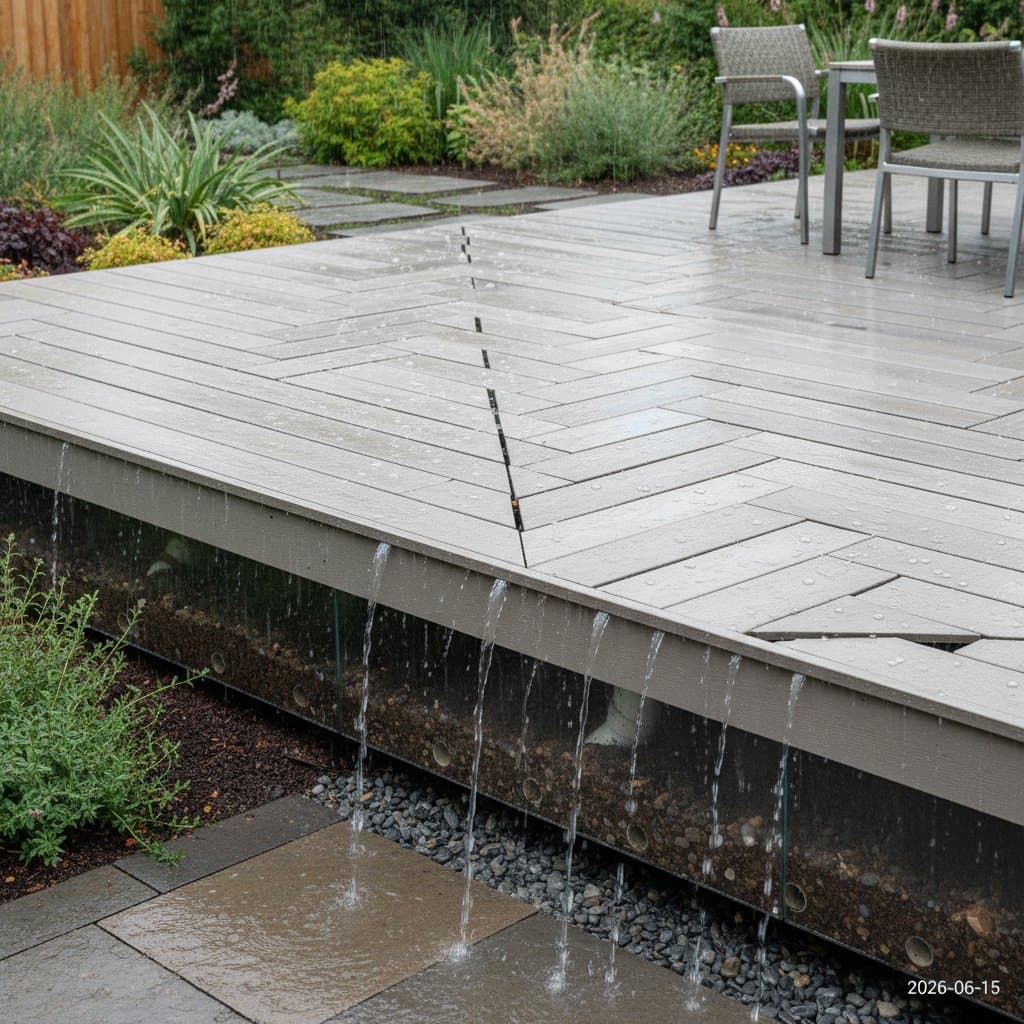
Understanding Permeable Decking: A Revolution in Outdoor Design
Traditional decks often face challenges from heavy rain, leading to standing water, slippery surfaces, and potential damage to surrounding landscapes. Homeowners frequently resort to repeated sealing and cleaning to manage these issues. Permeable decking introduces a superior alternative by allowing rainwater to drain directly through the deck boards, maintaining a dry and stable platform even during intense storms.
This system not only eliminates pooling but also reduces soil erosion and supports local water management efforts. Ideal for backyards, patios, or urban rooftops, permeable decking combines functionality with aesthetic appeal. The following sections detail its mechanics, required components, and implementation strategies to help you achieve a resilient outdoor space.
How Permeable Decking Functions
Permeable decking operates through a layered design that facilitates water infiltration. The surface boards, typically made from composite materials with integrated drainage channels, permit water to flow downward rather than accumulating on top. Beneath the boards lies a substructure of spaced joists and a permeable underlayment that directs water into a gravel base or drainage system.
This configuration mimics natural ground absorption while elevating the deck above soil level. Benefits extend beyond dryness; the design lowers hydrostatic pressure on the structure, extending its lifespan, and contributes to eco-friendly stormwater control by replenishing groundwater. For urban environments like New York City, such decks comply with regulations promoting sustainable drainage solutions.
Essential Tools and Materials for Installation
Proper preparation ensures a smooth and effective installation process. Source materials from reputable suppliers specializing in outdoor composites to guarantee compatibility and durability.
Required Tools
- Circular saw equipped with a fine-tooth blade for precise cuts on composite boards
- Cordless drill fitted with bits designed for deck screws to secure fastenings efficiently
- Tape measure and chalk line for accurate layout and marking
- Level and rubber mallet to verify evenness and adjust components without damage
- Safety glasses and heavy-duty gloves to protect against debris and sharp edges
Key Materials
- Permeable composite decking boards, calculated at approximately one board per 1.5 square feet of coverage
- Joists made from pressure-treated lumber or corrosion-resistant aluminum framing for structural support
- Gravel base layer, at least 2 inches (5 cm) deep, to facilitate subsurface drainage on ground-level installations
- Permeable geotextile fabric or membrane to prevent soil migration while allowing water passage
- Stainless steel screws, rated for outdoor use, to resist rust and ensure long-term stability
- Edge trim or fascia boards to finish borders and enhance visual appeal
For a standard 10-by-12-foot deck spanning 120 square feet, plan for around 80 linear feet of decking material. Total costs range from $8 to $12 per square foot, encompassing the substructure, fasteners, and base preparation. While initial expenses for composite options exceed those of standard wood, the reduced maintenance and doubled service life—often exceeding 25 years—provide substantial long-term value.
Prioritizing Safety During Construction
Safety forms the foundation of any deck project, particularly when working with elevated structures and power tools. Adhering to best practices minimizes risks and ensures a reliable outcome.
- Always wear protective gear, including gloves, safety glasses, and long sleeves, to shield against splinters, sawdust, and minor injuries.
- Verify stable footing before making cuts or handling heavy materials; avoid working on uneven or wet surfaces.
- Resist the temptation to omit foundational layers like gravel or geotextile fabric, as these prevent settling, weed intrusion, and structural failure over time.
- Protect electrical tools from moisture by using ground-fault circuit interrupters and covering cords during unexpected rain.
Establishing secure anchoring points and selecting appropriate fasteners from the outset avoids costly corrections. A methodical approach here translates to years of trouble-free use.
Estimating Budget and Timeline
Budgeting accurately allows for informed decisions on materials and labor. Factor in regional pricing variations, especially in high-cost areas like New York City, where permits may add to expenses.
A compact 120-square-foot deck typically requires $1,000 to $1,500 in materials, depending on selections like premium composites versus basic lumber. Professional labor increases the total by 25 to 40 percent, often totaling $2,500 to $4,000 for a full build. Reuse an existing, code-compliant frame to cut costs, but invest in high-quality hardware such as stainless steel screws to prevent premature corrosion.
For DIY enthusiasts with intermediate carpentry experience, completion demands two full days of effort for a two-person team. Account for potential weather interruptions, which could add a day. Allocate time for site preparation, assembly, and final cleanup to maintain project momentum.
Scenarios Requiring Professional Expertise
Certain installations demand specialized knowledge to meet safety codes and performance standards. Engage experts when complexity arises.
Decks integrated with rooftops or positioned over habitable areas require precise flashing to prevent leaks and engineering assessments for load-bearing capacity. Professionals excel at incorporating advanced features, such as connections to rainwater collection systems that capture and repurpose runoff for irrigation or graywater use.
Seek contractors with proven experience in permeable and composite installations. Review portfolios showcasing completed projects that have endured multiple rainy seasons, and obtain references to confirm reliability and satisfaction.
Implementing Your Permeable Deck Project
Permeable decking delivers a seamless blend of practicality and environmental stewardship, creating outdoor spaces that thrive amid variable weather. By directing stormwater through the structure, it safeguards your property and promotes sustainable living.
Begin by assessing your site for drainage patterns and soil conditions, then select materials suited to your climate. Follow the outlined steps meticulously to yield a deck that remains dry, secure, and visually striking season after season. This investment enhances usability and property value for years to come.