
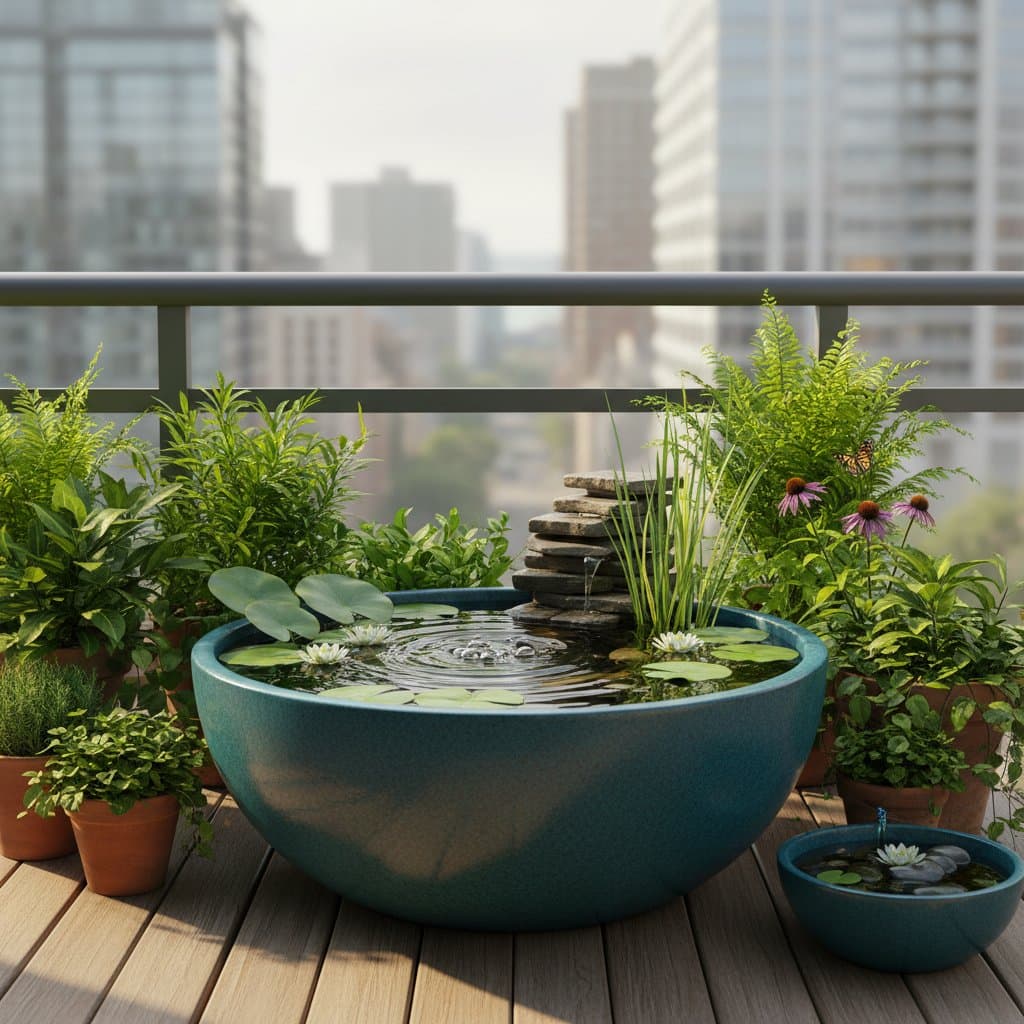
Introduction to Balcony Ponds
Urban living often means cramped spaces and constant noise, but a small balcony pond offers a simple solution. These compact water features create a pocket of tranquility by cooling the surrounding air through evaporation and softening urban sounds with gentle water movement. Even in a high-rise apartment, a modest pond can transform an overlooked corner into a vibrant, soothing oasis.
The appeal lies in their versatility. A balcony pond requires minimal space, yet delivers maximum impact on comfort and aesthetics. Readers will discover how to select materials, assemble the feature, and maintain it for year-round enjoyment.
Benefits of Adding a Pond to Your Balcony
One primary advantage is natural cooling. As water evaporates from the pond surface, it absorbs heat from the air, lowering temperatures by several degrees in the immediate area. This effect proves especially valuable during hot summer months in cities where balconies face direct sunlight.
Noise reduction follows closely. The soft trickle or bubble of water creates a white noise barrier that drowns out traffic, construction, or neighbor sounds. Studies in environmental psychology suggest such features reduce stress levels, promoting relaxation without electronic aids.
Beyond functionality, balcony ponds enhance biodiversity. They attract birds, insects, and butterflies, bringing life to concrete environments. This connection to nature boosts mental well-being, as supported by urban greening research.
Selecting the Right Container
Choose containers based on balcony size and style. Ceramic bowls or glazed pots work well for a classic look, holding 5 to 20 gallons depending on space. Ensure the material is non-porous to prevent algae overgrowth and cracking in temperature shifts.
For modern aesthetics, consider fiberglass or resin planters shaped like shallow basins. These options resist weight issues on balconies, as they weigh less when filled than traditional stone. Always verify the container's stability; a wide base prevents tipping in windy conditions.
Depth matters for functionality. Aim for at least 12 inches to allow oxygen circulation and support small aquatic plants. If space limits depth, opt for wider surfaces to maximize evaporation and sound effects.
Step-by-Step Setup Guide
Preparing the Location
Assess your balcony's exposure first. Place the pond in partial shade to avoid excessive evaporation or overheating, which can stress any added life forms. Secure the area against strong winds by anchoring the container or using balcony rail guards.
Clean the chosen spot thoroughly. Remove debris and ensure the surface is level to prevent uneven water distribution. If the balcony floor is slippery, add a rubber mat underneath for traction.
Filling and Initial Setup
Select water from a rain barrel or dechlorinated tap source to protect potential inhabitants. Fill the container slowly to avoid air bubbles that could destabilize plants.
Install a small solar-powered fountain pump for circulation. Position the pump at the bottom and attach a nozzle to create gentle flow. This setup enhances cooling through increased surface agitation and amplifies the soothing sound.
Adding Plants and Features
Incorporate hardy aquatic plants like dwarf water lilies or floating ferns. These not only beautify but also oxygenate the water and provide shade. Plant them in weighted pots to keep roots submerged without disturbing the base.
For added interest, include smooth stones or glass beads around the edges. These elements diffuse light, reducing glare, and create visual texture. Avoid overcrowding to maintain clear water flow.
Safety Considerations
Balcony ponds demand attention to prevent hazards. If children or pets frequent the area, install a mesh cover or raised edging to avoid accidental falls into the water. Keep the depth shallow if safety concerns dominate.
Electrical components, like optional LED lights for evening ambiance, require weatherproofing. Use grounded outlets and extension cords rated for outdoor use. Regularly inspect for leaks that could damage balcony structures.
In shared buildings, check lease agreements or HOA rules regarding water features. Some restrict added weight, so calculate the full load including water and containers, typically 8 pounds per gallon.
Maintenance Routines
Weekly checks form the foundation of upkeep. Skim leaves and debris with a fine net to prevent clogs in the pump. Test water pH monthly using simple kits, aiming for a neutral range of 6.5 to 7.5; adjust with natural additives if needed.
Clean the pond quarterly by draining partially and scrubbing with a soft brush. Avoid harsh chemicals; vinegar solutions suffice for algae control. Replace water fully every few months to refresh nutrients.
Monitor pump performance. Rinse the filter weekly and store it indoors during off-seasons. This prevents mechanical failure and ensures consistent cooling and noise-masking benefits.
Seasonal Care Strategies
In spring, refresh the pond after winter dormancy. Introduce new plants as temperatures rise above 50 degrees Fahrenheit. Gradually increase water levels to acclimate the ecosystem.
Summer maintenance focuses on evaporation. Top off water frequently and add floating covers during heatwaves to conserve moisture. Shade cloths protect against intense sun.
Prepare for fall by removing tender plants before frost. Winterize by draining most water or using heaters in mild climates. Insulate the container to prevent freezing cracks.
Enhancing Urban Serenity
A balcony pond extends beyond mere decoration; it redefines outdoor living in dense cities. By cooling air and muting noise, it fosters a personal sanctuary that invites daily reflection. Experiment with layouts to suit your routine, whether for morning coffee or evening unwinding.
The investment pays dividends in reduced stress and heightened appreciation for small-scale nature. Start simple, observe the changes, and adjust as your space evolves. This feature proves that urban dwellers can cultivate peace one ripple at a time.