
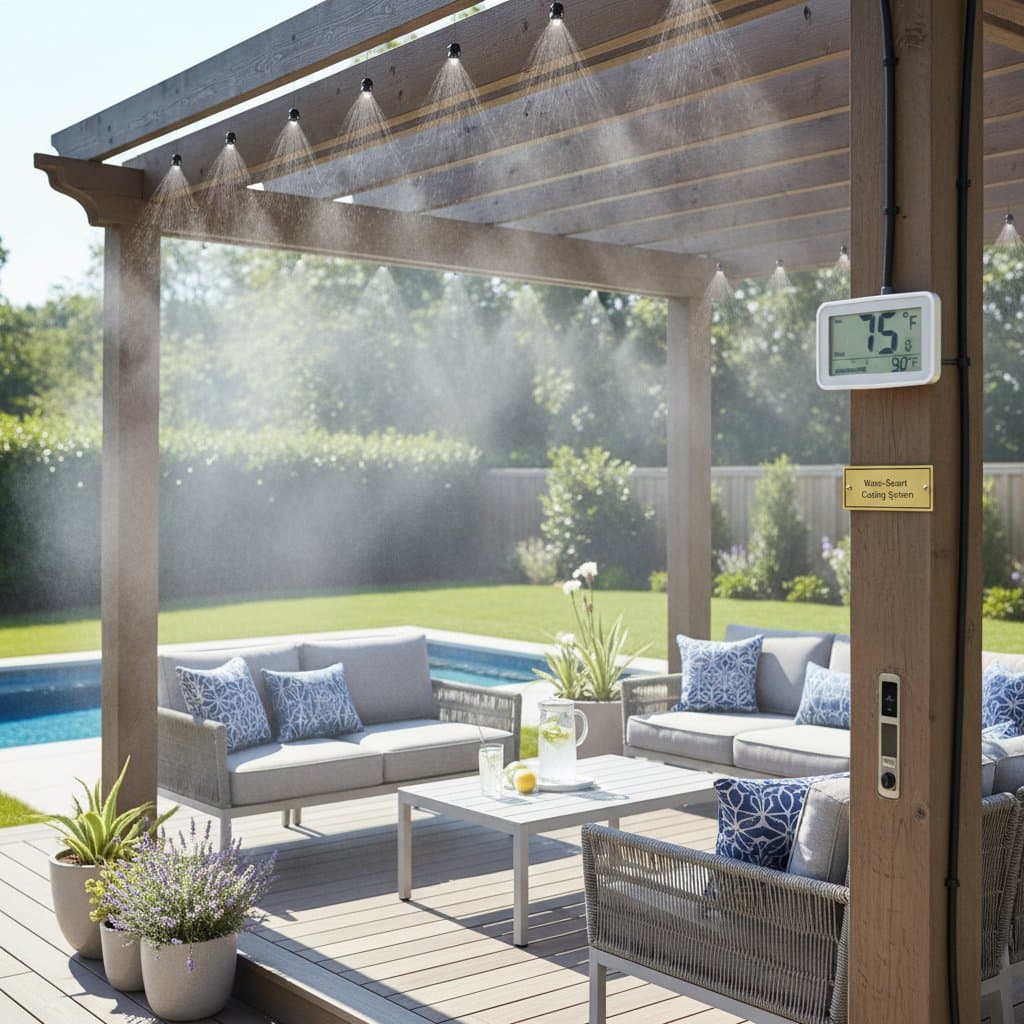
Cool Your Deck by 15 Degrees with Efficient Micro-Misting
Decks provide essential outdoor space for relaxation and gatherings, yet high temperatures often make them uncomfortable. A micro-misting system addresses this issue by reducing air temperature around the deck by approximately 15 degrees. This method employs fine water droplets that evaporate quickly, creating a cooling effect while conserving water compared to traditional sprinklers.
The system integrates discreetly into deck railings or overhead structures, operates with minimal noise, and avoids excessive wetting of surfaces or furnishings. Homeowners can achieve noticeable comfort improvements without professional assistance for basic installations. This guide covers the principles of micro-misting, essential components, installation procedures, safety considerations, and ongoing maintenance to ensure long-term performance.
Understanding Micro-Misting Systems
Micro-misting involves pressurized water forced through small nozzles to produce a light fog. As the mist evaporates, it absorbs heat from the surrounding air, lowering the perceived temperature. Systems designed for decks typically operate at low pressure, around 40 to 60 psi, to balance cooling efficiency with water savings.
Benefits extend beyond temperature control. These setups use up to 90 percent less water than conventional cooling methods, making them suitable for water-conscious regions. Additionally, the fine mist settles quickly, reducing the risk of slippery surfaces or damage to plants and deck materials.
For optimal results, position nozzles to cover seating and lounging areas evenly. Avoid direct exposure to heat sources like grills, which could affect mist dispersion. With proper setup, users report enhanced outdoor usability during peak summer conditions.
Essential Tools and Materials
Assemble the following items for a deck area measuring approximately 12 by 16 feet. Source materials from hardware stores or specialized irrigation suppliers to ensure compatibility.
- 25 to 50 feet of 3/8-inch polyethylene tubing, resistant to UV exposure and pressure fluctuations
- 6 to 10 misting nozzles with adjustable patterns, rated for 0.4 to 1.0 gallons per hour per nozzle
- Inline filter with 100-mesh screening to prevent clogs from debris or minerals
- Pressure regulator set to maintain 40-60 psi for safe operation
- 20 tubing clips or stainless steel zip ties for secure mounting
- Utility knife or tubing cutter for precise cuts
- End plug or loop connector to seal the line
- Brass garden hose adapter with quick-connect fitting
- Measuring tape at least 12 feet long
- Adjustable wrench for securing connections
Consider optional enhancements such as a battery-operated timer for scheduled operation or an additional sediment filter if local water contains high particulate levels. These additions improve automation and longevity without complicating the basic setup.
Step-by-Step Installation Guide
Prepare the area by clearing the deck and identifying mounting points along railings or pergolas. Measure the perimeter to determine tubing length and nozzle spacing, aiming for coverage every 2 to 3 feet.
- Connect the garden hose adapter to the nearest outdoor faucet. Attach the inline filter and pressure regulator in sequence to regulate flow.
- Run the polyethylene tubing from the regulator along the chosen path, securing it with clips every 2 feet to prevent sagging or movement.
- Cut tubing to length using the utility knife, ensuring clean, square edges. Insert nozzles into the line at intervals, twisting them firmly until seated.
- Install the end plug or loop at the tubing's termination to maintain pressure throughout the system.
- Tighten all fittings with the wrench, checking for leaks by turning on the water briefly.
- Test the system by activating the faucet. Adjust nozzle directions to create overlapping mist patterns that cool the target zone without drifting.
This process typically requires 2 to 3 hours for novices. Fine-tune spray angles during testing to maximize coverage and minimize water waste.
Safety and Best Practices
Position mist lines at least 12 inches away from electrical outlets or appliances to prevent moisture-related hazards. Direct nozzles away from walking paths to avoid creating slick spots on deck surfaces.
Select components compatible with local water quality. In areas with hard water, install a fine-mesh filter to capture minerals that could obstruct nozzles. Regulate pressure strictly to avoid tubing bursts or nozzle detachment; never exceed the manufacturer's specifications.
Suspend operation during strong winds, as they disperse mist inefficiently and increase evaporation loss. Inspect the setup periodically for wear, especially after storms that might dislodge components.
Cost Breakdown and Timeline
Expect to invest between $90 and $150 for a standard mid-sized deck system. Nozzles and the filter assembly account for the largest portion of expenses, with higher-quality options providing better durability and spray consistency.
Tubing and fittings add minimal cost but ensure reliability. Optional timers or valves may increase the total by $20 to $50, offering convenience for frequent use.
Installation demands 2 to 3 hours, plus 30 minutes for adjustments. Ongoing expenses remain low, with water consumption averaging less than 1 gallon per hour of operation.
Maintenance Schedule
Preparing for Warm Weather
Flush all lines upon reconnection to remove stagnant water or debris. Examine each nozzle for uniform spray patterns and replace any that clog or leak.
Secure tubing with fresh clips if seasonal shifts have loosened mounts.
During Peak Use
Clean nozzles monthly by wiping away deposits with a soft, damp cloth. Monitor filter condition; swap cartridges if water flow diminishes or appears discolored.
Reposition nozzles as needed to accommodate rearranged furniture or new deck accessories.
Winterizing the System
Disconnect from the water source and drain tubing thoroughly to prevent freezing damage. Store coiled lines in a dry indoor location.
Conduct a full inspection of fittings and replace any showing cracks or corrosion before the next season.
Professional Assistance Options
Engage a licensed plumber for connections to permanent water lines, which bypass hose dependencies but require compliance with building codes. Automation via smart controllers or integrated timers also benefits from expert installation to ensure seamless integration.
Seek professional help for troubleshooting persistent leaks, uneven pressure, or complex layouts. Inquire about backflow preventers, mandatory in many jurisdictions to safeguard potable water supplies.
Transform Your Deck into a Cool Retreat
Implementing a micro-misting system elevates outdoor living by delivering reliable cooling with efficient resource use. Homeowners gain extended enjoyment of deck spaces, fostering memorable gatherings without the discomfort of heat. With straightforward installation and simple upkeep, this solution delivers lasting value for seasonal comfort.