
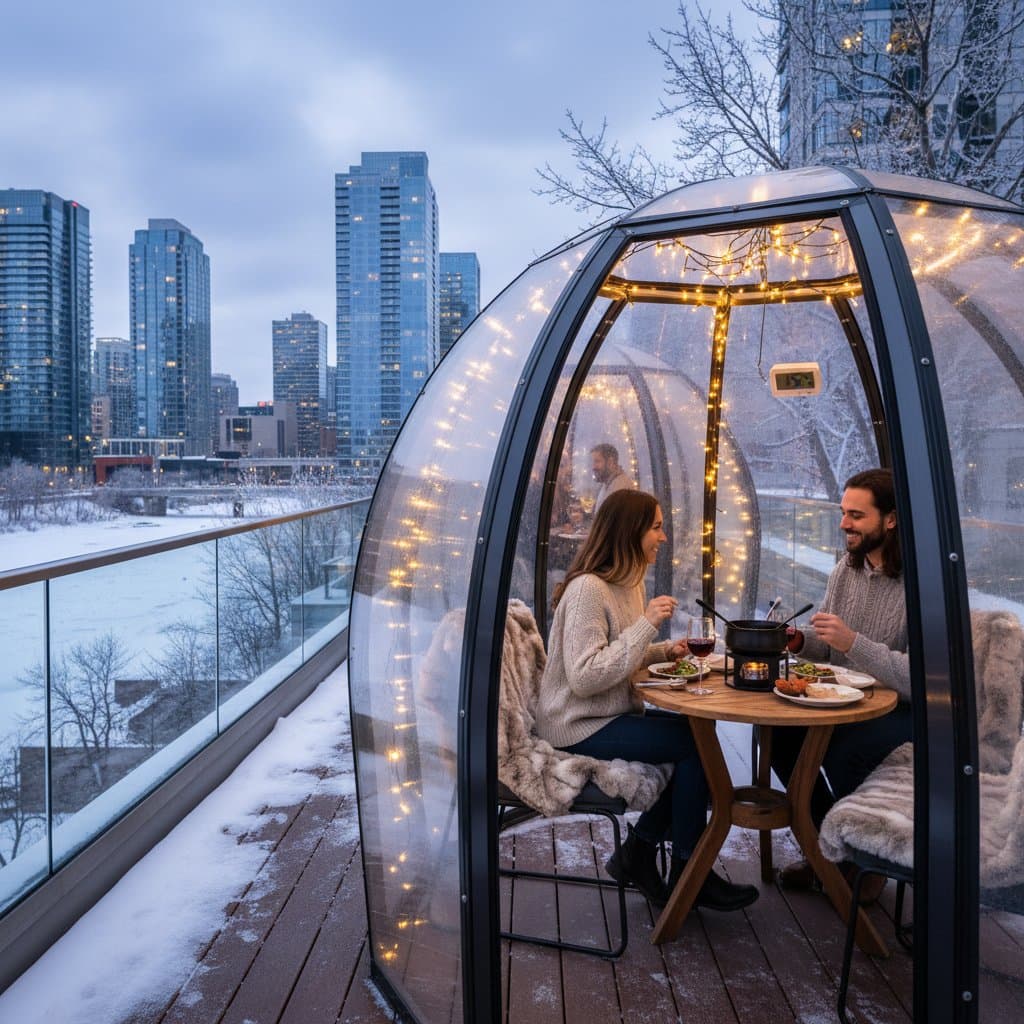
Microclimate Pods for Year-Round Balcony Dining
Harsh winter winds, persistent rain, or urban noise often interrupt outdoor meals on balconies. Individuals seek the fresh air benefits without exposure to uncomfortable elements. Microclimate pods provide an effective solution by forming a protected enclosure that maintains warmth and tranquility.
This guide details the nature of microclimate pods, their value in compact urban settings, and practical steps for installation and maintenance.
Overview
A microclimate pod consists of a transparent or semi-transparent structure that encircles a balcony dining or seating area. The design captures heat, deflects wind, and repels moisture. Options include lightweight polycarbonate panels, insulated fabrics, or tempered glass, often available as modular kits requiring minimal assembly tools.
The primary objective involves extending balcony usability throughout the year. Residents avoid retreating indoors during colder months and instead enjoy meals or relaxation in a stable environment.
Key benefits encompass:
- Weather resistance against wind, rain, and light snow.
- Temperature increase of up to 15 degrees Fahrenheit (approximately 8 degrees Celsius) within the enclosure compared to ambient conditions.
- Reduction in external noise from traffic or neighbors.
- Improved energy conservation by minimizing heat escape near exterior walls.
- Enhanced privacy while preserving natural light and views.
Such pods convert occasional outdoor spaces into reliable extensions of living areas, boosting daily comfort and property value.
Tools and Materials
Prior to installation, evaluate balcony dimensions and load-bearing capacity. Structures under 150 pounds (68 kilograms), properly secured without façade penetration, suit most apartment balconies.
Essential supplies include:
- One modular pod kit or custom-sized panels matched to balcony dimensions.
- One measuring tape extending at least 10 feet.
- One rubber mallet or screwdriver set.
- One tube of silicone sealant for securing joints.
- One portable electric heater or radiant panel, rated below 1500 watts.
- One ventilation insert or fan designed for carbon monoxide safety.
- One weather-resistant mat or flooring segment.
For a budget-friendly alternative, combine clear PVC panels with aluminum framing. This approach yields comparable protection, although thermal insulation may prove less effective.
Installation Steps
Step 1: Measure and Plan
Determine balcony width, depth, and height with precision. Allocate at least 2 inches (5 centimeters) clearance above railings or doors. Draft a layout sketch incorporating a compact table, two chairs, and space for one person to navigate comfortably.
Step 2: Select Pod Type
Decide between rigid-frame and soft-shell varieties.
- Rigid-frame models employ aluminum or steel frameworks with polycarbonate walls for superior heat retention and durability.
- Soft-shell options feature coated fabric over fiberglass supports, offering reduced weight and simpler storage at the expense of faster heat dissipation.
Step 3: Assemble the Frame
Arrange components on a flat, clean surface. Connect pieces via snaps or screws following kit guidelines. Ensure joints fit securely to eliminate drafts. During edge work, don gloves and tether small parts to prevent falls.
Step 4: Attach Panels or Covers
Secure panels or fabric to the frame, applying silicone sealant at seams. Verify that entry doors or zippers function without resistance. Achieve a firm seal without excessive tension on materials.
Step 5: Install Flooring and Heating
Position a rubber mat or interlocking tiles to enhance traction. Integrate a compact heater or underfoot mat. Maintain a minimum 18-inch (46-centimeter) distance from walls or fabrics, selecting only UL-certified units for enclosed use.
Step 6: Ensure Ventilation
Incorporate a small vent fan or adjustable window to facilitate air circulation. This measure controls condensation and avoids hazardous gas accumulation. Prohibit gas-powered heaters or open flames within the space.
Step 7: Incorporate Lighting and Decor
Install LED string lights or battery-operated lanterns. Opt for warm-color bulbs to counteract urban glare. Employ weatherproof cords routed away from walkways.
Safety Considerations
Verify balcony load limits prior to setup. Employ electric heaters equipped with automatic shutoff features. Maintain unobstructed emergency access. Avoid obstructing drainage systems to prevent water accumulation and surface damage. Conduct monthly inspections of seals for potential leaks or fractures.
Common Issues and Solutions
Condensation buildup: Activate ventilation for 10 minutes each day or use a microfiber cloth for wiping. A low-speed fan promotes even air distribution.
Persistent cold areas: Apply foam insulation to floor perimeters or layer with a rug to curb heat loss.
Rattling from wind: Re-secure anchors and tighten frame connections. Place vibration-dampening pads beneath base supports.
Replace yellowed or cracked panels promptly to preserve transparency and integrity.
Upkeep and Storage Practices
Wash panels biweekly using mild soap and water solutions. Steer clear of abrasive chemicals that damage surfaces.
Examine hinges, zippers, and connections for deterioration. Lubricate mechanisms with silicone spray as needed.
For fabric pods, ensure complete drying before folding and storing in a dry, temperate location. With rigid models, detach roof sections and shield the frame with a waterproof cover during off-seasons for optional open-air configurations.
Cost and Timeline Estimates
Expense categories:
- Soft-shell pods: 200 to 500 dollars.
- Rigid-frame pods: 700 to 1500 dollars.
- Bespoke glass setups: exceeding 2500 dollars.
Assembly duration:
- Soft-shell: 1 to 2 hours.
- Rigid-frame: 3 to 4 hours.
Basic tools and an assistant suffice for most kits. Professional services range from 300 to 600 dollars based on project scope.
Seasonal Adjustments
During winter, inspect seals and cords weekly. Gently remove snow from the roof using a soft-bristled broom.
In spring, increase ventilation frequency to deter mold growth. Clear moisture from seams regularly.
For summer, detach side panels or substitute with breathable mesh for improved circulation.
Professional Assistance Indicators
Seek a licensed contractor for balconies featuring irregular railings, integrated fixtures, or questionable support. Inquire about:
- Load capacity per square foot.
- Permissible attachment techniques.
- Compliance with fire regulations for semi-enclosed areas.
Essential Insights
Microclimate pods facilitate consistent balcony access by excluding wind and conserving heat. Select designs aligning with spatial constraints, financial plans, and storage preferences. Emphasize ventilation and secure heating to safeguard well-being. Regular cleaning and checks ensure longevity and performance across seasons.
Implementing Your Balcony Upgrade
Initiate the process with these actions:
- Measure the balcony and outline a proposed arrangement.
- Research pod options online, evaluating dimensions and compositions.
- Acquire materials and schedule assembly time.
Upon completion, the balcony evolves into a serene, insulated haven. Use it for meals, leisure reading, or quiet reflection amid city energy, insulated from seasonal challenges.