
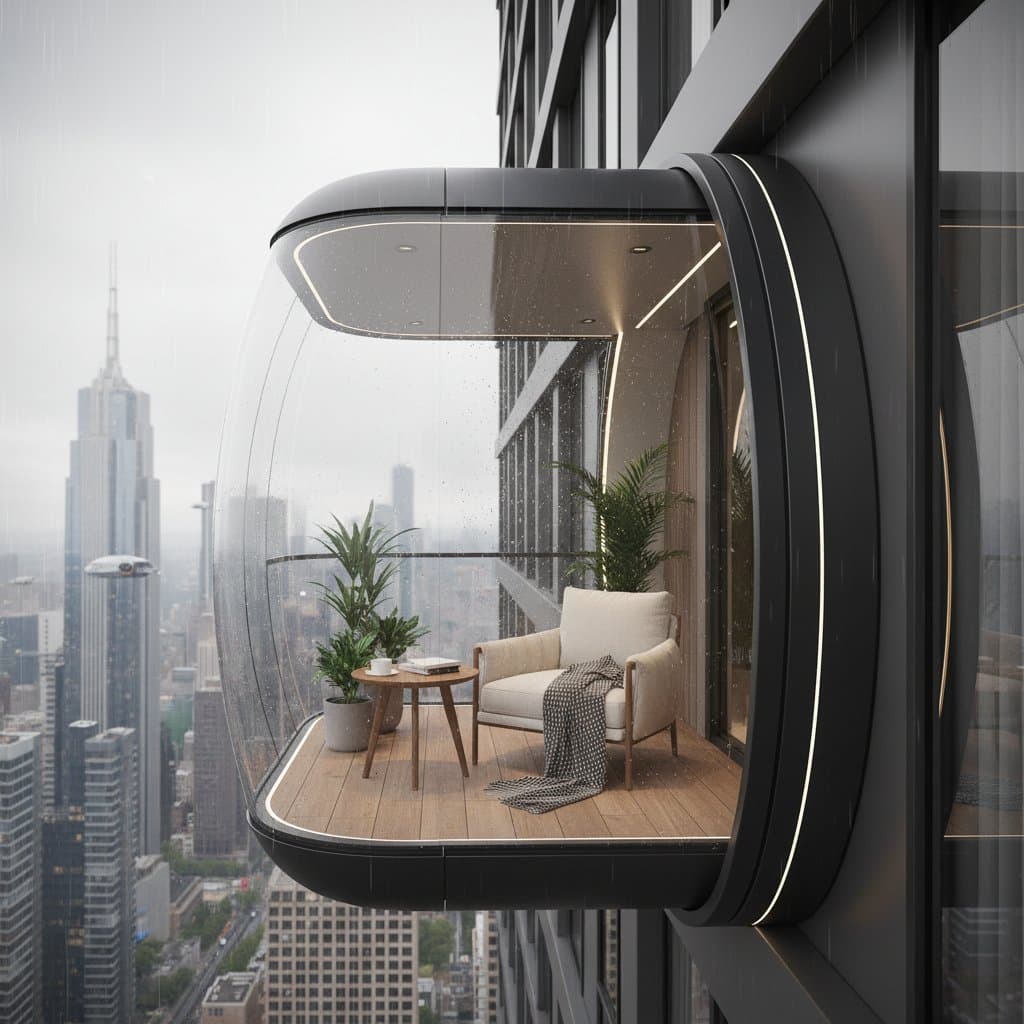
Transform Balconies into Year-Round Havens with 2026 Pods
City balconies often remain unused for much of the year due to harsh weather conditions. Wind, excessive noise, and cold temperatures limit their appeal to brief summer periods. Balcony pods address these challenges effectively. These compact, climate-controlled enclosures convert modest outdoor areas into functional indoor-outdoor spaces that remain comfortable throughout the seasons.
The primary benefit lies in creating a protected environment for relaxation without concerns over fluctuating temperatures, precipitation, or urban pollutants. This guide details the features of 2026 balcony pods, their operational principles, and practical steps for integrating one into an apartment or home setting.
Overview
A balcony pod consists of a modular enclosure designed to overlay an existing balcony or terrace. It provides a sealed barrier against external elements while maximizing natural light penetration. Contemporary models incorporate double-glazed panels, slender aluminum framing, and integrated ventilation systems to maintain consistent air circulation. Users gain precise control over internal temperature, acoustic isolation, and unobstructed views of urban landscapes.
Compared to traditional glass extensions, 2026 pods feature reduced weight and simplified assembly processes. Installation occurs directly on concrete bases, metal platforms, or wooden frameworks with minimal structural alterations. Certain configurations include pre-installed electrical conduits for illumination and auxiliary heating elements.
The practical value becomes evident in the added usable area, typically ranging from 40 to 80 square feet. In dense urban environments, this expansion equates to an additional living room. Furthermore, the enclosure safeguards outdoor furnishings against ultraviolet degradation and humidity damage, thereby reducing long-term replacement expenses.
Essential Components and Tools
While professional assembly handles the core construction, familiarity with components aids in maintenance and minor adjustments. Understanding these elements ensures informed decisions during selection and upkeep.
Key materials commonly used:
- Pod panels: Tempered glass or durable polycarbonate sheets framed with aluminum for strength and aesthetics
- Floor support: Powder-coated steel beams or pressure-treated lumber to withstand environmental exposure
- Sealing elements: Silicone strips, rubber gaskets, and adhesive foam tape to prevent water ingress
- Fastening hardware: Corrosion-resistant stainless steel bolts, expansion anchors, and reinforced corner brackets
- Ventilation units: Adjustable louvers positioned for optimal cross-breeze
- Optional enhancements: Integrated electric heaters, low-voltage LED lighting, or motorized shade systems
Recommended tools for installation support or routine care:
- Cordless power drill equipped with bits suitable for masonry and metal
- Precision level and retractable measuring tape for accurate alignment
- Protective eyewear and heavy-duty gloves to minimize injury risks
- Stable, non-slip stepladder for elevated access
- Caulking gun loaded with silicone sealant for joint applications
Kits for 2026 pods arrive with pre-numbered components and detailed instructions. A team of two individuals can complete assembly of a standard-sized unit within one to two days. Prior to commencement, obtain explicit permission from building management, as exterior modifications often necessitate formal documentation.
Installation Process
Proceed through these structured steps to achieve a secure and effective balcony pod setup. Each phase emphasizes precision to ensure longevity and safety.
1. Conduct Precise Measurements
Determine the balcony's dimensions, including width, depth, and vertical clearances. Account for a minimum 1-inch (2.5 cm) expansion gap adjacent to railings and adjacent walls to accommodate thermal movement and facilitate drainage. Create a basic diagrammatic layout to visualize component placement.
Safety consideration: Avoid precarious positions over railings during measurements. Enlist an assistant to stabilize the measuring device and maintain balance.
2. Select Appropriate Size and Specifications
Match the pod configuration to the balcony's physical constraints. Opt for a three-panel sliding system on balconies shallower than 5 feet to preserve accessibility. For larger terraces, select a comprehensive framed enclosure with an overhead canopy for complete protection.
Practical advice: Polycarbonate options offer affordability and lighter weight, ideal for weight-sensitive structures, whereas glass provides superior thermal efficiency and sound dampening.
3. Prepare the Foundation Surface
Remove accumulated debris and inspect for surface irregularities or fractures. Apply a weather-resistant leveling compound to smooth uneven flooring. This preparation mitigates potential leaks and distributes structural loads evenly.
Safety consideration: Don protective gloves when clearing sharp debris or manipulating metallic components.
4. Construct the Base Frame
Position frame segments flat on the balcony surface. Secure corner connections with initial loose bolts, verify squareness using a level, and then apply full torque. Confirm overall plumb and level to prevent future distortions.
Safety consideration: Confine all tools and materials within the railing perimeter to eliminate the risk of objects falling to lower levels.
5. Install the Enclosure Panels
Insert panels into designated tracks or clips according to the assembly diagram. Apply a continuous bead of silicone sealant along all adjoining edges. Inspect every seam meticulously to eliminate any voids.
Safety consideration: Employ suction lifters or dual-person handling for glass panels to distribute weight evenly and avoid personal injury or material damage.
6. Integrate Ventilation and Features
Position vent assemblies at diagonally opposite points to promote effective air exchange. Affix lighting fixtures, shading mechanisms, or heating units as per the pod's design specifications.
Safety consideration: Select components certified for outdoor electrical use and route wiring to avoid ground contact or moisture exposure.
7. Perform Functionality Tests and Final Sealing
Enclose the space and simulate environmental stresses to detect drafts or vibrations. Reapply sealant to identified weak points and conduct a thorough cleaning of all surfaces.
8. Customize the Interior
Incorporate a low-profile all-weather mat, compact stacking chairs, and a side table for seating. Introduce shade-tolerant greenery like ferns or ivy to enhance ambiance without overwhelming the limited space.
Essential Safety Guidelines
- Position ladders solely on level, stable ground to prevent tipping.
- Grip glass elements with cushioned gloves to reduce slippage hazards.
- Route electrical cables clear of standing water accumulations.
- Adhere to manufacturer ratings when connecting multiple appliances to avoid circuit overloads.
- Verify the balcony's weight-bearing capacity prior to introducing substantial furnishings or equipment.
In instances of noticeable wind-induced movement or instability, halt activities immediately and engage a certified installer for a structural evaluation.
Common Issues and Resolutions
Excessive moisture buildup on interior surfaces: Increase vent openings marginally or introduce a compact dehumidification unit. Warm, humid external air often forms droplets on cooler panel interiors following inclement weather.
Vibrations from unsecured fittings: Employ a torque wrench to retighten all fasteners. Persistent noise may require the addition of rubber isolators to absorb minor shifts.
Water penetration at joints: Re-caulk affected areas with transparent silicone and ensure the overhead structure maintains a subtle outward pitch for runoff. This configuration directs precipitation away from the enclosure.
Elevated temperatures during warm months: Install specular blinds or sheer drapes to deflect solar heat. Adhesive shade films compatible with pod materials can diminish interior brightness by up to 60 percent.
Cost Considerations and Timeline
Pricing depends on dimensions and material choices. Entry-level polycarbonate enclosures begin at approximately 2,000 dollars, escalating to 5,000 through 7,000 dollars for glass variants with operable entryways. Professional labor fees typically add 10 to 20 percent to the total outlay.
Assembly requires one to two full days, followed by a half-day for sealing applications and site restoration. This investment yields substantial returns in extended usability. With routine attention, a quality pod endures for a decade or longer.
Ongoing Care Practices
Perform monthly cleaning of panels using a solution of mild detergent and lukewarm water. Steer clear of abrasive cleaners that may etch protective coatings. Refresh silicone seals biennially to sustain barrier integrity against the elements.
Inspect ventilation ports and runoff channels at seasonal transitions. Clear any obstructions that might foster dampness retention. Elevate removable textiles during periods of disuse to inhibit mold development.
Diligent maintenance preserves optical clarity and thermal performance, even amid corrosive urban atmospheres laden with salt or humidity.
Practical Actions to Begin
To advance your project without delay, consider these immediate measures:
- Evaluate the balcony's existing framework, documenting potential interferences such as HVAC units or exhaust outlets.
- Gather visual references of enclosure designs harmonious with your property's architectural style.
- Establish preliminary financial parameters to facilitate objective comparisons among available options.
This approach not only expands living areas but also fosters a seamless connection to the outdoors, enhancing daily urban living with sustained comfort and aesthetic appeal.