
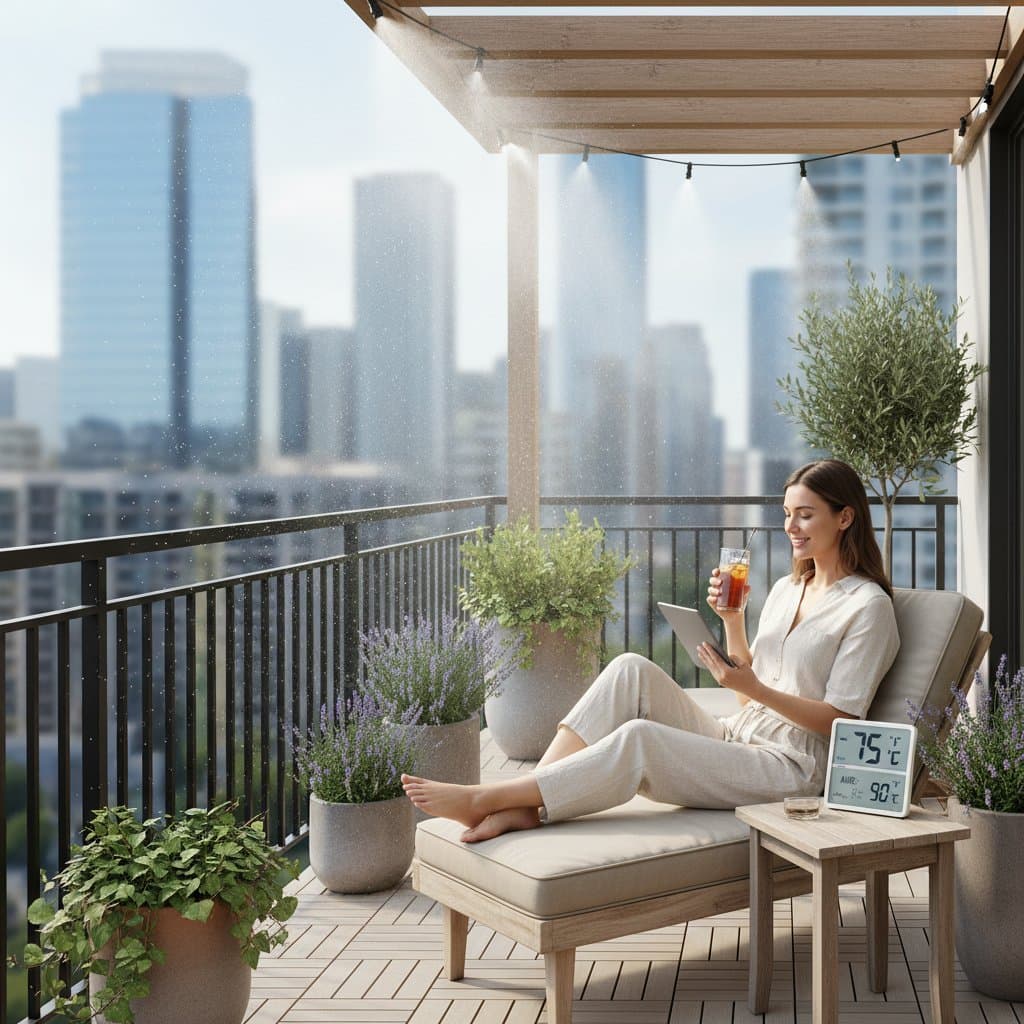
Cool Your Balcony by 15 Degrees for Less with Micro-Misting Systems
Urban balconies often become uncomfortably warm during summer due to surrounding concrete, glass, and metal surfaces that absorb and radiate heat. A micro-misting system addresses this issue by dispersing a fine water mist that evaporates rapidly, absorbing ambient heat and lowering temperatures by up to 15 degrees Fahrenheit. This approach provides an effective way to enhance outdoor comfort without high expenses or complex installations.
How Micro-Misting Systems Work
Micro-misting systems employ small nozzles to produce water droplets finer than typical sprays. These droplets evaporate almost instantly upon contact with warm air, drawing heat away through the evaporation process. This method mirrors techniques used in commercial greenhouses and outdoor dining areas to maintain cooler environments.
In urban settings, where the heat island effect intensifies temperatures, the cooling impact proves particularly valuable. Systems can reduce air temperatures by 10 to 15 degrees Fahrenheit, or 5 to 8 degrees Celsius, while also increasing humidity levels to ease dry-air discomfort. Installation costs remain low, and water consumption typically falls below that of a standard garden hose over equivalent periods.
Essential Tools and Materials
Assembling a basic micro-misting setup requires straightforward components, available in kits or individually. Select durable materials to ensure longevity and efficiency.
Required items include:
- Flexible tubing, 25 to 50 feet long based on balcony dimensions
- Misting nozzles, positioned every 2 feet for uniform coverage
- Connectors and clips to fasten tubing to railings or overhead structures
- Adapter for connecting to a hose bib or indoor faucet
- Inline filter to prevent mineral accumulation
- Zip ties or clamps for secure mounting
- Optional timer for scheduled operation
Opt for brass or stainless steel nozzles, as they resist clogging more effectively than plastic alternatives. For optimal water use, choose nozzles with a flow rate of approximately 0.012 gallons per minute.
Installation Steps
Step 1: Design the Layout
Begin by measuring the balcony's perimeter and height. Identify nozzle placement points, spacing them every 2 feet to achieve consistent cooling. Position nozzles to avoid direct contact with walls or windows, directing mist into open air spaces.
Step 2: Secure the Tubing
Route the tubing along the upper railing or ceiling perimeter. Fasten it with clips at intervals of 1 foot to maintain tension and prevent sagging, ensuring a professional appearance.
Step 3: Install the Nozzles
At each designated spot, cut the tubing and insert nozzle fittings. Orient each nozzle outward and angled slightly downward for effective dispersion. Hand-tighten all connections to seal against leaks.
Step 4: Link to Water Supply
Connect the tubing to the faucet adapter or hose bib, placing the filter inline between the source and tubing. Gradually introduce water flow and inspect for leaks. Tighten fittings as needed without over-applying force.
Step 5: Test and Fine-Tune
Activate the system briefly to observe the mist pattern. A proper setup produces a light fog rather than visible droplets. Reposition nozzles for even distribution, and if condensation forms on surfaces, lower the water pressure incrementally.
Essential Safety Considerations
Connect the system exclusively to potable water sources, avoiding any greywater connections. Maintain a minimum distance of 12 inches from electrical outlets or fixtures when routing tubing. Shut off the water supply when the system remains idle to avoid pressure-related issues.
Perform monthly filter cleaning to minimize mineral deposits and bacterial growth. In buildings with variable water pressure, consult local codes for backflow prevention devices.
Common Troubleshooting Solutions
For uneven mist or dripping: Inspect nozzles for blockages and clean them by soaking in a vinegar solution overnight to remove mineral scale.
If pressure seems low: Verify the filter's cleanliness and ensure no kinks exist in the tubing.
To prevent water spots on furniture: Elevate nozzle angles or reposition seating areas farther from the mist line.
Addressing nozzle leaks: Apply plumber's tape to threaded areas and secure connections firmly.
Replace any persistently leaking tubing segments, as they are affordable and simple to customize.
Ongoing Maintenance Practices
Clean the filter on a monthly basis and replace it every few months in areas with hard water. At season's end, detach nozzles and store them in airtight containers to ward off corrosion.
After each use, wipe balcony surfaces to eliminate potential slick areas. Protect cushions by storing them during misting or ensuring they remain dry. Should algae develop, flush the system with a diluted bleach solution, followed by a thorough rinse.
Off-Season Storage Guidelines
In preparation for winter, fully drain the system by disconnecting from the water source and allowing residual water to evaporate. Coil the tubing neatly and store indoors to protect against freezing damage.
Organize components in labeled containers, wrapping nozzles in absorbent material to control moisture. Before spring reuse, inspect for wear, reconnect, and test water flow prior to reinstallation.
Cost and Time Estimates
Expect to invest 60 to 120 dollars in a compact system, with an additional 15 to 30 dollars for a timer. A solo installation typically requires one to two hours.
Operational costs stay minimal, with a one-hour session using less than one gallon of water for every ten nozzles. This efficiency surpasses portable fans or outdoor air conditioners in energy savings and quiet performance, with durable components enduring multiple seasons.
Tips for Seasonal Use
Inspect and prepare the system as temperatures rise consistently. Flush lines, replace filters, and check seals to ensure reliability. During intense heat, operate in cycles of five to ten minutes throughout the day to balance cooling and humidity.
For balconies exposed to direct afternoon sun, integrate shade elements like sails or screens. These additions can further decrease temperatures by about 5 degrees Fahrenheit when paired with misting.
Professional Assistance Options
Engage a licensed plumber for connections to permanent water lines or adjustments to irregular pressure. Such experts can incorporate regulators and backflow devices compliant with regulations. For added features like nearby fans or lighting, have an electrician evaluate electrical safety.
Practical Next Steps
-
Assess your balcony's measurements and select mounting locations.
-
Acquire a kit featuring brass nozzles and an integrated filter.
-
Proceed with installation, testing, and activation to experience enhanced outdoor comfort.
This setup delivers reliable cooling, transforming urban balconies into inviting spaces year after year.