
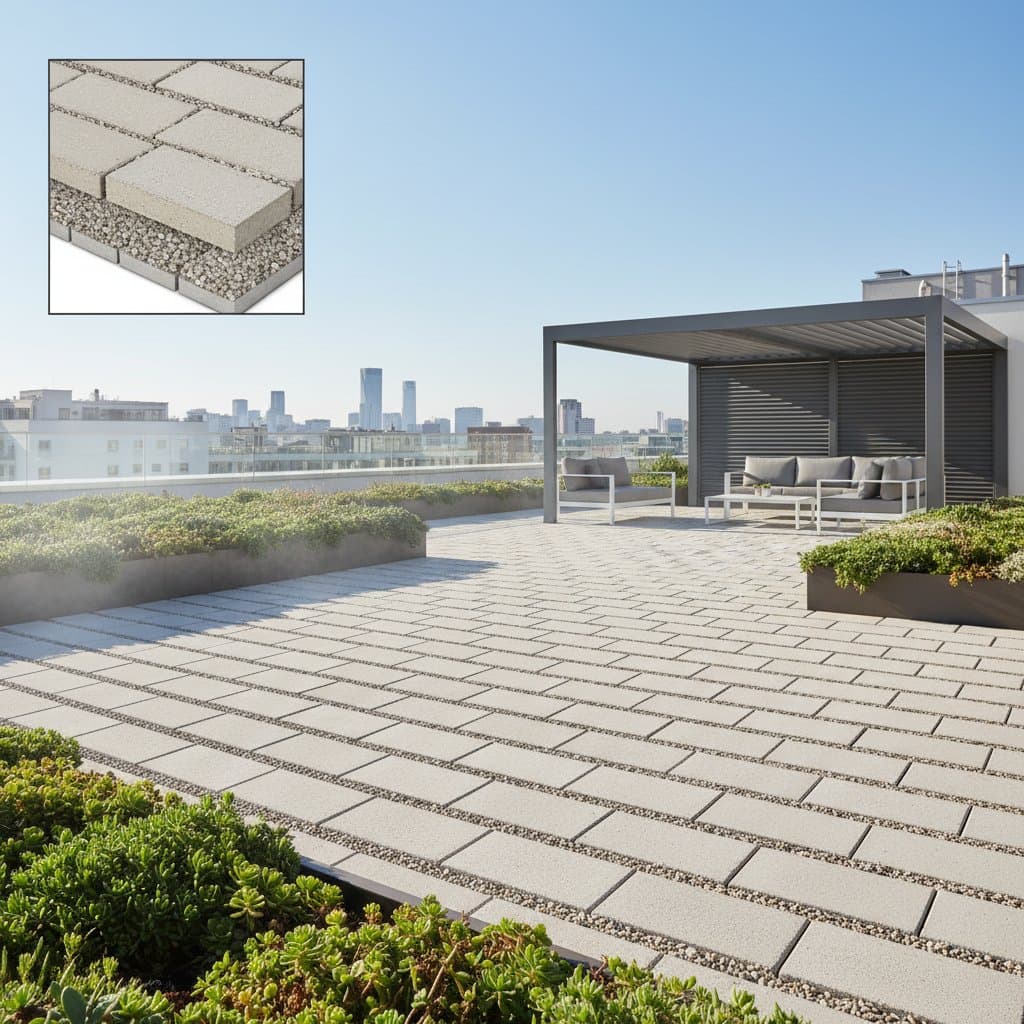
Understanding Permeable Pavers for Rooftop Cooling
Urban rooftops often absorb intense heat, raising indoor temperatures and straining cooling systems. Permeable pavers address this challenge by allowing water and air to pass through their joints, promoting evaporation that cools the surface. Studies show these installations can decrease peak rooftop temperatures by up to 15°F compared to traditional impervious surfaces, creating more comfortable environments and reducing reliance on air conditioning.
This cooling occurs through a combination of reflective materials and airflow. Light-colored pavers reflect sunlight rather than absorb it, while the permeable design facilitates natural ventilation. In dense city settings, such as those in New York, this approach not only combats the urban heat island effect but also manages stormwater runoff effectively.
Key Benefits for Urban Rooftops
Installing permeable pavers yields multiple advantages beyond temperature reduction. Energy savings materialize as lower air conditioning demands, potentially cutting summer utility bills by 10 percent or more. The protective layer shields underlying roof membranes from ultraviolet damage and thermal expansion, extending their lifespan by years.
Environmentally, these pavers support green initiatives by filtering rainwater and reducing sewer overload. For building owners, they enhance property value through versatile rooftop use, whether for patios, gardens, or recreation areas. Overall, the investment pays off in comfort, durability, and sustainability.
Materials Required
Select materials suited to rooftop conditions to ensure stability and performance. Choose concrete or porous clay pavers with a minimum thickness of 2 inches for durability against foot traffic and weather exposure. Opt for light hues like gray or beige to maximize reflectivity.
Under the pavers, use a geotextile filter fabric to prevent sediment migration into drains. A drainage mat, typically 0.5 inches thick, provides cushioning and water flow. For the base, employ coarse sand or expanded shale aggregate, avoiding fine soils that compact easily.
Joint fillers include polymeric sand for stability or small gravel for enhanced permeability. Tools needed comprise a rubber mallet, level, broom, and utility knife. Verify all components comply with local building codes for load-bearing and fire resistance.
Installation Steps
1. Inspect and Prepare the Roof
Begin with a thorough assessment of the roof's condition. Confirm the membrane remains intact, without cracks, blisters, or soft spots that could compromise waterproofing. Remove all debris, including dirt, leaves, and loose gravel, using a stiff broom or leaf blower.
If repairs are necessary, engage a licensed roofer to address issues promptly. Measure the area to calculate material quantities accurately, and review structural load limits with an engineer if the roof exceeds 10 years old. This preparation prevents future complications and ensures a secure foundation.
Safety Tip: Work only on dry, calm days, and use harnesses when accessing edges or slopes greater than 5 degrees.
2. Lay the Filter Fabric
Unroll the geotextile fabric across the entire installation zone, overlapping seams by 6 inches to avoid gaps. Secure it temporarily with landscape staples around the perimeter. Cut precisely around protrusions like vents, drains, and HVAC units using sharp shears.
This barrier maintains drainage efficiency by blocking fine particles from entering the system. For added protection on sloped roofs, consider a dimpled drainage mat beneath the fabric to channel water toward scuppers.
3. Add the Leveling Layer
Spread a uniform 1-inch layer of coarse sand or lightweight aggregate over the fabric. Rake it evenly, then screed with a long straightedge resting on parallel supports to achieve a flat plane. Compact lightly with a plate compactor set to low vibration to avoid disturbing the fabric.
This sub-base distributes weight uniformly and allows minor settling without paver displacement. On flat roofs, slope the layer slightly toward drains, aiming for a 1/4-inch drop per foot.
Safety Tip: Distribute materials gradually to avoid overloading one section, and use wheelbarrows with broad tires for transport.
4. Place the Pavers
Commence laying from the lowest edge or corner, progressing upward or outward in a staggered pattern like brickwork for stability. Position each paver with 1/8-inch to 1/4-inch joints for optimal drainage, ensuring edges align tightly.
Gently tap with a rubber mallet to seat them into the base, checking level every few rows. Cut pavers as needed with a wet saw for borders or obstacles, wearing protective eyewear and gloves.
5. Fill the Gaps
Once all pavers are set, sweep polymeric sand or fine gravel into the joints using a push broom. Work in sections, filling from multiple directions to ensure complete coverage. Mist lightly with water to activate the binder in polymeric sand, allowing it to set for 24 hours.
This filling stabilizes the surface and directs water through the voids. Avoid overfilling, which could impede permeability.
6. Check Drainage
Test the system by simulating rainfall: pour several gallons of water across various points and observe flow paths. Water must percolate through joints and aggregate without ponding, reaching roof drains within seconds.
Adjust as needed by clearing blockages or re-leveling low spots. Document the test results for reference during inspections.
Safety Tip: Maintain at least a 4-inch clearance around all drains and edges to facilitate unimpeded flow and prevent backups.
Essential Safety Guidelines
Prioritize safety throughout the project to protect yourself and the structure. Schedule work during mild weather, avoiding rain or high winds that increase slip risks. Equip with non-slip footwear, gloves, safety glasses, and knee pads for prolonged kneeling.
Limit loads by staging materials near access points, never exceeding the roof's rated capacity. Employ a spotter for edge work and secure tools to prevent drops. If the project spans multiple days, cover unfinished areas with tarps to shield from elements.
Consult professionals for roofs with steep pitches or fragile components. Adhering to these practices minimizes accidents and preserves installation quality.
Common Troubleshooting Issues
Even careful installations encounter challenges. For uneven pavers, identify high or low spots with a straightedge, then lift affected units, adjust the base material, and reseat firmly.
Standing water signals potential clogs in joints or drains; flush with a hose and inspect underlayment for compression. Loose joints require additional filler swept in and compacted.
Growth of weeds or algae demands gentle treatment: apply a solution of white vinegar diluted in water, scrub lightly, and rinse thoroughly. Steer clear of bleach or acids that might erode the roof membrane.
Persistent problems, such as shifting under heavy use, may indicate inadequate base depth; reinforce with more aggregate if feasible.
Cost Estimates and Timeline
For a 100-square-foot rooftop area, expect to invest $8 to $15 per square foot in materials, covering pavers, fabric, base, and fillers. Labor from a contractor adds $10 to $20 per square foot, depending on complexity and location.
A DIY project fits into a weekend for small spaces, with preparation taking half a day and laying the rest. Larger areas, over 500 square feet, benefit from professional crews to manage logistics and ensure code compliance.
Returns include substantial energy reductions: a 15°F surface drop translates to 2 to 4°F cooler interiors, slashing AC runtime by about 10 percent during peak heat. Over five years, these savings often offset initial costs.
Ongoing Maintenance Practices
Sustain performance with routine care. Monthly sweeping removes surface debris, preventing joint blockages. Seasonal inspections reveal settled areas; top up with matching filler and compact.
Annual cleaning involves hosing down the surface after applying mild detergent, focusing on stained spots. After storms, clear drains and realign any displaced pavers promptly.
Monitor for cracks in pavers or membrane exposure, replacing units immediately. With consistent upkeep, permeable systems last 20 years or longer, maintaining their cooling efficiency.
Integrating Storage and Features
Maximize rooftop utility by incorporating storage thoughtfully. Select furniture from lightweight alloys or composites to minimize weight stress. Position items centrally, away from edges unless reinforced.
For planters, use elevated stands with saucers to contain drips and avoid soil migration into joints. Store cushions and tools in sealed, ventilated containers to resist moisture damage.
If adding grills or seating, anchor them securely and distribute loads evenly. These additions enhance functionality without compromising the pavers' protective role.
Engaging Professional Help
Certain scenarios warrant expert involvement for safety and efficacy. Seek professionals if the roof exhibits sagging, leaks, or age over 20 years. Cover more than 50 percent of the surface area, or if codes mandate engineering stamps.
When consulting contractors, inquire about: load-bearing capacity in pounds per square foot; compatible underlayment for your membrane type; and drain safeguarding protocols.
Professionals bring tools for precise leveling and warranties on workmanship, ideal for intricate designs or high-value properties.
Realizing Sustainable Rooftop Benefits
Implementing permeable pavers transforms challenging urban spaces into assets. The combined effects of cooling, durability, and versatility yield long-term gains in comfort and efficiency. Start with a site assessment to tailor the approach, and enjoy a cooler, greener rooftop that supports healthier living.