
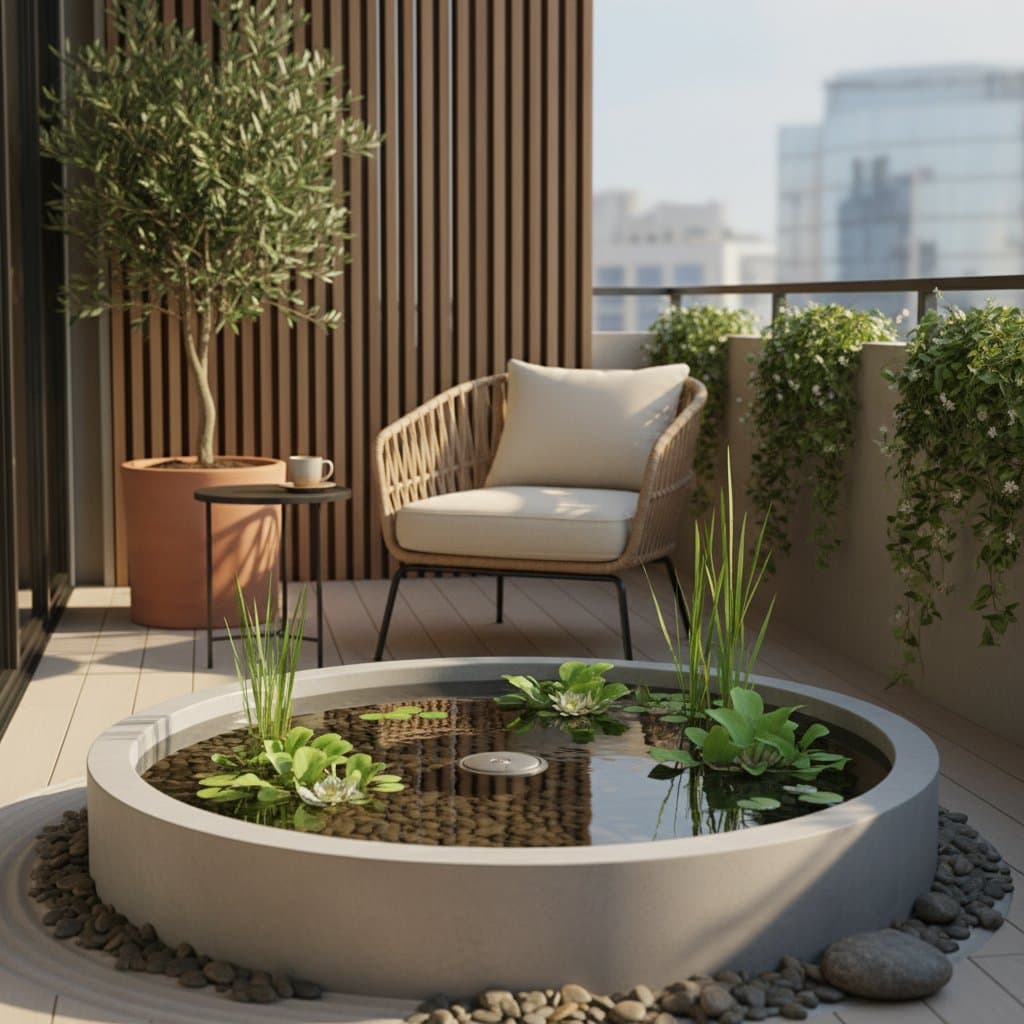
Creating Zen on Your Balcony: The Allure of Micro Ponds
Balconies in urban settings often face the relentless hum of city life, from traffic below to glare from surrounding buildings. A micro pond offers a remedy, serving as a small, self-contained water feature that introduces natural rhythms into limited spaces. This element cools the surrounding air, dampens external sounds, and provides a focal point for quiet reflection.
The following sections explain the essence of a micro pond, its relaxation benefits, and precise methods for installation on a balcony. Additional details cover ongoing care, winter preparation, and cost estimates to support informed decisions.
Overview
A micro pond functions as a diminutive water garden housed in a single container. Sizes range from a modest six-inch bowl to a substantial two-foot tub. Users fill the vessel with water, incorporate aquatic plants, and optionally include stones or a circulation device for subtle auditory effects. This setup doubles as an aesthetic accent and a humidifying presence.
Benefits
- Serenity and concentration: The gentle motion of water masks ambient noise and offers a soothing visual anchor.
- Thermal regulation: Evaporation from the pond surface reduces nearby air temperature by two to four degrees Fahrenheit.
- Atmospheric purification: Plants such as water lettuce or dwarf papyrus filter airborne dust and particulates.
- Space-efficient layout: The entire arrangement occupies a compact area, suitable for balconies measuring three feet by three feet or smaller.
- Minimal upkeep: After initial stabilization, the pond requires only periodic water replenishment and surface cleaning.
Tools and Materials
Assemble a balcony micro pond using basic household goods alongside targeted horticultural items.
- Container: Select a vessel one to two feet in diameter and eight to twelve inches in depth, opting for glazed ceramic, fiberglass, or reinforced plastic.
- Waterproof liner: Employ this if the container lacks inherent sealing.
- Aquatic substrate: Prepare approximately one gallon for petite configurations; steer clear of standard potting soil, which tends to float.
- Pebbles or river rocks: Gather two to three pounds to secure the base and enhance visual appeal.
- Plants: Procure three to five compact aquatic varieties, including one floater, one oxygenator, and one marginal species.
- Water source: Utilize tap water after dechlorination by allowing it to stand for 24 hours prior to plant introduction.
- Optional circulation device: Choose a solar-powered or electric pump suitable for volumes under ten gallons to generate mild water movement.
- Protective netting: Install a fine mesh to deter debris and insects.
Steps
Step 1: Select an Appropriate Container
Evaluate your balcony's structural capacity when choosing a container. A one-foot-deep bowl accommodates about five gallons of water, equating to approximately forty pounds, exclusive of the vessel's weight. Position the container on a flat, secure surface, preferably adjacent to a railing or wall to shield against wind gusts.
Step 2: Install Liner and Base
For unsealed containers, trim a pond liner to exceed the interior dimensions by one inch and conform it smoothly to the sides and bottom. Introduce a one-inch layer of rinsed pebbles to stabilize plantings and create an organic foundation.
Step 3: Introduce Water and Plants
Pour water to reach two-thirds of the container's capacity. Submerge plant containers gently, ensuring each crown emerges slightly above the surface. Allocate at least six inches of clearance around floating specimens to allow unobstructed growth.
Step 4: Stabilize the Ecosystem
Complete the filling process once plants are positioned. If incorporating a pump, situate it centrally or concealed behind upright foliage. Verify that the water movement produces a soft ripple rather than vigorous splashing, and reposition stones as needed for equilibrium.
Step 5: Incorporate Accents
Distribute petite stones or shells along the perimeter for refinement. Consider lightweight additions like a bamboo scoop or miniature lantern to introduce varied textures, while avoiding elements that might destabilize or damage the structure.
Step 6: Monitor Initial Performance
Examine water transparency and plant vitality each day during the first week. A faint greenish hue indicates natural cycling; should an unpleasant odor develop, replace half the volume and limit direct sun exposure to four through six hours daily.
Safety Considerations
- Load verification: Ensure the balcony supports at least fifty pounds per square foot prior to installing water elements.
- Power precautions: Connect any pump to a ground-fault circuit interrupter outlet, routing cords away from moisture.
- Protection for children and animals: Position shallow ponds beyond easy access or secure with netting.
- Hygiene protocols: Refresh half the water biweekly to inhibit mosquito breeding; integrate a circulating pump or biological larvicide if necessary.
Troubleshooting
Cloudy water: Excess organics typically cause this issue. Extract wilted foliage and cleanse the pebble layer.
Fading plants: Assess light exposure; aquatic species generally require four to six hours of sunlight per day. Discard any showing signs of decay.
Larval presence: Introduce circulation or deploy a mosquito control tablet.
Excessive algae: Employ shading via taller plants or relocate to indirect light, as algae flourish under full sun.
Seepage issues: Examine liner margins and joints; repair minor breaches with adhesive tape or substitute the material.
Maintenance and Storage
Sustain clarity and equilibrium through routine attention.
- Weekly tasks: Remove surface debris, replenish evaporated water, and inspect pump operation.
- Monthly routines: Clean stones, prune overgrowth, and retain at least one-third of the water volume to preserve microbial balance.
- Seasonal adjustments: In freezing conditions, relocate sensitive plants indoors within shallow containers. Partially drain to avert ice-induced fractures. In temperate areas, apply mesh coverings to exclude falling matter.
For off-season storage, evacuate and wash the container using mild detergent, then air-dry fully before shrouding. Coil liners neatly and house pumps in moisture-free enclosures.
Budget and Timeline
Construct a fundamental micro pond for $40 to $120, varying with container quality and botanical selections. Premium ceramic options elevate costs, whereas repurposed containers prove economical.
Assembly demands one to two hours, encompassing preparation and planting. Ongoing maintenance consumes ten minutes weekly. Solar pumps range from $20 to $30, with individual aquatic plants priced at $5 to $15.
Seasonal Guidance
- Spring preparation: Renew water supplies, propagate plants, and service circulation devices.
- Summer vigilance: Monitor for rapid evaporation and intense light; replenish frequently.
- Autumn cleanup: Clear accumulated leaves and trim declining growth.
- Winter protection: Reduce water levels and shelter fragile components indoors.
These practices safeguard integrity and preserve vibrancy across seasons.
Professional Assistance
Engage a qualified contractor for balcony load assessments or structural evaluations. Building authorities or engineers can verify safe weight thresholds.
For pump installations involving fixed wiring, consult a licensed electrician to establish weather-resistant connections.
Larger installations with integrated plumbing warrant input from a container gardening specialist.
Implementing Your Micro Pond
- Assess dimensions: Confirm space accommodates the container's weight while preserving navigation.
- Collect supplies: Source or adapt a sealed pot, along with rocks and initial plantings.
- Initiate modestly: Establish a single unit to gauge integration into your routine before scaling.
A modest water expanse alters balcony ambiance profoundly. The subtle sounds, reflective surfaces, and verdant elements divert focus from daily pressures. Regular visits to this feature encourage outdoor pauses, affirming that tranquility thrives in confined areas.