
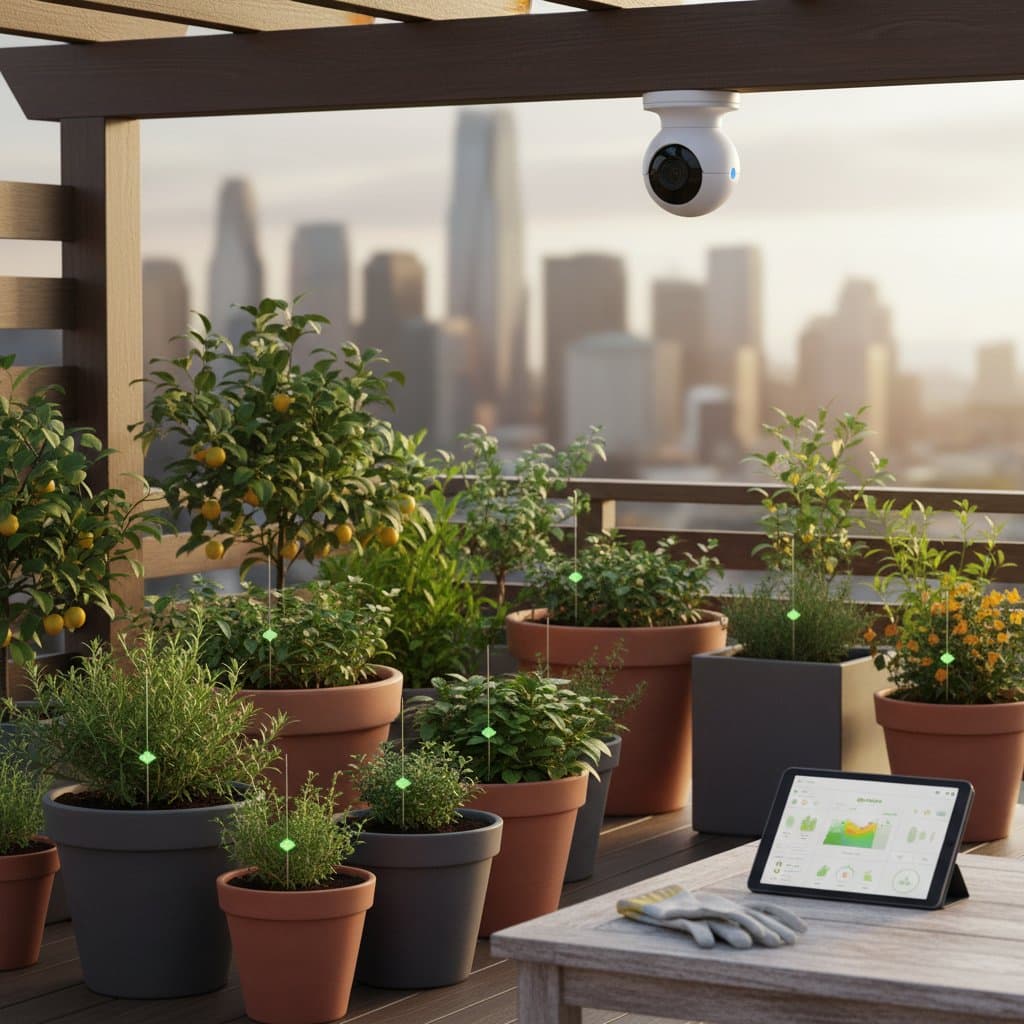
6. Set Alerts and Rules
Access the companion app to establish custom triggers, such as initiating watering when soil moisture falls below 35 percent or notifying you about emerging leaf spots. Fine-tune the sensitivity settings gradually to eliminate false notifications while preserving responsiveness.
7. Test the System
Initiate a manual watering sequence to verify basic functionality, then observe the automatic activation under controlled conditions. Monitor the live camera feed to ensure the system activates solely in response to genuine needs, such as detected dryness or pest activity.
With successful testing complete, the setup operates independently. It identifies pests and soil deficiencies, delivers timely alerts, and executes predefined actions when authorized.
Safety Tips
Position all electrical components at least 6 inches (15 centimeters) above deck surfaces to avoid moisture accumulation. Select extension cords and protective enclosures rated for outdoor use to withstand weather exposure.
Avoid mounting cameras in locations exposed to direct sprays or heavy rainfall, which could impair the lens. Refrain from applying pesticides in proximity to the camera, as residues may cloud the lens and disrupt image analysis.
Perform weekly lens cleaning with a soft, lint-free cloth to sustain optimal visual clarity. These practices safeguard your equipment and promote healthy plant environments.
Troubleshooting
Smart systems require periodic oversight to maintain performance. The following addresses frequent issues with targeted solutions.
Problem: Excessive pest detection alerts from the camera.
Fix: Lower the detection sensitivity or retrain the AI model by uploading additional photos of unaffected foliage. Elements like shadows or moisture droplets often mimic pest signs.
Problem: Frequent activation of watering functions.
Fix: Increase the soil moisture threshold by 5 percent increments or verify that sensors sit at an appropriate depth within the soil.
Problem: Intermittent app connectivity.
Fix: Relocate your Wi-Fi router for better signal strength or install a dedicated extender adjacent to the deck area.
Problem: Inconsistent water distribution.
Fix: Inspect and clear sprinkler heads of debris, then execute a brief flushing cycle biweekly to remove blockages.
Problem: Lens condensation during nighttime hours.
Fix: Insert a silica gel packet within the camera housing or relocate the unit beneath a protective overhang.
Implementing these resolutions ensures reliable operation and minimizes future interruptions.
Budget and Time Considerations
Many assume smart gardening involves high expenses, yet entry-level configurations prove affordable. Begin with core components and scale as required.
Estimated Costs:
- AI-enabled camera with built-in analytics: $120 to $250
- Intelligent irrigation controller: $70 to $150
- Valves, hoses, and connectors: $30 to $60
- Mounting hardware and power supplies: $20 to $40
A basic installation typically totals $240 to $500. For decks smaller than 200 square feet (18 square meters), allocate approximately two hours for setup.
Opt for battery-operated cameras over wired models to cut initial wiring needs, or use programmable timers for scheduled irrigation as a simpler alternative to full AI integration. Prioritize robust camera construction for decks facing intense sunlight or frequent downpours, where hardware resilience outweighs software sophistication.
Maintenance Routines
Regular attention sustains the effectiveness of automated watering and pest management throughout the growing period.
Weekly Tasks:
- Gently wipe the camera lens to remove dust or smudges.
- Inspect for overgrown plants obstructing the field of view.
- Examine alert logs to identify and address any erroneous pest identifications.
Monthly Tasks:
- Flush filters and drip lines to eliminate mineral deposits.
- Recharge batteries or evaluate solar panel efficiency.
- Install the latest app updates to ensure seamless device compatibility.
Seasonal Tasks:
- Prior to cold weather, detach valves and drain all hoses completely.
- Relocate the camera indoors ahead of subfreezing conditions.
- Recalibrate the system in spring by capturing fresh images of emerging foliage.
Diligent maintenance optimizes resource use, including water and energy conservation.
When to Consult a Professional
Most deck setups suit DIY approaches, but engage an expert for complex integrations, such as linking to established irrigation lines. Seek assistance also for routing pipes beneath concrete or composite materials, connecting to substantial water reservoirs or pumps, or resolving persistent electrical faults and signal disruptions.
During the service, request detailed guidance on data exchange between the controller and camera. Obtain a documented diagram showing valve positions and Wi-Fi coverage to facilitate future modifications.
Smart Storage Practices
Organize spare parts efficiently to streamline access and longevity.
- House additional sensors and fittings in a clearly labeled, waterproof container.
- Coil hoses without tight bends and store at waist level to prevent creases.
- Position pest treatments in a cool, shaded storage area shielded from temperature fluctuations.
- Maintain a compact logbook or digital record of layout adjustments, including new containers or rearranged elements.
Seasonal Adjustments
Adapt the system to environmental shifts for year-round reliability.
- Spring: Update AI training with images of fresh growth and revise watering parameters to account for variable rainfall.
- Summer: Conduct weekly lens cleanings to counter dust accumulation and review daily logs for uniform hydration.
- Fall: Dial back watering schedules and monitor for fungal warnings related to decaying foliage.
- Winter: Power down and indoor-store electronic components, retaining only cold-resistant moisture probes if applicable.
Steps to Implement Today
Advance your deck garden project with these immediate actions.
- Select a suitable camera. Prioritize models capable of recognizing at least five prevalent pests, including aphids, beetles, and caterpillars.
- Design watering zones. Employ compact hoses or drip emitters focused on root zones rather than foliage.
- Initiate training and validation. Dedicate a few minutes daily to app reviews, promptly correcting any image misinterpretations.
These steps position your garden for sustained success with AI assistance.