
Loading...

Transparent Solar Panels for Decks: Clear Views and Energy Savings | urbanoutdoorsnyc.com | Urban Outdoors - Small-Space Gardens, Rooftop Decks, Balconies, Decks, Backyard Design
Skip to main content
Urban Outdoors
Search
Home
  1. Home
  2. /
  3. Deck Construction & Remodeling
  4. /
  5. Transparent Solar Panels Keep Decks Bright While Cutting Energy Bills
Deck Construction & Remodeling

Transparent Solar Panels Keep Decks Bright While Cutting Energy Bills

bySheila Spaulding
2026-02-14 04:33:14February 14, 2026
7 min read
Featured image for Transparent Solar Panels Keep Decks Bright While Cutting Energy Bills

Categories

Navigation

  • Home
  • All Articles
  • About Us
  • Privacy Policy
  • Terms of Service

© 2026 Urban Outdoors. Crafted for bold city dwellers.

2026-02-14 04:33:14
Urban Outdoors - Small-Space Gardens, Rooftop Decks, Balconies, Decks, Backyard Design

Transparent Solar Panels Power Up Urban Decks

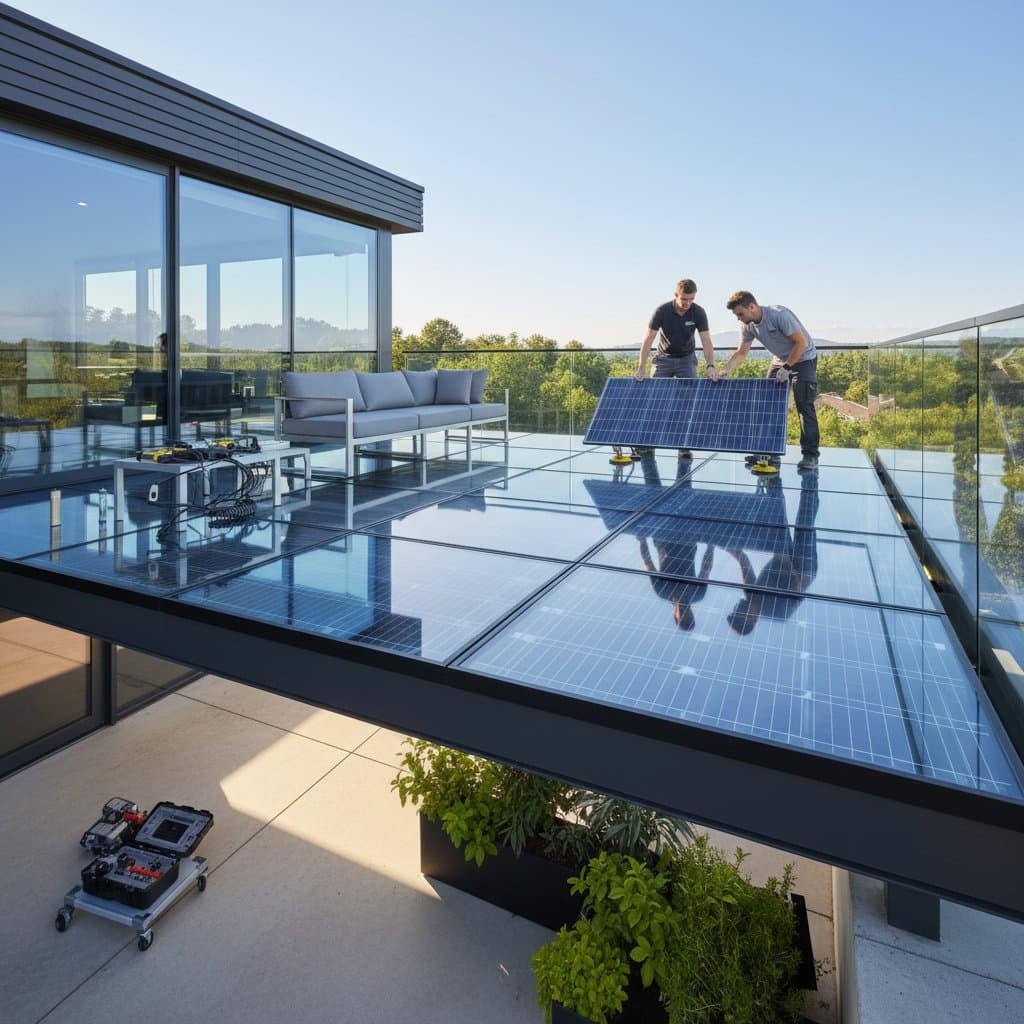
Urban dwellers cherish decks as serene extensions of living spaces, yet rising energy costs often temper that enjoyment. Transparent solar panels provide an innovative solution, allowing sunlight to flood the area while converting invisible light wavelengths into usable electricity. These panels resemble ordinary glass but function as efficient photovoltaic devices, preserving the airy ambiance that defines outdoor retreats.

This article explores the fundamentals of transparent solar panels, their integration into deck designs, and practical strategies for installation. Readers gain insights into selecting appropriate components, executing safe setups, and maintaining systems for optimal performance, all while aligning with budget constraints and daily lifestyles.

Overview

Transparent solar panels consist of advanced glass sheets embedded with thin-film photovoltaic materials. These layers selectively absorb ultraviolet and infrared light spectra, transmitting visible light to maintain transparency levels up to 90 percent. Suitable for overlaying existing deck railings, integrating into pergola structures, or forming custom canopies, the panels blend seamlessly with architectural elements.

The advantages extend beyond aesthetics. Installed over a 100-square-foot deck surface, such panels can produce 200 to 400 kilowatt-hours annually, sufficient to power LED lighting, ceiling fans, or portable chargers. This output reduces reliance on utility grids, potentially lowering monthly bills by 10 to 20 percent for average households, depending on local sunlight exposure and usage patterns.

Tools and Materials

Assembling the necessary equipment ensures a smooth installation process. Select components compatible with outdoor conditions, including resistance to humidity, UV degradation, and temperature fluctuations from -20 degrees Fahrenheit to 140 degrees Fahrenheit.

  • Transparent solar panels, available in sizes from 2 by 3 feet to custom dimensions
  • Aluminum or stainless steel mounting frames for corrosion resistance
  • Outdoor-rated wiring kit with UV-protected insulation
  • Microinverter or string inverter for DC-to-AC conversion
  • Optional deep-cycle battery for energy storage or direct grid-tie kit
  • Power tools including a cordless drill, adjustable wrench set, and digital multimeter for voltage testing
  • Personal protective equipment such as cut-resistant gloves, steel-toed non-slip boots, and safety goggles

Verify certifications like UL listing for electrical safety and IP65 rating for water resistance before purchase.

Installation Steps

1. Measure and Plan

Begin by assessing the deck's dimensions and solar potential. For a typical 10-by-12-foot deck, target 80 to 100 square feet of panel coverage to maximize output without overwhelming the structure. Use a solar pathfinder or smartphone app to map daily sun trajectories, identifying shaded areas caused by overhangs, foliage, or adjacent buildings. Factor in local building codes, which may require permits for installations exceeding 10 panels.

2. Select Panel Placement

Overhead configurations, such as pergola integrations, capture the most sunlight and yield higher energy returns, but demand reinforced joists capable of supporting 5 to 10 pounds per square foot. Railing-mounted panels provide moderate generation while enhancing privacy through subtle tinting. Vertical placements along perimeter fences suit smaller decks, offering 50 to 70 percent of overhead efficiency but easier access for cleaning.

3. Secure Mounting Frames

Position frames parallel to deck joists, spacing anchors every 24 inches for stability against winds up to 50 miles per hour. Drill pilot holes and fasten with galvanized lag screws, torquing to 20 foot-pounds to prevent loosening. Inspect for level alignment using a bubble level; deviations greater than one-eighth inch per foot compromise panel efficiency and structural integrity.

4. Install and Wire Panels

Snap panels into frames using provided silicone gaskets for vibration dampening. Connect series-parallel wiring configurations—typically four panels in series for voltage matching—via weatherproof MC4 connectors. Route cables through conduit sleeves along structural posts, maintaining a 6-inch clearance from heat sources. Disconnect all power sources prior to handling electrical components to mitigate shock risks.

5. Integrate Inverter and Storage

Position the inverter on a north-facing, shaded wall or enclosed cabinet to avoid direct sun exposure. Wire panel arrays to the inverter input terminals, observing polarity, then link the output to a dedicated circuit breaker or battery bank rated for 12 to 48 volts. Employ a clamp meter to confirm voltage output between 18 and 60 volts DC under full sun before completing connections.

6. Seal and Verify Operation

Apply a bead of clear silicone sealant around frame perimeters and junction boxes, ensuring full coverage to prevent moisture ingress. Allow 24 hours for curing in moderate temperatures. Activate the system and monitor the inverter's LCD display for real-time power production; expect 50 to 100 watts per 10 square feet on clear days. Conduct a full load test by connecting a 100-watt appliance to validate performance.

Safety Considerations

Collaborate with at least one assistant for lifting panels weighing 15 to 25 pounds each, reducing strain and error risks. Refrain from grid connections unless supervised by a certified electrician to comply with National Electrical Code standards. Schedule installations during dry, calm conditions, and secure loose materials to avoid accidents. Position all wiring at least 18 inches above walkways, using cable ties for organization and hazard prevention.

Common Issues and Solutions

If energy output falls below expected levels, inspect for accumulations of dirt, bird droppings, or pollen, which reduce transmittance by up to 15 percent. Gentle rinsing with a hose restores efficiency; schedule cleanings quarterly in pollen-heavy seasons.

Flickering connected devices often signals inverter overload or intermittent connections. Reset the unit and tighten all terminals to 10 inch-pounds; consult the manual for firmware updates if persistent.

Condensation or water intrusion appears as fogging within panels. Reapply sealant to compromised seals and inspect gaskets for brittleness, replacing with EPDM rubber variants for enhanced durability. Monthly visual inspections catch issues early, sustaining 95 percent efficiency over time.

Cost Estimates and Timeline

Material expenses range from 18 to 30 dollars per square foot, influenced by panel transparency (higher clarity increases costs) and brand warranties extending five to ten years. Professional electrical integration adds 500 to 1,500 dollars, while DIY efforts minimize labor to under 200 dollars.

A modest 50-square-foot setup requires 6 to 8 hours over a single weekend for two participants. Expansive projects, including custom pergolas, extend to 20 to 30 hours across multiple days. Start with railing panels at 800 to 1,200 dollars total to test viability before scaling to full coverage, prioritizing quality inverters and wiring for reliable returns on investment within three to five years.

Upkeep Practices

Maintain panels with a solution of distilled water and pH-neutral soap, applied via soft microfiber cloths to prevent scratches. Rinse thoroughly to eliminate residue, performing this task after rain events or monthly during dry spells.

Biannual reviews of mounting hardware involve checking torque on screws; readjust if rotation exceeds one-quarter turn. Examine wiring for abrasion or discoloration, splicing and insulating any compromised sections with heat-shrink tubing.

Organize maintenance items—a toolkit with sealants, connectors, and cleaners—in a sealed plastic bin mounted nearby. Consistent attention ensures longevity, with systems operating at peak capacity for 20 years or more.

Optimizing System Performance

For battery-inclusive setups, house units in well-ventilated enclosures to dissipate heat, maintaining internal temperatures below 95 degrees Fahrenheit. Apply identification labels to circuits using vinyl tape in contrasting colors, facilitating diagnostics.

Allocate 4 inches of clearance around inverters for convective cooling, preventing thermal shutdowns. These practices not only safeguard components but also simplify expansions, such as adding smart monitors for remote output tracking.

Engaging Professional Assistance

Opt for expert involvement in scenarios involving structural modifications, like reinforcing joists for overhead arrays, or complex grid interconnections requiring utility approvals. Professionals handle permitting, ensuring compliance and voiding warranty risks from improper setups.

Hire licensed solar installers for projects surpassing 1 kilowatt capacity, as they provide performance guarantees and access to incentives like federal tax credits up to 30 percent. Initial consultations, often free, clarify feasibility and refine designs to match specific site conditions.

Advancing Your Deck's Energy Independence

Implementing transparent solar panels transforms decks from passive spaces into active contributors to household sustainability. Beyond immediate bill reductions, these installations foster resilience against power outages and enhance property values by up to 5 percent.

Begin with a site assessment to tailor the system to your needs, then proceed methodically through planning and execution. The result yields a vibrant, self-sustaining outdoor environment that harmonizes innovation with natural beauty.

You Might Also Like

Fire-Pit Decks with Seating Walls Work Year-Round

Shade Sails Drop Deck Temps 20° Without Electricity

Acoustic Panels Cut Deck Noise by 30 to 50 Percent

Solar Fabrics That Shade Your Pergola and Cut Power Bills

Solar Drip Systems Water 20 Pots With No Effort

Tagged:

energy,deck,transparent,solar,panels,transparent solar,decks,generating,energy-generating-decks,solar-deck-panels

Recent by Sheila Spaulding

Image for AI Drip Systems End Uneven Deck Garden Watering

AI Drip Systems End Uneven Deck Garden Watering

Feb 14, 2026
Image for Shade Sails Drop Deck Temps 20° Without Electricity

Shade Sails Drop Deck Temps 20° Without Electricity

Feb 13, 2026
Image for Acoustic Panels Cut Deck Noise by 30 to 50 Percent

Acoustic Panels Cut Deck Noise by 30 to 50 Percent

Feb 13, 2026
Image for Pergolas That Fit Balconies Under Six Feet Wide

Pergolas That Fit Balconies Under Six Feet Wide

Feb 11, 2026
Image for Acoustic Panels Cut Balcony Noise Without Soundproofing

Acoustic Panels Cut Balcony Noise Without Soundproofing

Feb 10, 2026

energy

Image for Shade Sails Drop Deck Temps 20° Without Electricity

Shade Sails Drop Deck Temps 20° Without Electricity

Feb 13, 2026
Image for Solar Fabrics That Shade Your Pergola and Cut Power Bills

Solar Fabrics That Shade Your Pergola and Cut Power Bills

Feb 13, 2026
Image for Solar Pergolas Cut Energy Bills While Shading Your Deck

Deck Construction & Remodeling

Fire-Pit Decks with Seating Walls Work Year-Round

Fire pit decks with built-in seating walls transform outdoor areas into versatile, inviting retreats. These designs offer warmth, structured comfort, and enduring style without the clutter of separate furniture. Homeowners appreciate their all-season functionality, ease of maintenance, and ability to foster gatherings.

Feb 14, 2026

Transparent Solar Panels Keep Decks Bright While Cutting Energy Bills

Elevate your deck with transparent solar panels that generate electricity without dimming the sunshine or obstructing vistas. This guide details the technology, required materials, secure installation procedures, ongoing care, and financial considerations to build an inviting, power-producing outdoor haven.

Feb 14, 2026

Shade Sails Drop Deck Temps 20° Without Electricity

Convert hot decks into comfortable outdoor areas using shade sails that lower surface temperatures by up to 20 degrees Fahrenheit without electricity. This guide covers planning, installation, and maintenance of these UV-resistant structures to achieve enduring comfort, contemporary design, and energy efficiency. Complete the project over a weekend for effective, electricity-free cooling and extended seasonal use.

Categories

Deck Construction & Remodeling(174)
Balcony Design(158)
Small-Space Gardens(68)
Rooftop Decks(56)
Backyard Design(19)

Solar Pergolas Cut Energy Bills While Shading Your Deck

Feb 12, 2026
Image for Solar Pergolas Turn Wasted Deck Space Into Power

Solar Pergolas Turn Wasted Deck Space Into Power

Feb 11, 2026
Image for Shade That Powers Your Rooftop Escape

Shade That Powers Your Rooftop Escape

Feb 11, 2026
Feb 13, 2026

Acoustic Panels Cut Deck Noise by 30 to 50 Percent

Create a tranquil outdoor space on your city deck or balcony using acoustic panels that absorb echoes and external noise. This comprehensive guide provides insights on materials, precise installation steps, safety measures, maintenance routines, and expert advice to achieve 30 to 50 percent noise reduction for enhanced privacy and comfort.

Feb 13, 2026

Permeable Decking Drains Rain Through Your Deck Surface

Permeable decking transforms rainy days into worry-free outdoor experiences. This advanced composite technology allows water to pass through the deck surface, preventing puddles, minimizing erosion, and enhancing safety. Delve into the materials, essential tools, and detailed installation process to create an enduring, environmentally conscious deck that withstands seasonal storms.

Feb 12, 2026

Solar Pergolas Cut Energy Bills While Shading Your Deck

Elevate your deck with a solar pergola that delivers shade, produces renewable power, and trims energy expenses. This comprehensive resource details customization choices, step-by-step assembly, upkeep strategies, and investment breakdowns to foster sustainable, stylish living spaces while increasing property appeal.

Feb 12, 2026

Solar Pergolas Turn Wasted Deck Space Into Power

Convert your deck into a versatile, energy-generating oasis using a solar pergola. This innovative structure merges shaded comfort with solar power production, promoting sustainability while enhancing usability. Explore essential materials, step-by-step installation, cost estimates, and upkeep strategies for a robust system that boosts your home's efficiency, aesthetics, and self-sufficiency.

Feb 11, 2026

Micro-Clover Decks Cut Maintenance and Replace Wood

Frustrated with wood deck upkeep? Micro-clover decks provide a vibrant, living option for patios and rooftops. These sustainable surfaces remain cool, manage water effectively, and cost half as much as composites. Discover installation, care, and benefits for year-round use.

Feb 10, 2026

Solar Pavers Turn Patios into Power Sources

Solar pavers integrate photovoltaic technology into durable walking surfaces, generating electricity from sunlight to power lights or devices. This guide covers their functionality, essential materials, installation steps, and maintenance strategies to maximize energy output while preserving aesthetic appeal in patios and decks.

Feb 9, 2026

Misting Systems Drop Deck Temperature by 20°F

Convert your deck into a refreshing oasis using a misting system that lowers temperatures by as much as 20°F. This guide covers the mechanics, required tools, installation process, upkeep routines, and cost considerations to achieve efficient, outdoor cooling.

Feb 8, 2026

Auto-Water 50+ Deck Plants with One Afternoon Setup

Turn your deck into a vibrant, low-maintenance garden. Follow this step-by-step guide to install a micro drip irrigation system for more than 50 plants, covering essential tools, precise setup instructions, ongoing maintenance, and seasonal adjustments for year-round success.

Feb 8, 2026

Shade Sails Block 95% of UV Rays and Cool Decks 20°F

Convert a sun-exposed deck into a shaded oasis using UV-blocking shade sails. This comprehensive guide explains material selection, anchor installation, and upkeep routines to ensure durability and comfort. It includes planning strategies, essential tools, safety measures, and design ideas for an inviting outdoor environment.

Feb 7, 2026

Mycelium Decking: The Compostable Alternative to Wood

Mycelium decking, derived from fungal networks, transforms sustainable outdoor spaces. These boards provide the aesthetic appeal of wood with full biodegradability and low environmental impact. This guide details planning, building, and maintaining a deck that enhances your yard while supporting ecological responsibility.

Feb 6, 2026

Mushroom Boards: Biodegradable Decking That Grows Itself

Mycelium decking boards redefine sustainable outdoor living. Derived from fungal roots and agricultural waste, these boards provide strength, ease of installation, and complete biodegradability. Discover construction techniques, upkeep routines, and benefits for reducing environmental impact while enhancing your space.

Feb 4, 2026

Shade Sails Turn Hot Decks Into Cool Urban Retreats

Convert your sun-baked urban deck into a shaded, inviting oasis using shade sails. Explore expert advice on selecting durable UV-resistant materials, achieving stable installation, performing essential maintenance, and implementing budget-friendly approaches to create a comfortable outdoor environment throughout the seasons.

Feb 4, 2026

Acoustic Garden Pods Block Noise Without Losing Light

Convert your backyard into a serene professional haven with a soundproof deck office constructed from an acoustic garden pod. This comprehensive guide addresses design principles, essential materials, installation procedures, safety measures, and upkeep strategies. The result is a robust, weather-resistant workspace that excludes distractions and promotes productivity mere steps from your home.

Feb 3, 2026

Solar Drip Systems Keep Deck Gardens Watered Automatically

Elevate your deck gardening with solar-powered drip irrigation for precise, hands-free watering. This guide covers final setup steps, safety measures, common fixes, cost breakdowns, and year-round care to foster healthy plants with minimal intervention.

Feb 2, 2026

Solar Pavers Convert Steps and Sunlight Into Power

Elevate your outdoor paths with solar pavers that generate electricity from sunlight and movement. This comprehensive resource outlines functionality, step-by-step setup, budgeting, troubleshooting, and ways to apply the power for lighting or devices—all while promoting green living.

Feb 2, 2026

Glass Deck Floors That Skylight the Space Below

Elevate your deck design with glass floor panels that function as skylights, flooding lower areas with natural light while delivering a sleek, contemporary look. This resource provides in-depth coverage of benefits, essential materials, step-by-step installation, safety protocols, maintenance routines, and guidance on when to hire experts—all to optimize your outdoor environment for light, style, and longevity.

Feb 2, 2026

Mycelium Boards Replace Wood in Sustainable Decking

Mycelium decking redefines sustainable outdoor design with boards cultivated from fungal roots and agricultural waste. These lightweight, compostable planks match wood's strength while minimizing environmental impact. This guide covers planning, installation, and care for a resilient, green yard addition.

Feb 1, 2026