
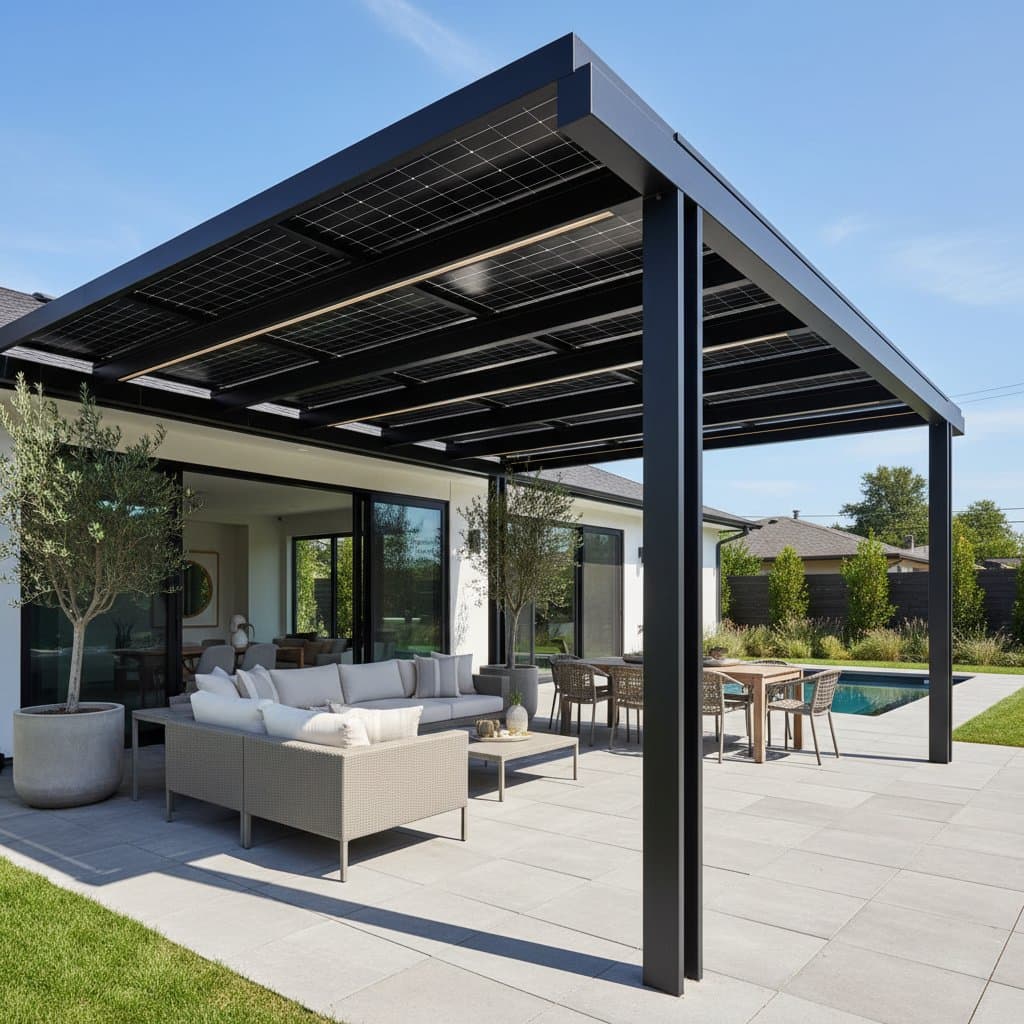
Shade Your Patio and Power Your Home with Solar Pergolas
Homeowners seek shaded outdoor areas for relaxation, yet they also aim to lower electricity expenses. A solar pergola addresses both needs effectively. It delivers shade for patios or decks and produces clean electricity from solar energy. The result is an enhanced outdoor environment paired with improved home energy efficiency.
This guide explains the nature of a solar pergola, its significance, options for construction or purchase, and strategies for sustained performance.
Overview
A solar pergola consists of a framework with slatted or solid roofing integrated with photovoltaic panels. These panels transform sunlight into electricity, which offsets household consumption or charges storage batteries. The structure itself provides shade, privacy, and architectural interest to exterior spaces.
The primary advantage lies in its multifunctional design. Individuals obtain a shaded area for outdoor activities while the overhead panels generate power silently. Depending on panel capacity and positioning, such systems produce between several hundred and several thousand watts. A standard compact installation typically incorporates six to twelve panels, each rated at approximately 300 watts.
Systems connect to the home's electrical panel or operate independently to power exterior features like lighting or appliances. This approach introduces solar energy without requiring roof modifications.
Tools and Materials
Constructing or installing a solar pergola demands careful preparation and essential tools. For a typical 10-by-12-foot pergola, the following items are necessary:
- Lumber or aluminum framing suitable for outdoor load-bearing applications
- Concrete mix for footings, approximately 4 cubic feet in total
- Photovoltaic panels, generally 6 to 12 units, each measuring about 40 by 65 inches
- Mounting brackets and flashing to secure panels securely
- Inverter matched to the system's total wattage
- Conduit and wiring designed for exterior electrical installations
- Fasteners, sealant, and paint for weatherproofing
- Safety equipment, such as gloves, goggles, and a voltage tester
Pre-engineered solar pergola kits include many components pre-matched and predrilled. These kits reduce installation duration and enhance overall reliability.
Steps
1. Plan Your Layout
Select a site that receives direct sunlight for the majority of the day. South-facing orientation proves optimal. Employ a compass or mobile application to verify direction. Measure the area precisely to determine pergola dimensions. Maintain at least 3 feet of clearance on all sides to facilitate airflow and access for upkeep.
2. Set the Footings
Outline post locations and excavate holes measuring 12 inches in width and 24 inches in depth. Pour concrete and position posts plumb. Permit the foundation to cure fully prior to installing crossbeams. Verify straightness using a string line.
3. Assemble the Frame
Secure beams and rafters with galvanized bolts. Apply water-resistant sealant to wooden frames before panel placement. Ensure metal frames feature corrosion-resistant joints. The framework must withstand wind and snow loads without compromise.
4. Mount the Solar Panels
Arrange panels across the rafters prior to attachment. Adhere to manufacturer specifications for bracket torque values. Position panels at a 15- to 30-degree tilt, adjusted for local latitude, to maximize energy yield. Route all wiring through protective conduit.
Caution: Disconnect power at the main breaker prior to any wiring connections.
5. Connect Electrical Components
Position the inverter and junction box in a sheltered location nearby. Extend conduit from panels to the inverter, then to the primary service panel or battery array. A certified electrician must perform final electrical integrations to comply with regulations and ensure safety.
6. Test and Monitor
After connections, activate the inverter and observe its interface. Confirm output readings from individual panels. Utilize a mobile application or multimeter to assess voltage and current levels. Observe daily shading variations that could impact efficiency.
Safety Tips
- Wear insulated gloves whenever handling circuits that may carry voltage.
- Position ladders on firm, level surfaces.
- Refrain from installing panels in rainy or high-wind conditions.
- Engage an electrician for a pre-activation system review.
Troubleshooting
Low power output: Clean panels using mild soap and water. Accumulations of dust, bird droppings, or pollen reduce efficiency by 10 to 20 percent.
Uneven production: Inspect for shading caused by growing vegetation or adjacent structures. Adjust panel positions as required.
Flickering lights or inverter errors: These symptoms indicate potential loose connections or grounding problems. Deactivate the system immediately and consult a qualified solar professional.
Maintenance
Solar pergolas require minimal routine care, focused on cleaning and periodic checks. Conduct the following every few months:
- Examine mounts and bolts for signs of rust or loosening.
- Clean panels with a soft brush, hose, and mild detergent.
- Trim overhanging branches that could cause shade or debris accumulation.
- Apply fresh paint or sealant to the structure every few years to shield wood or metal from environmental damage.
If the inverter supports Wi-Fi connectivity, review performance data weekly. Minor declines in output signal early issues like soiling or faulty connections.
Storage
Keep spare components, sealants, and wiring in an indoor, dry environment. Store ladders and cleaning supplies in close proximity for convenient access. For pergolas with integrated battery storage, adhere to manufacturer recommendations regarding temperature and ventilation. Maintain batteries within 50 to 80 degrees Fahrenheit (10 to 27 degrees Celsius) to optimize longevity.
Budget and Time
Expenses depend on scale and materials selected. A 10-by-12-foot wooden pergola equipped with six panels ranges from $7,000 to $13,000, encompassing materials and labor. Aluminum or steel alternatives cost more initially but demand less ongoing care. Self-installation reduces labor fees, though electrical finalization requires professional involvement.
Anticipate 3 to 5 days for a straightforward project. Structural assembly constitutes the bulk of the effort, with electrical integration typically requiring a half-day once the frame stands complete.
Seasonal Reminders
- Spring: Thoroughly wash panels and review wiring ahead of high-sun periods.
- Summer: Monitor inverter proximity for heat buildup and verify adequate ventilation.
- Fall: Remove fallen leaves and debris from roof elements.
- Winter: Gently clear snow and inspect beams for ice formation.
Consistent oversight preserves shading functionality and energy generation across seasons.
When to Call a Pro
Engage a licensed solar specialist or electrician upon observing:
- Ongoing inverter malfunctions or diagnostic codes
- Voltage reductions exceeding 10 percent during operation
- Wiring instability within conduits or enclosures
- Beam fractures or distortions
Professionals conduct circuit testing, component replacement, and code verification. For expansions involving battery additions or capacity increases, expert planning guarantees system equilibrium and security.
Key Takeaways
A solar pergola merges comfort with energy production in a single installation. It shelters patios from sun while harnessing renewables to diminish utility expenses. Through robust construction, secure wiring, and diligent care, the system endures for numerous years.
Your Next Steps
- Measure available space and track sunlight patterns daily.
- Obtain estimates from at least two solar or pergola providers.
- Initiate with a modest panel array to evaluate output prior to enlargement.
Upon completion, the solar pergola transcends mere shading. It establishes your outdoor zone as an efficient, self-sustaining energy source, operational whenever sunlight prevails.