
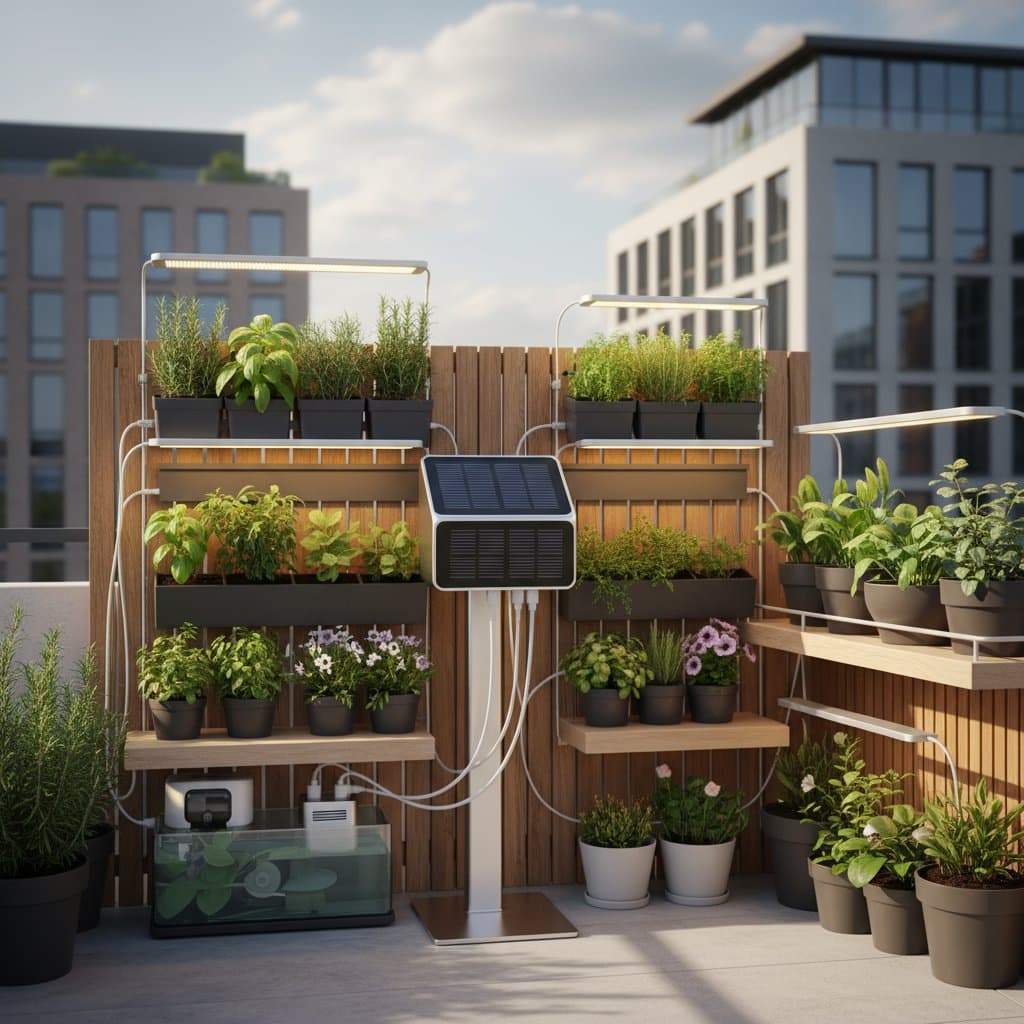
Understanding Solar Hubs for Balcony Gardens
Solar hubs represent a compact, eco-friendly solution designed specifically for urban gardeners with limited space. These devices integrate solar panels, batteries, sensors, and automated controls to manage plant care essentials. By capturing sunlight, they power irrigation pumps, LED grow lights, and moisture detectors without relying on grid electricity.
In dense city environments, where balconies often face inconsistent sunlight and weather challenges, solar hubs provide reliability. They adjust operations based on real-time data, ensuring plants receive precise amounts of water and light. This technology empowers residents to cultivate herbs, vegetables, or flowers effortlessly, even in high-rise apartments.
Users appreciate the simplicity of these systems, which reduce manual intervention while promoting sustainability. A single hub can support multiple pots, making it ideal for small-scale setups. As urban living intensifies, such innovations bridge the gap between city constraints and the desire for fresh, homegrown produce.
Key Benefits of Solar-Powered Automation
One primary advantage lies in water conservation. Solar hubs employ drip irrigation that delivers moisture directly to roots, minimizing evaporation and runoff. Studies show these systems can cut water usage by up to 50 percent compared to traditional methods, a significant saving in water-scarce urban areas.
Automation extends to lighting, where adjustable LEDs mimic natural sunlight cycles. This feature proves crucial for shaded balconies, promoting photosynthesis and steady growth. Plants develop stronger stems and higher yields, transforming modest spaces into productive gardens.
Beyond efficiency, solar hubs enhance user convenience. Sensors alert via simple indicators or apps if adjustments are needed, freeing time for enjoyment rather than chores. The result is a harmonious blend of technology and nature, fostering relaxation amid city bustle.
Environmental impact adds another layer of value. By operating on renewable energy, these hubs lower carbon footprints associated with plant care. They encourage biodiversity in urban settings, supporting pollinators and contributing to greener communities.
Step-by-Step Setup Guide
Begin by selecting a suitable location on your balcony. Position the solar panel to receive maximum daily sunlight, ideally facing south in the Northern Hemisphere. Secure it firmly to avoid wind displacement, using provided mounts or brackets for stability.
Connect the hub to your pots next. Attach drip lines to each container, ensuring emitters sit near the soil surface. For multi-level arrangements, route tubing along railings or walls to reach hanging planters without cluttering the area.
Power up the system by charging the battery under direct sun for several hours. Calibrate sensors by inputting your plants' specific needs, such as watering frequency for tomatoes versus succulents. Test the setup with a short cycle to verify flow and light activation.
Integration with existing balcony features enhances functionality. Pair the hub with trellises for vining plants or reflective surfaces to boost light exposure. Initial setup takes about 30 minutes, after which the system runs autonomously.
Operating and Monitoring Your System
Once installed, the solar hub operates on a programmed schedule tailored to your garden's requirements. It activates pumps during optimal times, typically early morning or evening, to coincide with cooler temperatures. LED lights supplement natural conditions, extending daylight for shade-tolerant species.
Regular monitoring ensures peak performance. Observe plant health daily, noting any wilting or discoloration as early signs of imbalance. Use the hub's built-in indicators to check battery levels and sensor accuracy, adjusting settings as seasons change.
Incorporate weather awareness into routines. During rainy periods, the system pauses irrigation to prevent overwatering. For windy days, inspect connections to maintain secure tubing and panel alignment.
Data from the hub provides insights over time. Track growth patterns to refine future configurations, such as increasing light duration for fruiting plants. This iterative approach maximizes yields and system longevity.
Essential Maintenance Practices
Maintain the solar panel by wiping it with a soft, damp cloth monthly to remove dust and debris. This simple step preserves energy capture efficiency, especially in polluted urban air. Avoid harsh cleaners that could damage the surface.
Flush drip lines biweekly to clear mineral deposits from hard water. Run a vinegar solution through the system for 10 minutes, followed by a plain water rinse. This prevents clogs that disrupt even distribution.
Inspect the battery quarterly. If the charge capacity diminishes, replace the unit promptly; most models endure three to five growing seasons with proper care. Store spares in a cool, dry place during off-seasons.
Address potential issues proactively. Trim hose ends if frayed, or reseat connectors to eliminate 90 percent of leaks. Should plants appear dry, examine lines for air pockets and purge them before extending watering durations.
Optimizing Storage and Organization
Maximize balcony space with vertical storage solutions. Install racks or shelves to elevate pots, creating room for movement and access. This arrangement also improves air circulation, reducing disease risks among plants.
Organize components systematically. Label irrigation hoses according to plant types, such as one for moisture-loving herbs and another for drought-resistant varieties. This practice simplifies troubleshooting and seasonal rotations.
Keep maintenance supplies handy in a dedicated container near the hub. Include spare fittings, a roll of Teflon tape for seals, and pruning tools. Ready access to these items enables swift repairs, minimizing downtime.
For winter storage, disassemble non-essential parts and clean thoroughly. Wrap the hub in protective covering to shield it from elements. Proper organization extends equipment life and streamlines spring reactivation.
Advancing Your Balcony Garden
Start small by deploying a single solar hub to assess its fit with your balcony's conditions. Monitor performance across light variations, wind exposure, and shade patterns over the first month. This trial reveals customizations for optimal results.
Expand gradually as confidence builds. Add supplementary hubs for larger setups or integrate compatible sensors for advanced automation. Experiment with diverse plant combinations to diversify your harvest.
The rewards extend beyond convenience. Residents experience reduced water bills, consistent plant vitality, and reclaimed leisure time. Solar hubs align urban gardening with natural rhythms, cultivating self-sufficient oases that enrich daily life.