
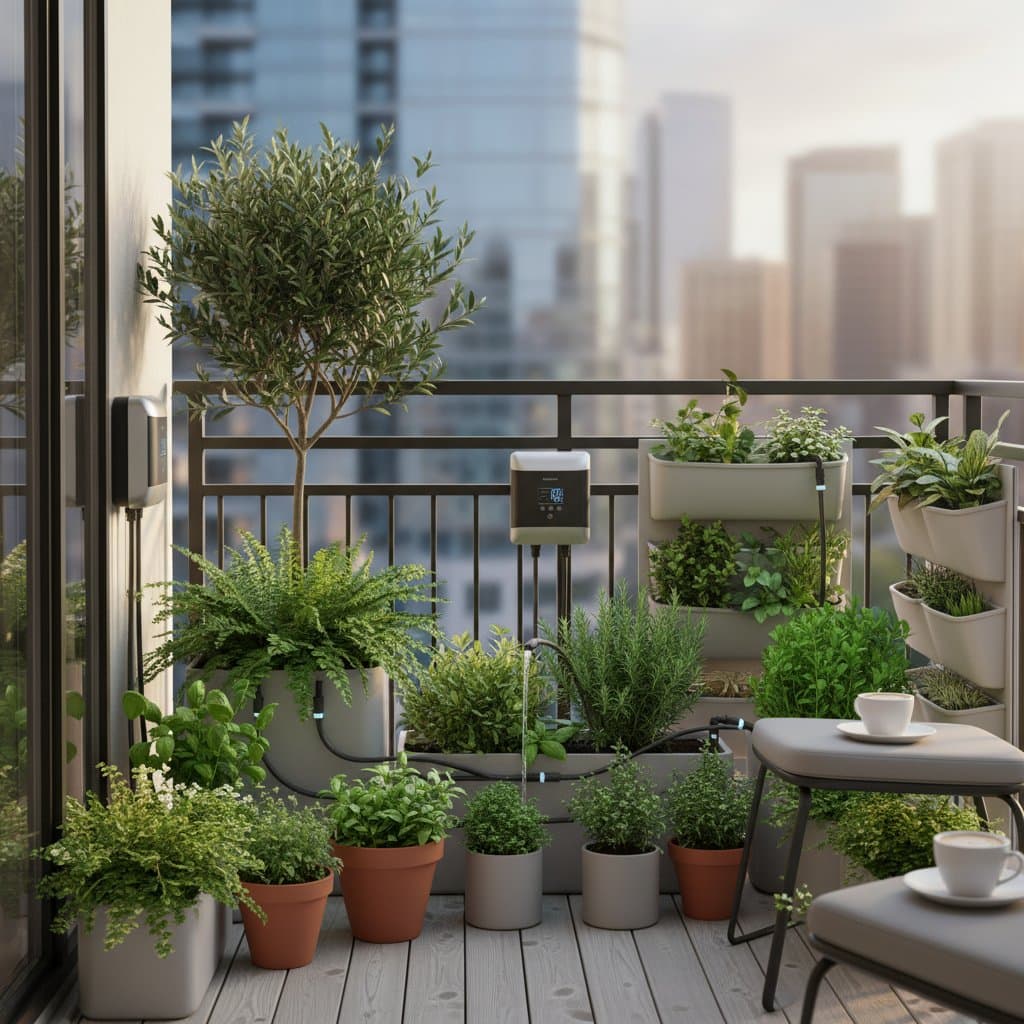
Balcony Gardens That Water Themselves Effortlessly
A balcony garden can bring calm and color to city life, yet maintaining plant health often demands more time than available. Hot afternoons, busy mornings, and travel days make watering easy to overlook. The objective here proves straightforward: establish a balcony garden that waters itself with minimal daily intervention. This guide explains self-watering systems, outlines safe setup procedures, and details year-round maintenance strategies.
Overview
A self-watering balcony garden employs an automated irrigation system that supplies water directly to plant roots on demand. These setups incorporate sensors, drip tubing, and compact reservoirs to maintain consistent moisture levels without manual watering each day. The outcome includes time savings, reduced water waste, and robust plant growth even during intense heat.
Control represents a primary advantage. Appropriate systems adapt to individual plant requirements and sustain optimal soil moisture. Stronger root development follows, enhancing plant resilience to environmental stress. Water usage drops by up to 50 percent relative to manual methods, benefiting both household expenses and environmental conservation.
Tools and Materials
Installation requires no extensive equipment or expertise. Most compact balcony systems assemble in a single afternoon. For a standard 6-by-10-foot balcony, assemble the following:
- One self-watering planter or reservoir per container, sized at 1 to 2 gallons (4 to 8 liters) each
- Flexible drip irrigation tubing, 1/4-inch (6 mm) diameter
- Micro emitters or drippers, rated at 0.5 to 2 gallons per hour
- A timer or smart controller compatible with a water source or storage tank
- Moisture sensors for automated monitoring, if desired
- Small stakes and clips to secure tubing
- A bucket or water barrel, in absence of an outdoor faucet
- Basic scissors and a small knife for tubing adjustments
Balconies lacking hose access benefit from a water barrel paired with a submersible pump. Battery-operated or solar-powered pumps suit small-scale applications effectively.
Steps
Step 1: Plan Your Layout
Sketch the balcony layout and identify sun-exposed versus shaded areas. Group plants according to hydration preferences. Herbs and leafy greens require greater moisture, while succulents and cacti demand less. Position the reservoir or water source on a stable, level surface, proximate to an electrical outlet if employing a pump.
Step 2: Set Up the Reservoir
Select a lidded container to minimize evaporation. A 10-gallon (38-liter) barrel sustains a modest balcony garden for one to two weeks. Install the pump or attach primary tubing to the base outlet. Conduct a leak test prior to integrating additional components.
Step 3: Connect the Main Line
Route the primary tubing along the balcony edge or railing. Fasten it with clips at intervals of 12 inches (30 centimeters). Maintain a level path to ensure uniform water distribution. Pierce small openings in the tubing at each plant location.
Step 4: Add Drippers or Emitters
Affix one dripper to small pots or two to larger planters. Verify flow rates per manufacturer specifications. Opt for 2-gallon-per-hour drippers on water-intensive plants such as tomatoes; 0.5-gallon-per-hour suffices for succulents. Position emitters close to plant bases for targeted delivery.
Step 5: Install the Timer or Controller
Link the timer to the faucet or pump. Program it for 5- to 10-minute cycles, once or twice daily, adjusted for prevailing weather conditions. Smart controllers enable remote modifications via mobile applications. Certain models integrate moisture sensors to bypass cycles when soil remains adequately hydrated.
Step 6: Test and Adjust
Execute a complete cycle under observation. Inspect for leaks or obstructed emitters. Reduce flow rates or reposition emitters if pots overflow. Shorten duration if surface pooling occurs; aim for moist yet not waterlogged soil.
Safety Tips
- Maintain electrical cords and plugs in dry conditions; employ only outdoor-rated extension cords.
- Fasten reservoir lids securely to deter access by pets or children.
- Refrain from climbing railings or precarious surfaces during assembly.
Troubleshooting
Plants appear wilted despite system operation.
Inspect emitters for blockages. Clear with a thin wire or vinegar solution rinse.
Soil remains excessively wet.
Decrease watering duration or install lower-flow drippers.
Pump fails to operate.
Verify power connections and intake filter cleanliness. Replace the unit if damaged.
Maintenance and Storage
Flush tubing every few months to eliminate mineral deposits; circulate plain water for 10 minutes. Clean reservoirs using mild soap, followed by thorough rinsing. Prior to winter, drain all water and relocate pumps indoors for protection.
Budget and Time
A complete setup, encompassing timer, tubing, and emitters, costs between $80 and $150. Novices complete installation in two to three hours.
Seasonal Reminders
During peak heat, monitor water levels every few days, as evaporation accelerates. In cooler periods, lessen watering intervals to avert root rot. Examine timers and sensors at the onset of each growing season for functionality.
When to Call a Pro
For balconies with electrical or plumbing constraints, engage a licensed handyman or plumber. Request installation of backflow preventers and weatherproof seals on outdoor elements.
Your Next Steps
Begin modestly with one or two planters linked to a basic drip kit. Monitor plant responses over a week to refine settings.
To proceed immediately:
- Measure the balcony and compile a plant inventory.
- Acquire a starter drip kit including timer and 10 to 12 feet (3 to 4 meters) of tubing.
- Assemble the system over the upcoming weekend and relish the assurance of an independent garden.
Self-watering balcony gardens offer simplicity, intelligence, and sustainability. They liberate time, foster plant vitality, and convert urban spaces into serene, self-sustaining green havens.