
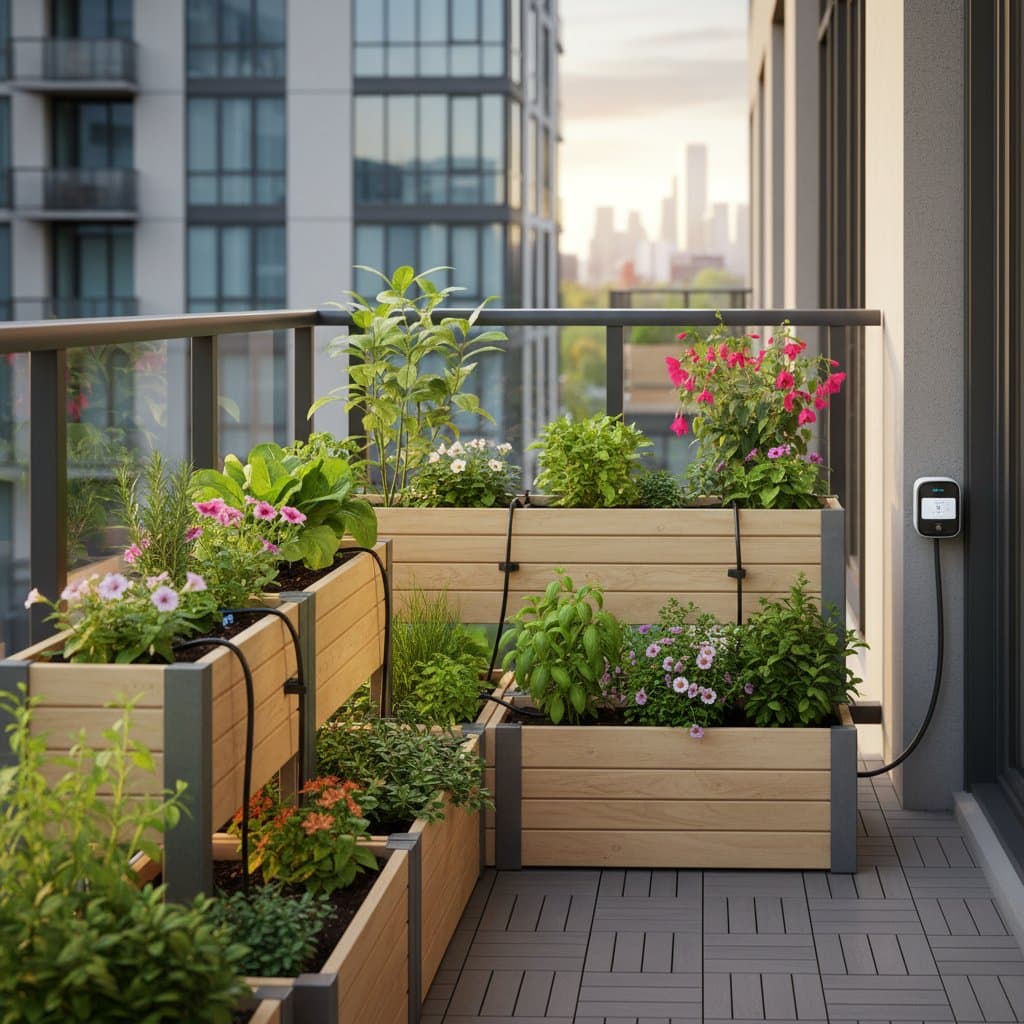
Introduction to Smart Drip Irrigation for Urban Spaces
Balcony gardens offer city dwellers a vital connection to nature, yet watering them consistently poses challenges amid busy lifestyles and variable weather. Smart drip irrigation systems address these issues by delivering water directly to plant roots through a network of tubes and emitters controlled by timers or sensors. These setups ensure optimal moisture levels without manual intervention, allowing urban gardeners to focus on enjoyment rather than routine tasks.
In limited spaces like balconies, where pots cluster tightly and sunlight patterns shift, precision watering prevents both drought stress and root rot. Gardeners report healthier foliage and increased yields from herbs, vegetables, or flowers when using these technologies. This guide covers everything from selection to long-term care, empowering you to cultivate a resilient outdoor haven.
Key Benefits of Smart Drip Systems
Automated drip irrigation conserves water by applying it slowly and directly, reducing evaporation losses common in overhead methods. Studies show these systems can decrease usage by 30 to 50 percent compared to traditional hand-watering, which benefits both the environment and utility bills in water-conscious urban areas.
Plants receive consistent hydration, leading to stronger growth and fewer pest vulnerabilities. For balcony setups, this means less wilting during heatwaves or neglect on travel days. Integration with smartphone apps allows remote monitoring and adjustments, providing peace of mind for those with irregular schedules.
Beyond efficiency, these systems support customization for diverse plant needs. Drought-tolerant succulents require less frequent cycles than thirsty tomatoes, and adjustable emitters accommodate varying pot sizes. Overall, the result is a low-maintenance garden that thrives year-round.
Essential Tools and Components
A basic smart drip kit includes a timer or controller, main supply tubing, distribution lines, emitters, and a filter. Opt for pressure-compensating emitters to maintain even flow across elevations on sloped balconies. Smart controllers with soil moisture sensors add intelligence by pausing cycles when soil is adequately damp.
Gather additional items such as a hole punch for custom tubing insertions, stakes or clips to secure lines against wind, and a battery-operated timer if outlets are scarce. For fertilizer integration, choose systems with inline injectors to distribute nutrients evenly. These components ensure reliability in compact, exposed environments.
Quality matters; select UV-resistant tubing to withstand sun exposure and durable fittings to handle temperature fluctuations. Start with kits designed for 10 to 20 pots, scalable as your garden expands.
Step-by-Step Setup Guide
Begin by mapping your balcony layout. Identify pot positions, noting sun exposure and drainage patterns to position emitters near root zones. Measure the total length needed for tubing, adding 20 percent extra for adjustments.
Connect the main supply line to a faucet or rain barrel using a pressure regulator to avoid bursts. Attach the filter next to prevent debris from clogging the system. Run distribution tubing along pot edges, punching holes for emitters and securing with clips every 12 inches.
Install the controller near the water source, programming initial cycles based on plant types: 10 to 15 minutes every other day for most balcony flora. Test the setup by running a full cycle, observing for leaks and coverage. Adjust emitter spacing for larger containers, aiming for one to two per gallon of soil volume.
For smart features, pair the controller with a weather app integration to skip rainy days automatically. Once operational, monitor the first week closely to fine-tune timings.
Ongoing Maintenance Practices
Regular checks keep the system performing optimally. Inspect tubing biweekly for cracks, especially after storms, and replace sections promptly to maintain pressure. Clean emitters by soaking in a vinegar-water solution to remove mineral deposits, ensuring unobstructed flow.
Incorporate seasonal adjustments: increase frequency during summer droughts and reduce in cooler months. If adding fertilizers through the line, follow with a plain water flush to clear residues and prevent clogs. Wipe down sensors and timers to remove dust, preserving their accuracy.
Store spare parts like extra tubing and emitters in a dry spot for quick fixes. Annual deep cleaning involves disassembling and rinsing all components, extending the system's lifespan to five years or more.
Troubleshooting Common Issues
Uneven watering often stems from kinks in lines or blocked emitters. Straighten tubing and soak affected parts in a vinegar solution for 10 minutes to dissolve buildup. Run a flush cycle afterward to verify restoration.
Leaks at connections require trimming damaged ends and reinserting fittings firmly. Use cable ties for reinforcement if joints slip under balcony vibrations. For persistently dry pots, upgrade to higher-flow emitters or add secondary lines for voluminous containers.
Overwatering signals appear as yellowing leaves or soggy soil. Shorten cycle durations or install moisture sensors to automate shutoffs. Persistent problems may indicate a faulty timer; test by manually overriding cycles.
Budget and Investment Insights
Entry-level balcony drip kits range from 40 to 120 dollars, varying by automation level and capacity. Basic timers add 20 dollars, while app-enabled controllers push costs toward the higher end. Factor in 10 dollars for supplemental tubing, emitters, and fasteners.
Installation demands one to two hours, depending on pot count and layout complexity. Long-term savings emerge through reduced water bills and healthier plants that require fewer replacements. A quality filter, though an extra 15 dollars, safeguards against sediment damage and justifies the upfront spend.
Advanced systems with sensors recoup costs quickly by optimizing usage, potentially saving 30 percent on seasonal water. View this as an investment in effortless gardening rather than an expense.
Scaling Up for Sustained Growth
Launch with a modest setup covering four to six pots to test compatibility with your balcony's microclimate. Observe plant responses over two weeks, noting growth rates and leaf conditions to refine emitter placements.
As confidence builds, extend lines to additional containers, grouping similar plants for unified zoning. Label zones with tags indicating watering schedules, simplifying tweaks during expansions.
This progressive approach fosters a self-sustaining ecosystem. With smart drip irrigation, your balcony evolves into a verdant sanctuary, rewarding dedication with vibrant, low-fuss beauty.