
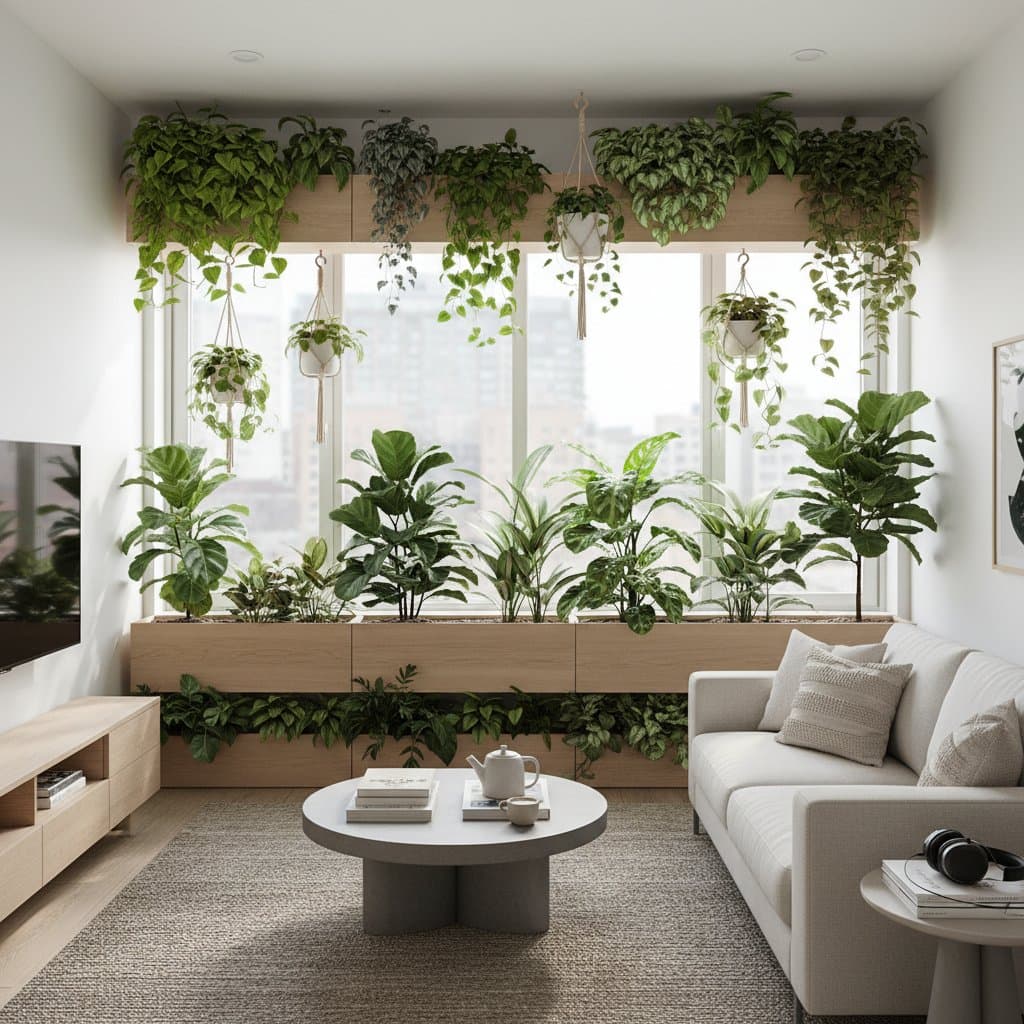
Acoustic Plants: Mitigating Urban Noise in Compact Spaces
Urban environments pulse with vitality, yet they also resonate with persistent noise from sirens, traffic, and mechanical units. Such sounds can erode mental well-being over time. Acoustic plants offer a straightforward, organic method to attenuate this auditory overload, fostering perceptible quietude without extensive structural changes. This article examines the principles of acoustic plants, their mechanisms, and practical implementation for noise mitigation in limited areas.
Understanding Acoustic Plants
Acoustic plants function as biological sound absorbers. Their foliage, stems, and root systems capture and diffuse sound waves, much like natural acoustic panels. Denser vegetation enhances performance; broad, textured leaves on species such as rubber plants or ferns excel at muffling mid-frequency noises, whereas thick vines or compact shrubs intercept higher pitches. In apartments or balconies with constrained space, a modest collection of containers can diminish reverberations and soften ambient tones.
The primary advantage lies in enhanced livability. External sounds remain audible but lose their intensity. Research indicates that incorporating vegetation can lower subjective noise perception by several decibels, equivalent to reducing urban volume by approximately one-third. Moreover, the presence of greenery promotes psychological relaxation, rendering residual sounds less intrusive.
Essential Materials
Assembly requires minimal items, scaled appropriately for the available area.
- Three to five medium-sized containers, each 10 to 14 inches in diameter
- Well-draining potting soil
- Saucers or trays to capture excess water
- Suitable plant types, including rubber plant, peace lily, fiddle leaf fig, or English ivy
- A soft cloth or brush for periodic leaf maintenance
- Optional supports like trellises or bamboo screens for vertical arrangements
For suspended or elevated setups, verify that surfaces can support the load. A watered 12-inch clay pot may exceed 15 pounds in weight.
Implementation Steps
Step 1: Identify Noise Entry Points
Pause for a moment in silence to pinpoint sound infiltration sources, such as windows, doors, or adjacent walls. Designate these locations as primary intervention zones.
Step 2: Design the Arrangement
Position taller specimens nearest the dominant noise origin. Cluster shorter plants forward to build layered thickness. Target at least 3 feet of continuous foliage along the affected boundary.
Step 3: Prepare Containers
Place a base layer of gravel for drainage, then add potting soil to fill two-thirds of the volume. Center the plant and surround it with additional soil, compacting gently to eliminate air pockets.
Step 4: Hydrate and Install
Saturate each plant until water appears in the saucer. Arrange containers in close proximity, with gaps no wider than 1 to 2 inches, to form an unbroken acoustic shield.
Step 5: Incorporate Vertical Elements
Employ trellises or trailing vines to clad bare walls. Such upward extensions disrupt reflections from rigid surfaces. Maintain a 2-inch clearance between foliage and walls for optimal diffusion.
Step 6: Establish Upkeep Routine
Clean leaves monthly with a damp cloth; accumulated dust impairs absorption and photosynthesis. Remove wilted foliage to sustain circulation.
Safety Considerations
- Confirm the security of stacked or suspended containers prior to use.
- Ensure no water drips near electrical components.
- Wear protective gloves when handling sap-producing varieties like rubber plants.
Common Challenges and Solutions
Should noise penetration persist, inspect intervals between plants. Spaces exceeding 3 inches permit sound leakage; introduce compact fillers to seal them.
Yellowing foliage often signals excess moisture. Allow the uppermost inch of soil to dry completely between waterings.
For lingering indoor reverberations, supplement with soft furnishings like area rugs or draped textiles. These complementary textures amplify overall dampening.
Ongoing Care Practices
Adhere to a consistent regimen for vitality.
- Irrigate every 5 to 7 days, adjusting for ambient humidity.
- Reposition containers monthly to ensure even light exposure.
- Prune excessive growth to avoid congestion.
- Replenish soil biannually to support root health.
Cost and Effort Overview
An entry-level configuration featuring four plants and pots ranges from 80 to 150 dollars. Incremental expansion allows gradual investment. Initial assembly requires about one hour, followed by 10 minutes of weekly attention.
Adapting to Seasons
During warmer periods, position plants to screen open windows, balancing ventilation with filtration.
In cooler weather, distance specimens from chilly currents to prevent foliage stress.
Increase cleaning frequency amid heightened urban particulate levels.
Professional Assistance Thresholds
Persistent mechanical or construction disturbances in rental properties may necessitate supplementary insulation. Consult a certified specialist to evaluate structural vulnerabilities and recommend panels or seals.
Core Principles
Acoustic plants attenuate city sounds via absorption and dispersion. Ample space proves unnecessary; targeted clusters of robust varieties suffice. Begin by locating ingress points, then erect a verdant partition to intercept waves.
Next Steps for Implementation
Initiate the process with these three measures:
-
Select a high-noise area and prepare it for greening.
-
Acquire two broad-leaved plants and one trailing variety to establish the barrier.
-
Cluster them securely, hydrate thoroughly, and assess auditory changes the following day.
Layered vegetation not only subdues echoes but also elevates ambiance. In relentless urban settings, this organic approach cultivates genuine sanctuary within one's residence.