
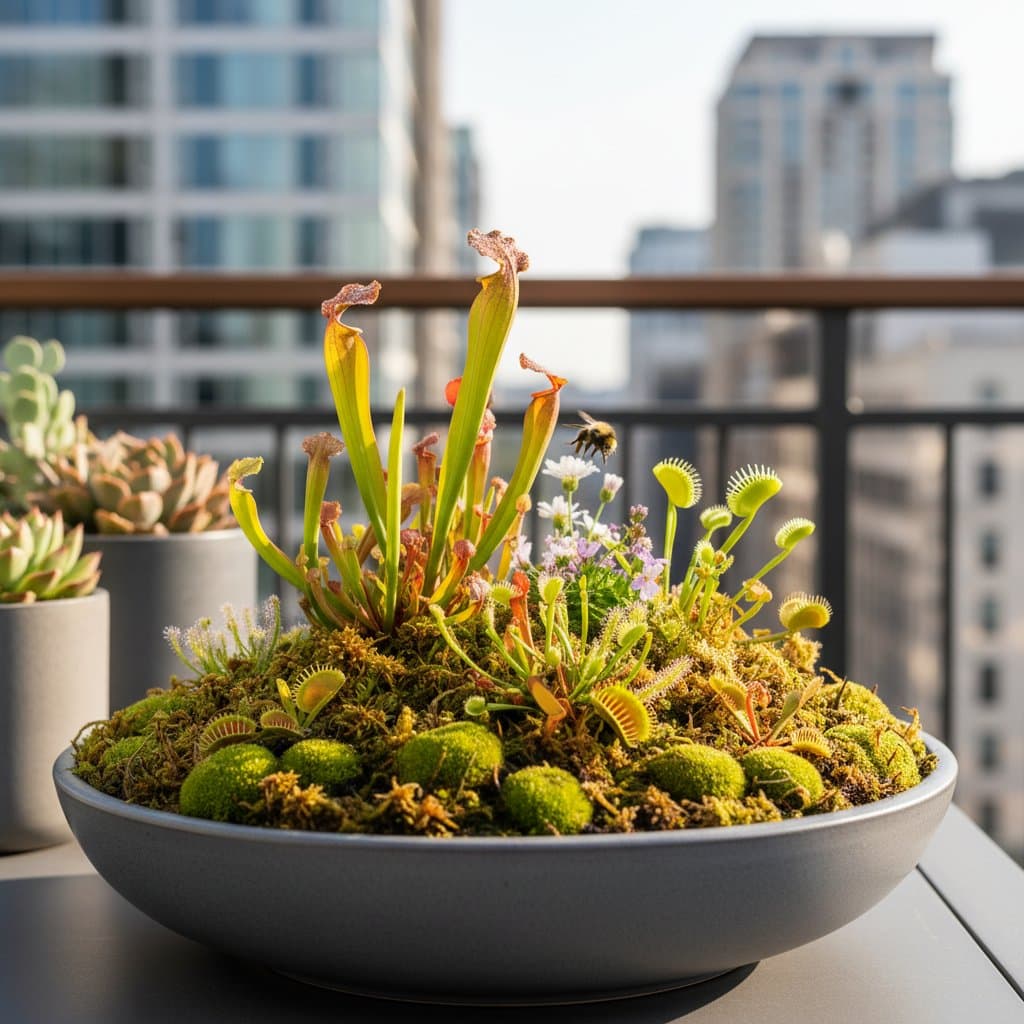
Step 5: Establish the Water Zone
Pour water into the container gradually until the level sits approximately 1 inch (2.5 cm) below the soil surface. Use a piece of tape or a small, non-intrusive rock to mark this water line on the interior of the container. This marker serves as a reliable reference for monitoring and adjusting levels during routine checks.
Select rainwater or distilled water for this initial filling to maintain the acidic conditions essential for bog plants. Allow the water to settle for 24 hours before introducing plants, which gives the substrate time to stabilize.
Step 6: Regulate Moisture Levels
Inspect the water level every two to three days, depending on local humidity and temperature. The soil must remain damp to the touch at all times, providing consistent hydration without saturation. Replenish with rainwater whenever the level falls below the marked line.
In hot or windy urban environments, evaporation occurs more rapidly, so daily checks may prove necessary during peak summer months. Employ a moisture meter if preferred, but manual testing with a finger ensures direct assessment of the root zone conditions. Prevent complete drying, as this stresses the plants and disrupts the ecosystem balance.
Troubleshooting Common Issues
Problem: Plants Develop Brown or Crispy Leaves
Cause: Insufficient soil moisture leads to dehydration.
Fix: Immediately add water to restore the level just below the soil surface. Apply a layer of fresh sphagnum moss over the top to enhance moisture retention and shield the soil from rapid evaporation.
Monitor closely for the next week to confirm recovery, and adjust your checking schedule to prevent recurrence.
Problem: Algae Appears on the Soil Surface
Cause: Excessive direct sunlight or prolonged standing water promotes algal blooms.
Fix: Relocate the container to a spot with partial shade, such as near a north-facing wall or under an overhang. Reduce watering frequency slightly until the surface stays damp rather than submerged, which discourages further growth.
Scrape away visible algae gently with a soft tool, then rinse the area with diluted rainwater to clear residues.
Problem: Unpleasant Odor Emerges from the Container
Cause: Stagnant water accumulates due to inadequate drainage or aeration.
Fix: Incorporate additional coarse sand into the lower substrate layer to improve airflow and prevent waterlogging. Drill a few small drainage holes near the top rim of the container to facilitate overflow during heavy rains.
Stir the upper soil layer lightly to aerate, but avoid disturbing roots. If the odor persists, partially replace the water and substrate.
Problem: Plants Exhibit Weak Growth or Pale Foliage
Cause: Water quality introduces alkaline minerals that alter the soil pH.
Fix: Substitute portions of the existing water with collected rainwater to restore acidity. Perform a gentle flush by pouring fresh rainwater through the system slowly, allowing excess to drain and remove built-up minerals.
Test the pH periodically with strips designed for aquariums or gardens; aim for a range of 4.5 to 5.5.
Problem: Insects or Fungus Gnats Infest the Surface
Cause: Decaying organic material on the top layer attracts pests.
Fix: Remove any fallen or decomposing leaves promptly using tweezers or gloved hands. Refresh the surface with a thin layer of new sphagnum moss to suppress breeding sites and maintain hygiene.
Introduce beneficial nematodes if gnats persist, as these natural predators target larvae without harming plants.
Ongoing Maintenance Practices
A mini bog garden demands consistent attention, though tasks occur infrequently rather than daily. The primary responsibility involves water regulation to sustain the delicate moisture balance.
Maintain soil that feels consistently moist, avoiding both aridity and flooding. Every two weeks, inspect and trim away dead leaves or accumulated debris to inhibit decay and preserve water clarity.
Once or twice each growing season, replenish the surface with additional sphagnum moss. This addition not only conserves moisture but also enhances the garden's aesthetic appeal and ecological function.
In winter, position the container adjacent to a protective wall to benefit from reflected warmth. Where frost poses a risk, insulate the top with breathable burlap or a layer of straw. Refrain from relocating bog plants indoors unless ample natural light and ventilation exist, as indoor conditions often mismatch their needs.
Seasonal Care Guidelines
Spring Preparation:
- Renew the top soil layer using a blend of peat moss and coarse sand to rejuvenate nutrients.
- Separate overcrowded plants carefully and transplant divisions into separate containers for healthier expansion.
- Incorporate fresh moss to bolster moisture retention as growth accelerates.
Summer Management:
- Monitor water levels every few days to counteract increased evaporation.
- Install shade cloth over the container if air temperatures exceed 85°F (29°C) to prevent scorching.
- Vigilantly address algae formation and prune excessive foliage to promote air circulation.
Autumn Adjustments:
- Clear away dried stalks and prune back perennial growth to tidy the appearance.
- Decrease watering volume modestly to minimize standing water risks.
- Apply a light mulch of moss or straw to insulate roots against cooling nights.
Winter Protection:
- Safeguard the container against complete freezing by grouping with other pots for mutual insulation.
- Retain minimal dampness in the soil while covering the setup to shield from elements.
- Withhold fertilizers and avoid root disturbance, allowing plants to enter dormancy undisturbed.
Consulting Professionals
Seek advice from a qualified garden specialist if the bog displays ongoing rot, atypical mold growth, or root deterioration. Such symptoms often indicate anaerobic conditions in the soil, requiring expert intervention.
A professional can conduct pH testing and recommend a complete substrate rebuild to restore viability. For gardens incorporating rare or protected plant species, contact a specialized native plant nursery prior to acquisition. Experts there verify legality and suitability for container cultivation, ensuring ethical and sustainable practices.
Essential Insights
- Mini bog gardens replicate wetland environments within confined containers, ideal for urban settings.
- Prepare soil using peat, sand, and rainwater to sustain low-nutrient, acidic conditions.
- Provide steady moisture and partial sunlight to support plant health.
- Select compact varieties of moisture-tolerant plants that flourish in perpetually damp substrates.
- Conduct regular water assessments and seasonal pruning to uphold ecosystem stability.
Implementing Your Bog Garden
Transform your balcony into a functional micro-wetland using a single container and methodical care. Begin with an appropriate soil composition, introduce water judiciously, and permit the plants time to establish roots.
The outcome delivers a dynamic exhibit of natural adaptation and tranquility amid city surroundings. Gather materials now, position the container securely, and observe as the habitat evolves. Each plant contributes to a balanced system, demonstrating how modest water and dedication nurture diverse life in compact areas.
This setup underscores ecological equilibrium, proving that urban dwellers can cultivate verdant refuges with intentional design.