
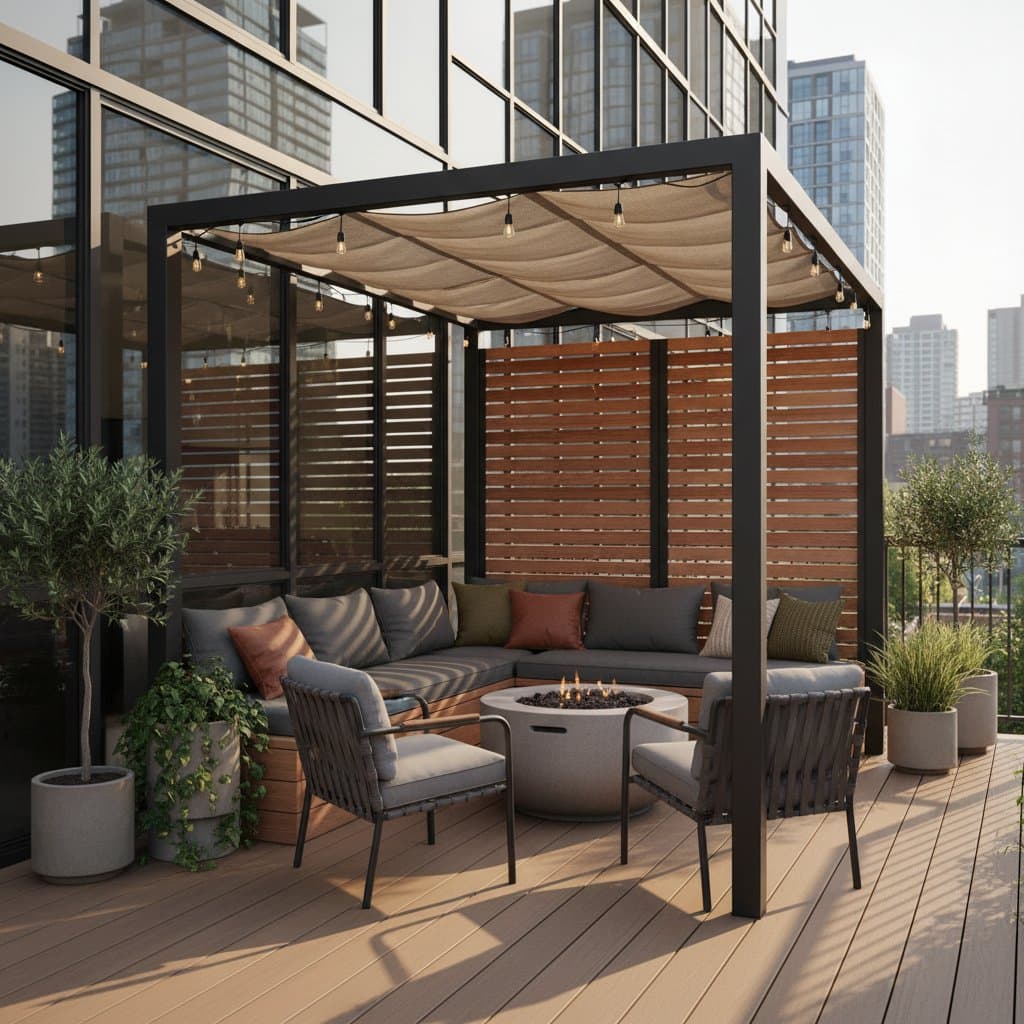
Step 5: Finish and Seal
After assembling the frame, sand all surfaces to eliminate rough spots and splinters. Select a high-quality, weather-resistant stain or sealant formulated for outdoor exposure; these products form a barrier against rain, humidity, and sunlight. Apply two thin coats using a brush or roller for even coverage, allowing each layer to dry according to the manufacturer's instructions, typically 24 hours. Once fully cured, the finish not only enhances the wood's natural grain but also extends its lifespan by preventing cracking and discoloration. Before proceeding, test the sealant on a scrap piece to ensure compatibility with your material.
Step 6: Add Shade Layers
Enhance functionality by incorporating adjustable shade elements that adapt to changing weather. A retractable fabric canopy offers quick deployment for sun protection, while bamboo rolls provide a natural, textured alternative. Secure the fabric using rust-resistant eye hooks and durable cord, enabling smooth sliding along tracks for partial or full coverage. Opt for UV-resistant, mildew-proof materials to maintain vibrancy through seasons of use. For added versatility, consider modular panels that allow light penetration during cooler months, ensuring the structure remains airy and inviting.
Safety Considerations
Prioritize structural integrity when installing a compact pergola on an urban deck. Consult building codes and have a professional assess the deck's load-bearing capacity; most lightweight designs add only 60 to 100 pounds, but older structures may require reinforcement.
- Select outdoor-rated electrical components for any lighting or fans to avoid hazards from moisture.
- Distribute weight from attachments like planters across multiple supports rather than concentrating on one area.
- Perform annual inspections of all hardware to detect wear, especially in high-wind urban environments.
- If installing on a balcony, verify railing stability and avoid modifications that could compromise safety barriers.
- For renters, choose freestanding options anchored with sand-filled bases to eliminate permanent alterations.
These measures ensure safe, reliable use while complying with local regulations.
Common Issues and Solutions
Even with careful construction, minor problems can arise due to urban weather patterns. Addressing them promptly preserves the pergola's appearance and performance.
Warped or Twisted Slats: Exposure to uneven moisture often causes this; source kiln-dried lumber from reputable suppliers to minimize risks. If warping occurs post-installation, carefully remove affected pieces, plane them flat if salvageable, or replace with straight alternatives. Prevent future issues by storing materials in a dry, level area before assembly.
Loose or Shifting Fasteners: Wind and rain can loosen screws over time. Schedule checks after every major storm, using a torque wrench to snug connections without stripping threads. Upgrade to stainless steel hardware for superior corrosion resistance in humid city air.
Inconsistent Shade Distribution: Gaps in coverage may result from imprecise spacing. Measure and adjust slats or fabric tension, aiming for uniform intervals; even a two-inch variance can alter light patterns significantly. Test during peak sun hours to fine-tune for optimal comfort.
Water Accumulation on Canopies: Flat surfaces invite pooling, leading to sagging or mold. Install with a subtle slope, dropping one inch per foot of width, to direct runoff toward edges. Pair with breathable fabrics that dry quickly, reducing mildew growth.
Peeling Finishes: Inferior products flake under UV assault. Prepare surfaces by cleaning with a gentle, non-abrasive soap solution, then apply fresh coats sparingly. Focus on end grains where absorption is highest, and choose penetrating oils for deeper protection.
Cost Breakdown and Timeline
Budgeting wisely allows for a durable pergola without exceeding limits. Basic wood models range from 150 to 450 dollars, factoring in lumber, hardware, and shade materials. Aluminum frames, though pricier at 300 to 600 dollars, resist rust and demand minimal upkeep, ideal for salty coastal urban areas.
Assembly typically requires one full day for a solo builder, plus 48 hours for drying finishes. Streamline costs by integrating with existing deck elements, such as reusing posts or aligning with railings. Invest in quality components upfront; subpar screws or raw wood lead to costly fixes down the line. Track expenses with a simple spreadsheet to identify savings, like sourcing reclaimed materials from local salvage yards.
Ongoing Upkeep Routines
Regular maintenance sustains the pergola's appeal and longevity in demanding urban conditions. Every three months, gently brush away debris like leaves or pollen using a soft-bristle tool and diluted mild detergent; rinse thoroughly to avoid residue buildup.
Annually, examine all joints for rust or looseness, replacing corroded parts immediately. Refresh wood with a clear, water-repellent sealer applied in spring, focusing on high-exposure areas. For fabric elements, disassemble at season's end, machine-wash on a delicate cycle, and air-dry completely to prevent shrinkage or tears.
During winter, remove detachable components to shield from gusts and freeze-thaw cycles; store in a sheltered spot like a garage. Powder-coated metal versions withstand year-round exposure, but a quick wipe-down prevents grime accumulation. These habits not only protect your investment but also keep the space ready for spontaneous gatherings.
Integrating Storage Solutions
Maximize limited deck real estate by leveraging the pergola's design for clever organization. The elevated beams offer prime spots for lightweight, vertical storage that frees the floor.
- Suspend compact planters with herbs or low-maintenance succulents using S-hooks, fostering a lush vertical garden without encroaching on walkways.
- Mount adjustable hooks inside the frame for essentials like lanterns, pruning shears, or coiled hoses, keeping tools accessible yet out of sight.
- Incorporate a slim bench along one side, featuring lift-up seats or drawers for stowing pillows, blankets, or grilling accessories.
Secure cords neatly with weatherproof zip ties routed along beams, maintaining a tidy aesthetic. This approach enhances utility while amplifying the sense of spaciousness in compact settings.
Professional Assistance Indicators
While DIY suits many projects, certain scenarios warrant expert involvement for safety and compliance. Engage a licensed contractor if your deck dates back more than 20 years or shows signs of deterioration; they can evaluate joists and beams using specialized tools to confirm support for additional loads.
Opt for professionals when incorporating electricity, such as recessed lighting or ceiling fans; insist on certified electricians experienced in outdoor installations to handle grounding and waterproofing. In co-op or condo settings with stringent guidelines, a designer can craft compliant, non-invasive models, like clamp-on systems that avoid drilling. Expect fees of 200 to 500 dollars for consultations, yielding peace of mind and code adherence.
Extending Your Outdoor Experience
Installing a compact pergola redefines urban deck potential, blending shelter with openness to foster extended leisure. Residents report using these spaces up to three hours longer daily, thanks to moderated temperatures and defined boundaries. Experiment with seasonal accents, like sheer curtains for evenings or heaters for cooler nights, to evolve the area year-round. This simple addition not only boosts property value but also enriches daily life with accessible nature.