
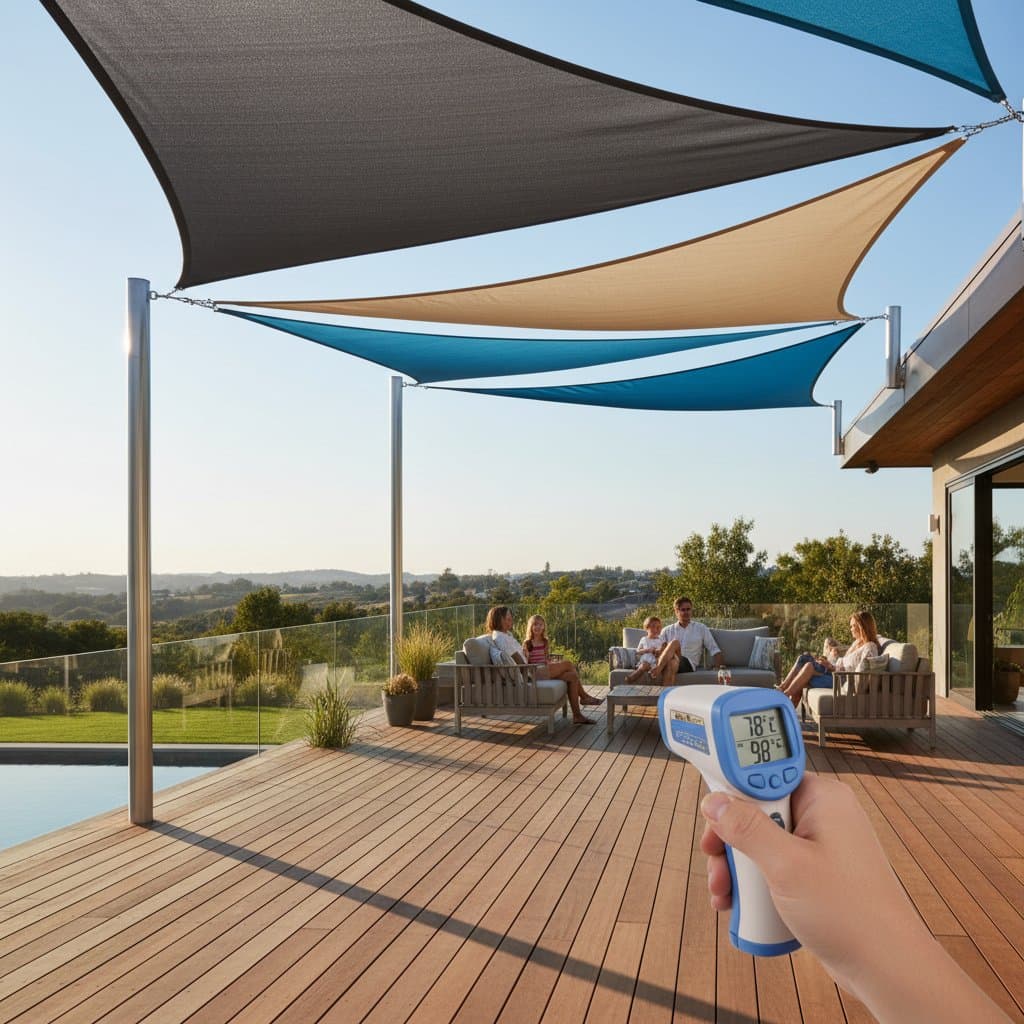
Step 5: Adjust and Test
Direct a steady stream of water across the shade sail using a garden hose. Observe the fabric closely for any areas where water gathers. If pooling occurs, modify the angle by securing one corner more tightly or releasing tension on another to promote better runoff. After confirming proper drainage, cut away surplus rope lengths and fasten all dangling ends securely.
Safety Considerations
Position ladders solely on stable, even surfaces and enlist a second person to hold the ladder steady at its base.
Avoid attaching anchors directly to exterior siding or decorative trim without verifying underlying structural support.
Scan the area above for electrical wires or other overhead hazards prior to elevating poles or climbing ladders.
Verify the strength of every anchor point by applying firm, steady pulls before connecting the sail fabric.
Examine turnbuckles and ropes at intervals of several weeks, looking for evidence of corrosion or wear.
Common Issues and Solutions
Sagging Material: Release tension at one attachment point, then draw up the opposing corners with uniform pressure. Persistent sagging might indicate anchors positioned too narrowly; relocate one anchor outward by 6 to 12 inches, or 15 to 30 centimeters.
Water Accumulation: Elevate the pitch of the sail installation. Designate one corner as the lowest point to channel water away effectively.
Excessive Movement in Breezes: Evaluate overall tension levels. Should the fabric continue to flutter, consider a reduced-size sail or add an additional fixation point to enhance stability.
Color Degradation: Select shade sails crafted from solution-dyed acrylic fabric, which maintains vibrancy far longer than those with dye applied only to the surface.
Hardware Slippage: Manually adjust turnbuckles every few weeks to maintain tightness. For components that loosen repeatedly, introduce a small amount of thread-locking compound.
Cost Estimates and Timeline
Expect to invest between 80 and 200 dollars for a basic shade sail paired with its mounting hardware, with prices varying based on dimensions and material durability. A solo installer requires approximately three hours to complete the setup, while a team of two can finish in two hours.
Lower expenses by integrating existing deck posts or adjacent building walls as fixation sites. Prioritize quality in fabric choices and metal components, as inferior options lead to rapid deterioration. Substandard metals corrode swiftly and may leave unsightly marks on wooden surfaces.
Individuals residing in coastal regions with salt exposure or areas prone to intense rainfall benefit from upgrading to stainless steel fittings. This choice enhances resistance to environmental damage and preserves an attractive finish over time.
Upkeep Procedures
Perform cleaning on the shade sail at intervals of a few months to preserve its condition.
Ease the tension slightly to bring the fabric within comfortable reach.
Prepare a solution of gentle detergent and water in a container.
Gently scrub away accumulated grime using a soft-bristled brush.
Flush the surface thoroughly with a hose and allow complete air drying prior to restoring full tension.
Steer clear of harsh chemicals like bleach or high-pressure cleaning devices, as these compromise the material's integrity and diminish its ultraviolet resistance.
Conduct seasonal reviews of all mounting hardware. Swap out any elements showing signs of rust or weakening immediately. Should a support post exhibit tilting or instability, embed it anew in concrete footing before reattaching the sail.
Seasonal Storage Strategies
In regions experiencing substantial snowfall or gale-force winter winds, dismantle the shade sail for the colder months. Fold it carefully and place it inside a moisture-proof container or dedicated textile storage pouch. Organize and tag all associated hardware and lines to simplify reassembly in spring.
Upon reinstallation, confirm compatibility of all connectors and ensure turnbuckles rotate without resistance. Apply a light coating of lubricant to pivot points before applying tension.
Professional Installation Indicators
Engage a specialist under these circumstances:
The deck presents irregular terrain or insufficient natural anchor opportunities.
Custom upright poles require embedding in concrete foundations.
The building facade consists of masonry like brick or stone, and drilling techniques remain uncertain.
Experts evaluate stress distribution across attachment angles, recommend appropriate fixation methods, and confirm that drainage paths align correctly. Request specifications for corrosion-resistant stainless steel components and ultraviolet-resistant fabrics backed by a minimum five-year guarantee.
Professional services typically charge 200 to 400 dollars for installing a single shade sail, scaled to the project's intricacies.
Finalizing Your Deck Upgrade
Achieve a refreshed deck through a dedicated weekend effort and reliable materials. Initiate with a compact triangular shade sail to test the enhancement, then scale up coverage as satisfaction grows. This addition not only tempers heat but also elevates the functionality and appeal of your outdoor area for seasons to come.