
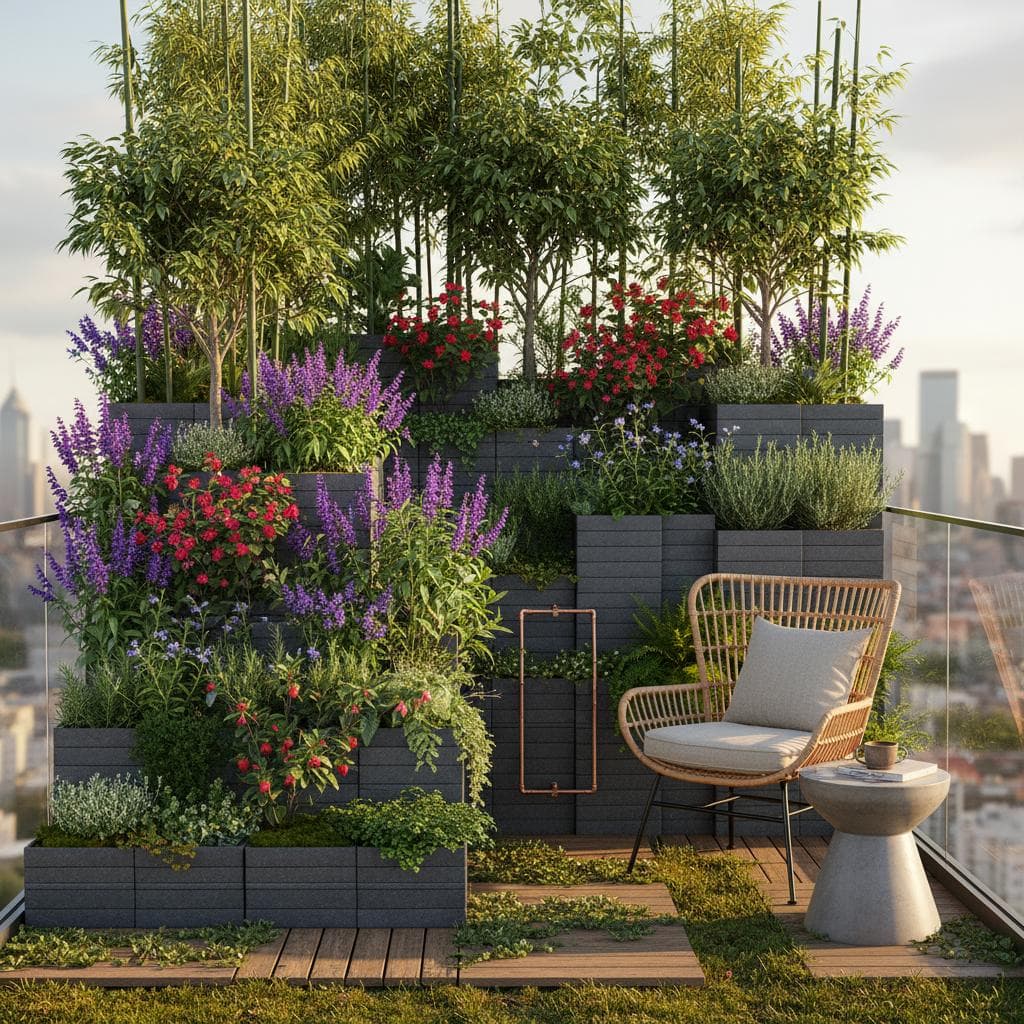
Step 4: Plant and Water
Position taller plants toward the back or in the corners of your balcony. Place medium-height plants in the central areas, and position low-growing cover plants along the edges. This arrangement maximizes sunlight exposure and creates visual depth.
Water each plant thoroughly until moisture appears at the bottom drain holes. Maintain soil that remains slightly damp, but ensure it never becomes waterlogged. Overwatering can lead to root rot, while underwatering stresses the plants.
Collect rainwater when possible for irrigation. This practice minimizes mineral accumulation in the soil and fosters beneficial microbial activity.
Step 5: Add Habitat Features
Incorporate simple structures to encourage wildlife interaction and enhance biodiversity.
- Construct a bee hotel using bundled bamboo sticks secured with twine.
- Install a small bird feeder filled with seeds appropriate for local bird species.
- Provide a shallow water dish filled with pebbles to offer safe drinking and bathing spots for butterflies and bees.
Refresh the water in the dish every two days to avoid creating breeding grounds for mosquitoes.
Safety Tips
Secure all pots using brackets or weighted plates to prevent them from tipping over. Refrain from suspending heavy planters directly over railing edges, as this poses a risk to those below. Wear protective gloves when working with compost to shield your hands from potential bacteria.
Keep any electrical cords for lights or pumps distant from wet surfaces to eliminate the risk of shocks or short circuits.
Troubleshooting
Problem: Plants Dry Out Quickly
Solution: Apply a one-inch (2.5 cm) layer of mulch or coconut coir on top of the soil.
Why it works: This covering reduces evaporation rates and helps maintain cooler temperatures around the roots.
Next step: Monitor soil moisture daily by inserting your finger one inch deep into the soil.
Problem: Pests Appear on Leaves
Solution: Prepare a spray with diluted neem oil, using one teaspoon per quart (1 L) of water.
Why it works: Neem oil interferes with pest feeding cycles while remaining safe for beneficial insects like bees.
Next step: Reapply the solution every seven days until the infestation resolves.
Problem: Poor Flower Growth
Solution: Apply an organic fertilizer with a 5-10-5 NPK ratio once each month.
Why it works: The elevated phosphorus content promotes robust flower development and blooming.
Next step: Cease fertilization during colder months to prevent unnecessary plant stress.
Maintenance
Remove dead leaves weekly to promote adequate airflow and reduce disease risk. Rotate the positions of pots every two weeks to ensure even exposure to sunlight. Refresh the topsoil once per season by incorporating fresh compost.
Clean planter surfaces periodically with a solution of mild soap and water to inhibit algae growth. Track plant performance in a dedicated notebook or digital log. Document successes and challenges to inform future planting decisions.
Storage
Store surplus soil and compost in airtight containers to preserve quality. Dry all tools thoroughly and wipe them clean before storage to prevent rust formation. Coil hoses carefully to avoid kinks or cracks that could lead to leaks.
During cold weather, relocate sensitive plants indoors near a sunny window. Alternatively, insulate pots by wrapping them in burlap for added protection against frost.
Budget and Time
Estimated cost:
- Containers and soil: 80 to 120 dollars
- Plants and seeds: 60 to 90 dollars
- Accessories and tools: 40 to 70 dollars
Time to set up:
- Planning and shopping: 2 to 3 hours
- Planting and arranging: 3 hours
- Ongoing care: 10 to 15 minutes per day
For limited budgets, begin with just three pots and expand gradually. Source cuttings from friends or propagate from existing plants to minimize expenses.
Seasonal Reminders
During warm seasons, prioritize flowering herbs such as basil and mint to draw in pollinators. In cooler periods, cultivate hardy greens or introduce evergreens for year-round structure.
Elevate pots on small bricks during rainy spells to enhance drainage and prevent waterlogging. In dry months, irrigate plants early in the morning or late in the evening to minimize evaporation losses.
Introduce new plant species annually to counteract soil nutrient depletion and reduce pest accumulation.
When to Call a Pro
Consult a professional gardener or your building manager under these circumstances:
- Water from your setup begins leaking to apartments below.
- You intend to install planters exceeding 40 pounds (18 kg) in weight.
- Railings exhibit signs of rust or structural compromise.
Key Takeaways
A balcony designed with biodiversity in mind serves as more than mere ornamentation. It functions as a dynamic system that enhances personal well-being, aesthetic appeal, and contributions to local ecosystems. Urban dwellers prove that meaningful environmental impact requires no expansive yard.
Your Next Steps
- Select three distinct plant layers and one feature to support pollinators this week.
- Acquire necessary containers and soil within the next few days.
- Dedicate ten minutes each morning to observing visitors in your emerging balcony habitat.