
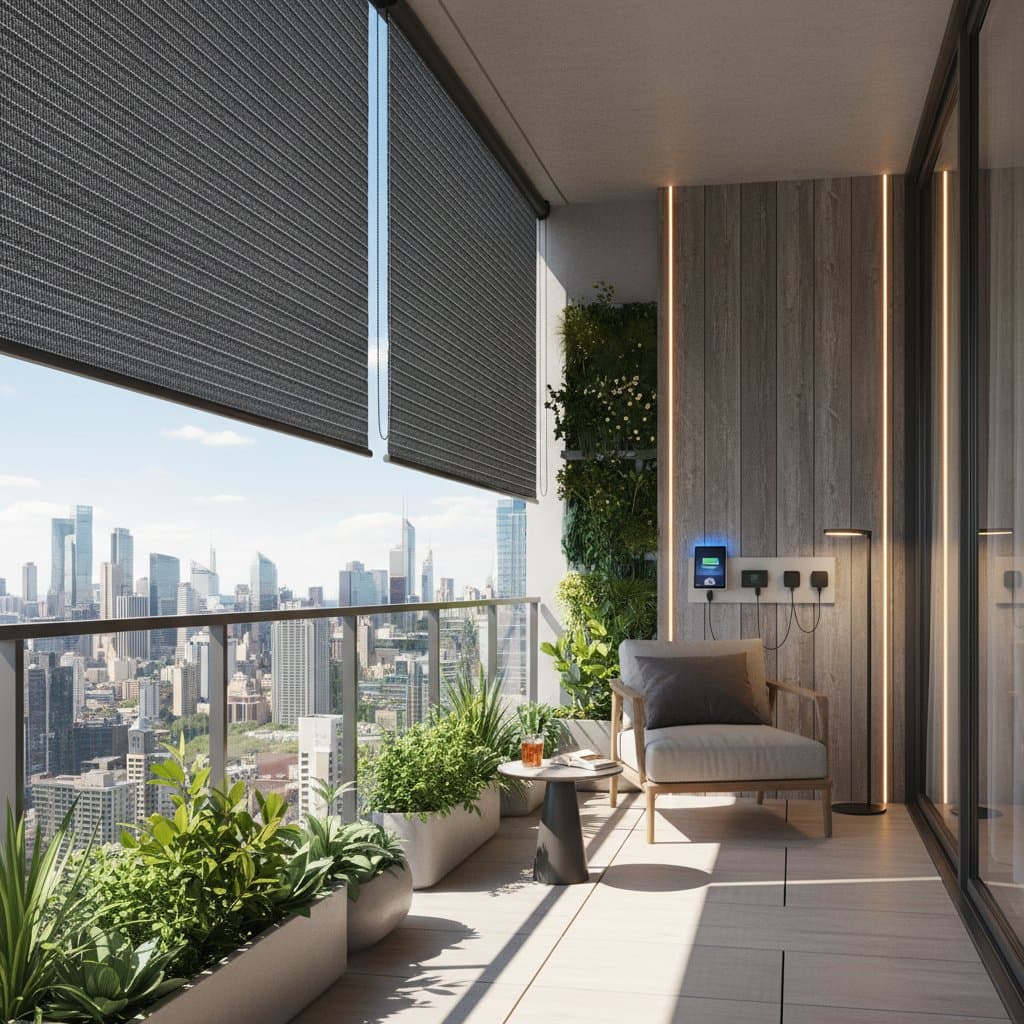
Solar Shades Block Heat While Powering Your Balcony
Urban dwellers often seek ways to enhance balcony spaces without extensive renovations. Solar shades offer a versatile solution by combining shade, energy generation, and aesthetic appeal. These innovative coverings not only reduce indoor heat but also harness sunlight to power small devices, turning a simple outdoor area into an efficient retreat.
Understanding Solar Shades
Solar shades consist of durable fabrics embedded with photovoltaic cells that capture sunlight. Unlike traditional blinds, they integrate energy production into everyday functionality. Available in roll-down or retractable designs, these shades adapt to various balcony sizes and urban environments.
The core benefit lies in their dual role: blocking up to 90 percent of solar heat while converting absorbed rays into usable electricity. This process minimizes glare and protects furnishings from UV damage. In city settings, where space is limited, such shades maximize utility without compromising views.
Key Benefits for Balcony Living
Heat reduction stands out as a primary advantage. During summer months, balconies can become uncomfortably warm, raising indoor temperatures. Solar shades lower this by reflecting infrared rays, potentially decreasing air conditioning needs by 20 to 30 percent.
Energy generation adds practical value. Integrated solar panels produce enough power for LED lights, phone chargers, or small fans. Over time, this offsets installation costs through reduced utility bills and promotes sustainable living in dense urban areas.
Aesthetic and protective features enhance usability. Choose from neutral tones or custom patterns to match balcony decor. The shades also shield against weather elements, extending the outdoor season into cooler months.
Selecting the Right Solar Shade
Consider balcony dimensions first. Measure width and height to ensure proper fit; most models range from 3 to 10 feet wide. Retractable options suit variable sunlight exposure, while fixed roll-down shades provide consistent coverage.
Evaluate power output needs. Entry-level shades generate 5 to 10 watts, sufficient for basic lighting. Advanced models reach 50 watts, powering multiple devices via USB ports or battery storage.
Material quality affects longevity. Opt for UV-resistant fabrics with warranties of 5 to 10 years. Check for easy-clean surfaces that repel dust common in city air. Brands offering modular designs allow customization for unique balcony shapes.
Installation Process
Professional installation ensures safety and efficiency, especially for high-rise balconies. However, many systems support DIY setup with included brackets and tools. Begin by securing mounting rails above the balcony railing or wall.
Attach the shade mechanism to the rail, ensuring level alignment. Connect wiring to a central hub or directly to outlets. Test retraction and energy output before full use. The process typically takes 1 to 2 hours for standard sizes.
Safety precautions include using stable ladders and avoiding overhead power lines. For renters, select no-drill mounting options that adhere with strong adhesives. Consult building guidelines to confirm compliance with urban regulations.
Maintenance and Long-Term Care
Routine cleaning preserves performance. Wipe fabrics monthly with a damp cloth to remove pollen or grime. Avoid harsh chemicals that could degrade photovoltaic cells.
Inspect connections seasonally for wear. Lubricate retraction mechanisms with silicone spray to maintain smooth operation. In winter, retract shades fully to prevent ice buildup.
Monitor energy production through built-in apps or meters. If output declines, professional servicing can restore efficiency. With proper care, solar shades last 10 to 15 years, delivering consistent savings.
Maximizing Your Balcony's Potential
Integrate solar shades with complementary elements like potted plants or weatherproof furniture. This setup creates a private oasis that invites relaxation after long days. The combination of comfort and clean energy aligns with modern urban lifestyles.
Year-round benefits extend beyond summer cooling. In milder seasons, generated power supports evening gatherings without grid reliance. Ultimately, these shades transform balconies into self-sufficient spaces that enhance well-being and environmental responsibility.