
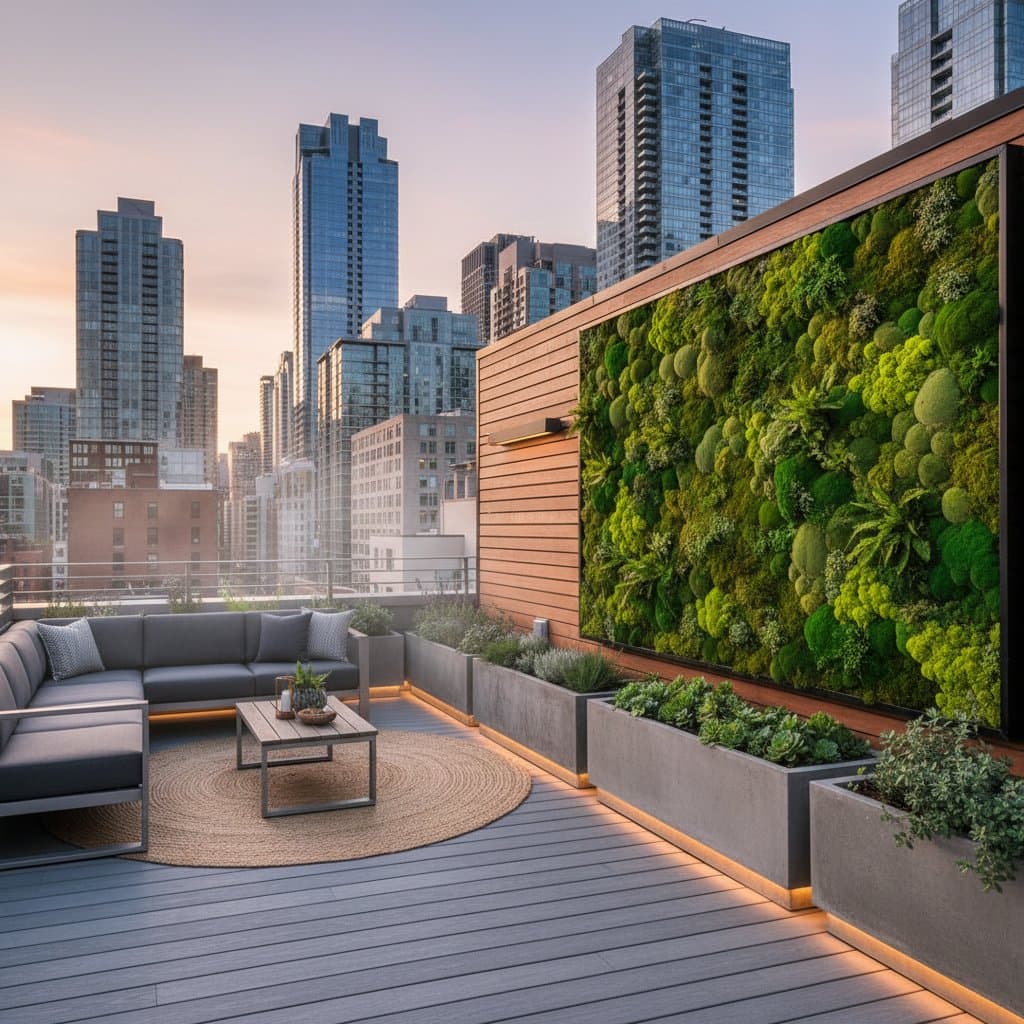
Introduction to Moss Walls for Urban Spaces
Urban rooftops often face challenges such as intense heat, noise pollution, and limited space for traditional landscaping. Moss walls offer an elegant solution by introducing lush greenery without the demands of conventional plants. These vertical installations create a natural barrier that cools surrounding air, absorbs urban sounds, and adds a textured, calming aesthetic to concrete environments.
Preserved moss requires no watering or sunlight, making it ideal for high-exposure rooftops. Living moss, on the other hand, brings subtle vitality and can adapt to shaded areas. Both options suit city dwellers seeking tranquility amid the bustle.
Benefits of Moss Walls on Rooftops
Moss walls excel in urban settings due to their resilience and low resource needs. They regulate temperature by evaporating moisture, which lowers surface heat by up to 10 degrees Fahrenheit on sunny days. This cooling effect extends to the entire deck, reducing reliance on mechanical air conditioning.
Sound absorption stands out as another key advantage. The dense structure of moss dampens echoes from traffic and wind, fostering a quieter atmosphere for relaxation or gatherings. Visually, moss introduces organic patterns that soften harsh lines of city architecture, promoting mental well-being through biophilic design principles.
Environmentally, these walls contribute to sustainability. They filter airborne pollutants and support biodiversity by providing microhabitats for small insects. Installation proves cost-effective, with initial setups ranging from a few hundred dollars for a single panel, far below the expense of potted gardens or pergolas.
Choosing Materials for Your Moss Wall
Select materials based on your rooftop's conditions and maintenance preferences. For preserved moss, opt for reindeer or sheet moss treated with glycerin to retain color and flexibility indefinitely. This type suits direct sunlight or dry climates, as it maintains its appearance without any intervention.
Living moss varieties, such as sphagnum or mood moss, thrive in humid, shaded spots. Source them from ethical suppliers to ensure viability. Backing options include lightweight foam boards for easy mounting or wire frames for a more sculptural look.
Consider the wall's size and location. A 4-foot by 6-foot panel covers a standard seating area effectively. Use rust-resistant hardware, like stainless steel brackets, to withstand rooftop weather exposure.
Step-by-Step Installation Guide
Preparation forms the foundation of a successful moss wall. Assess your rooftop for stable mounting surfaces, such as concrete parapets or wooden railings. Ensure the chosen spot receives partial shade to protect living moss from scorching sun.
- Measure the installation area precisely, accounting for a 1-inch gap between panels for expansion.
- Gather supplies: moss sheets or tiles, adhesive (non-toxic for living moss), mounting brackets, utility knife, level, and protective gloves.
- Clean the surface thoroughly to remove dirt or debris, then apply brackets securely with screws rated for outdoor use.
Attach the moss backing next. For preserved moss, press tiles firmly onto the frame using construction adhesive, overlapping edges slightly for seamless coverage. Living moss installations benefit from a soil-less substrate like coconut coir, secured with pins until roots establish.
Secure the entire assembly to the wall, using a level to maintain straight lines. Allow 24 hours for adhesives to set before exposing the wall to elements. Test stability by gently tugging on edges.
Maintenance Routines for Lasting Beauty
Moss walls demand minimal attention, aligning with busy urban lifestyles. For preserved varieties, dust accumulation represents the primary concern. Employ a soft brush or compressed air canister monthly to remove particles, avoiding water that could cause discoloration.
Living moss requires occasional misting, especially in arid conditions. Install a simple drip system connected to a rooftop water source, activating it two to three times weekly during dry spells. Monitor for pests like aphids, treating with neem oil if needed.
Seasonal checks ensure longevity. In winter, cover panels during extreme freezes to prevent cracking. Spring inspections allow for trimming overgrown sections, keeping the wall tidy and vibrant.
Sustainable Upgrades for Enhanced Performance
Incorporate smart features to boost efficiency and eco-friendliness. Solar-powered LED lights outline panels at night, highlighting textures without energy waste.
- Automated humidity sensors: These devices activate a fine mist system only when moisture levels drop below optimal thresholds, conserving water.
- Eco-friendly substrates: Select backings from recycled plastics or bamboo composites to minimize environmental impact.
Integrate rainwater collection for irrigation, channeling runoff directly to the moss. These additions maintain simplicity while amplifying benefits like air purification and thermal regulation.
Planning and Implementing Your Project
Visualize the transformation by selecting a focal wall on your rooftop, ideally near seating or entry points. Prioritize areas needing shade or acoustic buffering. Sketch a design incorporating multiple panels in varied shapes for dynamic appeal.
Procure materials from local nurseries or online specialists, opting for preserved moss for zero upkeep or living types for a touch of nature. Allocate four to six hours for assembly, working on a calm day to ease handling.
Post-installation, observe the shift in ambiance: reduced noise, cooler breezes, and a greener vista. Maintain a nearby toolkit with brush and spray bottle for routine care. Begin modestly with one panel to gauge fit before scaling up.
Realizing Tranquil Rooftop Retreats
Moss walls redefine urban outdoor living by delivering enduring calm with effortless integration. They withstand city rigors while enhancing comfort and sustainability. As you incorporate these elements, your rooftop evolves into a personal oasis, blending nature's soothe with modern practicality.